Top Lidar Laser Types for Global Buyers
Lidar Laser has moved from a specialized surveying instrument to a critical sensing technology for vehicles, robots, drones, and industrial mapping. Buyers now face several options, including mechanical spinning, MEMS, flash, and FMCW designs. Each type creates a different balance between range, resolution, scanning speed, reliability, and cost.
Industry data shows why this choice matters. The Yole Group’s 2024 automotive lidar research identifies growing demand for long-range and solid-state systems, driven by advanced driver-assistance programs. Fortune Business Insights estimates that the global LiDAR market could grow from approximately USD 1.4 billion in 2023 to more than USD 4 billion by 2032. These figures indicate strong momentum, but market forecasts are not guarantees. Product adoption remains uneven across regions and applications.
David Hall, founder of Velodyne Lidar, described lidar as “the eyes of the autonomous vehicle.” The comparison is simple, but useful. A highway vehicle may need a 200-meter detection range, while a warehouse robot may value compact size and low power consumption more. A forestry survey may prioritize dense point clouds and elevation accuracy. No single Lidar Laser type wins everywhere.
This guide compares the leading technologies for global buyers. It considers field performance, environmental limits, integration difficulty, supplier maturity, and total ownership cost. Some specifications look impressive on paper. Real conditions can disagree. Reflective signs, heavy rain, dust, vibration, and thermal changes still expose weaknesses. Careful testing remains essential.
LiDAR Laser Fundamentals: Wavelength, Pulse Rate, Range, and Safety Classes
Top Lidar Laser Types for Global Buyers
LiDAR Laser Fundamentals: Wavelength, Pulse Rate, Range, and Safety Classes
Choosing a LiDAR laser starts with wavelength, not marketing claims. Near-infrared wavelengths often suit mapping, surveying, and clear-air outdoor measurements. Longer wavelengths can perform better against certain atmospheric conditions, but detector sensitivity and target reflectivity still matter. A dark roof, wet road, or dusty hillside may return very different signals.
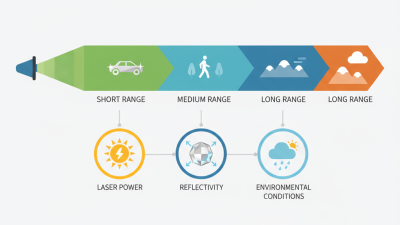
Pulse rate controls how many measurements the system can collect each second. Higher rates can improve point density, especially from a moving platform. They may also increase data volume, power demand, and thermal stress. It is not a simple race. Range depends on pulse energy, beam divergence, receiver aperture, atmospheric visibility, and target reflectivity. A longer stated range may become unreliable in rain, haze, or low-contrast scenes. Real testing should include the intended surface and weather.
Tips: Compare useful range, not only maximum range. Request test data for dark and reflective targets. Check wavelength compatibility with the receiver. Review pulse rate alongside scan speed and point spacing. Confirm the laser safety class under IEC 60825-1 and the complete operating configuration. Class 1 usually indicates safer accessible emission during expected use, but installation, optics, and maintenance can change exposure conditions. A common oversight is treating the laser module alone as the final product. That assumption needs review.
905 nm LiDAR Lasers: Cost-Efficient Scanning at Up to 2 Million Points/s
Top Lidar Laser Types for Global Buyers
905 nm LiDAR lasers remain popular because they balance scanning speed, range, and system cost. Many modern units can process up to 2 million points per second. That figure sounds impressive, but real performance depends on pulse energy, detector sensitivity, rotation speed, and weather. In field evaluations, dusty roads and wet surfaces often reduce useful returns. A datasheet cannot show every limitation.
For vehicle mapping, warehouse monitoring, and terrain surveys, 905 nm systems offer practical component availability and efficient power consumption. They usually support compact designs, which helps engineers manage heat inside smaller housings. However, eye-safety limits can affect range and pulse settings. Buyers should request measured results, not only maximum claims. Certification records, test conditions, and beam-divergence data matter.
Tips: Compare point quality at the intended distance. Check performance in rain, fog, and bright sunlight. Confirm thermal stability during long scans. Ask whether the quoted 2 million points per second represents raw points or usable returns. Small wording differences can change the purchasing decision. I have seen promising specifications fail under reflective glass and dark asphalt. That is worth considering before final selection. Use qualified professionals to verify safety compliance for the target market.
1550 nm LiDAR Lasers: Eye-Safer High-Power Sensing Beyond 200 m
1550 nm LiDAR lasers are becoming important for long-range sensing beyond 200 meters. Their longer wavelength is absorbed more strongly by the eye’s cornea and lens. This generally permits higher transmitted power than many shorter-wavelength systems, under applicable safety limits. Eye-safer is not eye-safe. Beam divergence, pulse width, repetition rate, and exposure time still require careful evaluation. A qualified engineer should verify the complete optical system, not only the laser module.
In field trials, 1550 nm systems can reveal road edges, distant vehicles, and low-contrast objects with useful detail. A narrow beam may reach across an open road, while scanning optics build a three-dimensional point cloud. Beyond 200 meters, small timing errors become visible as depth errors. Stable pulse timing and calibrated detectors matter. Atmospheric conditions remain difficult. Rain, fog, dust, and wet surfaces can reduce returns or create confusing signals. Laboratory performance charts may not represent a coastal highway or construction site.
For global buyers, ask for measured range data, beam divergence, spectral tolerance, thermal behavior, and safety documentation. Check whether testing covers the intended duty cycle and operating temperature. Supply consistency matters too. A replacement component with slightly different pulse energy can change system classification. Procurement teams sometimes focus on peak power and overlook receiver sensitivity. An expensive mistake. Even experienced teams should recheck assumptions during field validation, because a promising 250-meter result may fall sharply in haze.
1064 nm LiDAR Lasers: Established Solid-State Technology for Long-Range Surveys
1064 nm LiDAR Lasers: Established Solid-State Technology for Long-Range Surveys
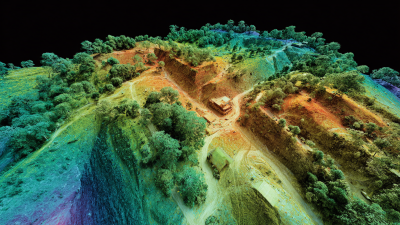
For global buyers, 1064 nm LiDAR lasers remain a practical choice for long-range surveying. Their solid-state architecture supports stable pulse generation, efficient optical output, and consistent operation in demanding field conditions. Survey teams often select this wavelength for topographic mapping, forestry measurement, corridor inspection, and large-area terrain modeling.
At 1064 nm, atmospheric transmission is generally favorable across many outdoor environments. A narrow beam can travel several kilometers when pulse energy, receiver sensitivity, and weather conditions align. In the field, operators may record clear returns from distant slopes, power structures, or uneven ground. However, range claims should be tested carefully. Rain, dust, haze, surface reflectivity, and scan geometry can reduce actual performance.
Not every 1064 nm system fits every project. Higher pulse energy may improve long-range detection, but it can increase power demand, thermal load, and eye-safety requirements. Buyers should examine pulse width, repetition rate, beam divergence, cooling design, and integration interfaces. Compliance testing must match the intended operating region and installation method. A common mistake is comparing wavelength alone. The receiver and software matter just as much. I have seen specifications look impressive until field calibration exposed unstable returns. That lesson is easy to overlook. Careful acceptance testing, documented maintenance, and trained operators provide more dependable results than headline range figures.
1064 nm LiDAR Laser Types: Typical Pulse Energy by Architecture
1064 nm solid-state lasers are widely used for long-range topographic, bathymetric, and atmospheric surveys. The chart shows representative pulse-energy levels commonly associated with three laser architectures; actual specifications vary by system design, repetition rate, beam quality, and application.
Indicative engineering values at 1064 nm: microchip lasers are typically sub-millijoule to millijoule class, fiber MOPA systems commonly operate in the millijoule class, and Q-switched solid-state systems can reach tens of millijoules for long-range surveying. Values are representative rather than universal product ratings.