Leave Your Message

China Top Light Curtain Guarding Manufacturers?

Choosing China’s top Light Curtain Guarding manufacturers requires more than comparing prices or product photographs. A reliable supplier should demonstrate practical experience with presses, conveyors, robotic cells, and automated assembly lines. Their safety light curtains should support appropriate sensing distances, resolution, response times, and environmental protection. Clear technical documents matter. So does responsive engineering support.

This guide examines manufacturers through evidence rather than promotional claims. It considers factory capabilities, quality control, product testing, customization, certifications, and after-sales service. Standards such as IEC 61496 and ISO 13849 may help buyers ask better questions, but certification details still require verification. A strong manufacturer can explain how its system behaves during alignment errors, vibration, power interruption, or repeated production cycles. Small details reveal competence.

Ask for test reports.

Real projects also expose weaknesses. Some suppliers communicate well before payment but respond slowly during installation. Others offer attractive customization yet provide limited application guidance. That does not automatically make them unsuitable, but it deserves attention. Buyers should review sample documentation, inspect production consistency, and request references from comparable industries. Delivery records, replacement procedures, and training support can affect safety and uptime for years.

No ranking remains perfect forever. Markets change, factories improve, and product lines are revised. This introduction therefore focuses on practical evaluation, transparent evidence, and responsible decision-making when comparing China-based Light Curtain Guarding manufacturers.
China Top Light Curtain Guarding Manufacturers?

What Are Light Curtain Guards and How Do They Work?

What Are Light Curtain Guards and How Do They Work?

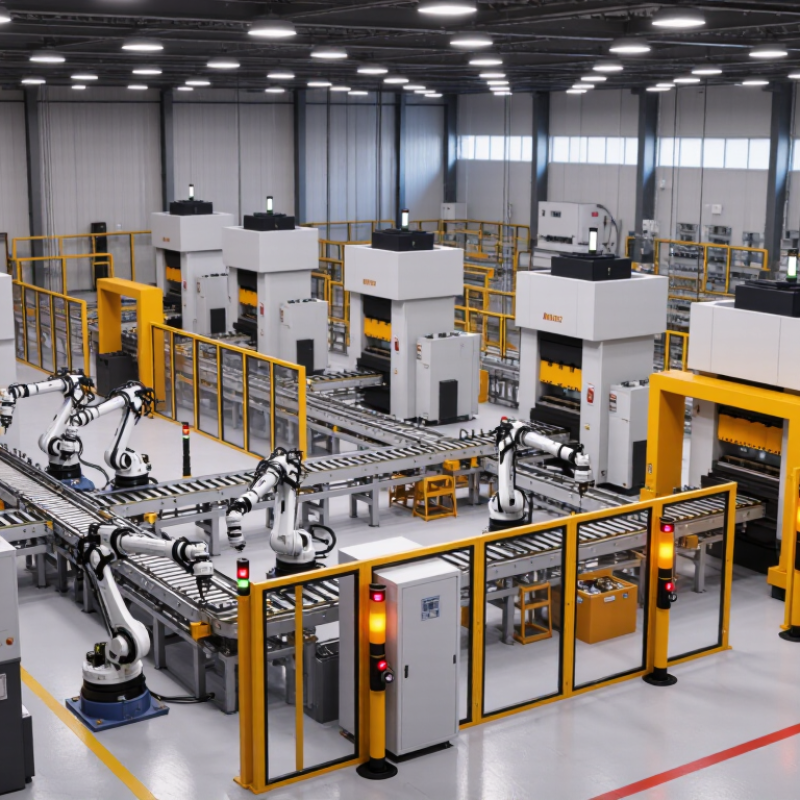
A light curtain is an optoelectronic safety device, not a physical fence. It sends parallel infrared beams across a machine opening. When a finger, hand, or body interrupts the field, the receiver signals the safety control circuit. The machine then stops hazardous movement. According to World Robotics 2024, more than 4.28 million industrial robots operated worldwide in 2023. That growth increases the need for reliable presence sensing near presses, conveyors, and robotic cells.

Effective protection depends on more than beam interruption. ISO 13855 requires the safety distance to reflect approach speed, detection capability, and machine stopping time. For example, a press may need a greater distance when its brake response is slow. A qualified engineer should measure the real stop time, rather than trust a brochure value. Beam resolution also matters. Hand detection is not the same as finger detection.

Small details decide performance.

During factory checks, technicians should inspect alignment, reflective surfaces, restart controls, and bypass conditions. A light curtain must prevent unexpected restarting after the field clears. Muting may be necessary for material flow, but poor sensor placement can create a dangerous gap. This is where selecting China-based manufacturers requires careful technical review: request test records, circuit diagrams, environmental ratings, and validation evidence against applicable standards. A neat enclosure does not prove safe behavior. Mistakes happen, especially when installation assumptions replace measured data.

Why Choose Chinese Manufacturers for Light Curtain Guarding?

Choosing Chinese manufacturers for light curtain guarding can bring practical advantages to machine builders and safety integrators. Many suppliers have extensive experience with automated presses, packaging lines, conveyors, and robotic cells. Their engineers often support custom lengths, sensing resolutions, mounting brackets, and cable exits. This matters when a standard frame does not fit a narrow production area.

China also offers a dense manufacturing network. Aluminum profiles, optical components, circuit boards, and protective housings can be sourced within one industrial ecosystem. This may shorten development cycles and keep pricing competitive. A capable supplier should explain detection distance, response time, restart functions, and environmental limits clearly. Factory testing should include alignment checks, beam interruption tests, and repeated switching under realistic conditions.

Cost alone is a weak reason to choose a supplier. A low quotation may hide limited documentation or inconsistent inspection. The process is not flawless. Some projects need extra communication because drawings, terminology, and safety expectations differ. Ask for test records, wiring diagrams, installation guidance, and evidence of quality control. Verification against relevant machinery safety requirements, such as IEC 61496, should be handled carefully. A reliable Chinese manufacturer will accept technical questions, discuss failure scenarios, and suggest improvements instead of promising everything immediately. That attitude can reveal genuine expertise.

China Top Light Curtain Guarding Manufacturers: Why Choose Chinese Manufacturers?

Common light curtain resolution options support different safeguarding needs, from finger detection to whole-body access protection.

Chinese manufacturers commonly offer multiple resolution classes, customizable sensing lengths, and application-specific configurations. A lower resolution value provides finer object detection, while higher values are typically used for larger access areas and presence detection. Selection should be validated against the machine risk assessment, required safety distance, and applicable standards such as IEC 61496 and ISO 13855.

Reference: Common industrial light curtain resolution classes used in safety applications; actual specifications vary by product and application.

Key Standards for Evaluating Chinese Light Curtain Suppliers

China Top Light Curtain Guarding Manufacturers?

Key Standards for Evaluating Chinese Light Curtain Suppliers

A reliable supplier should explain how each light curtain meets IEC 61496 requirements. Ask for current test reports, electrical diagrams, and a clear safety rating. Do not accept a certificate alone. Check whether the tested model matches the proposed model, including resolution, sensing height, and protective range. A factory with traceable production records inspires more confidence than a polished brochure.

Test practical details before purchase. Measure response time with the intended controller and confirm compatibility with the machine’s safety circuit. Inspect alignment indicators, mounting brackets, cable protection, and restart functions. For dusty workshops, review the enclosure rating and cleaning procedure. Request samples for repeated trials, not just one successful demonstration. Small gaps can matter.

Supplier experience should appear in evidence. Ask for application records, inspection procedures, calibration methods, and staff training details. Technical support should provide wiring guidance and troubleshooting steps in clear English. Pricing matters, but unstable documentation creates hidden costs. I have seen evaluations focus too heavily on unit price. That was a mistake. A lower-cost sensor can require extra guarding, longer commissioning, or replacement stock. Leave room for honest review: supplier claims, laboratory reports, and on-site performance may not align perfectly. Confirm every critical point before production approval.

China Top Light Curtain Guarding Manufacturers? - Key Standards for Evaluating Chinese Light Curtain Suppliers

Practical, evidence-based scorecard for comparing light curtain guarding suppliers without ranking individual companies or brands.

Evaluation Dimension Applicable Standard or Reference Verifiable Supplier Data Recommended Acceptance Check Suggested Weight
Safety-function design IEC 61496-1 and IEC 61496-2 Declared equipment type, detection principle, safety output architecture, and applicable test reports Confirm that the product category and safety functions match the machine risk assessment; request independent laboratory evidence where required 18%
Functional safety performance ISO 13849-1 or IEC 62061 Performance Level, Safety Integrity Level where applicable, PFHd value, diagnostic coverage, and validation documentation Check whether the claimed PL or SIL is supported by calculations and validation; verify compatibility with the complete machine safety circuit 18%
Detection resolution and protected height IEC 61496 series and ISO 13855 Resolution in millimetres, sensing range, number of beams, protected height, and dead-zone dimensions Verify that the selected resolution detects the smallest hazardous body part identified in the risk assessment and that the full opening is protected 12%
Response time and safety distance ISO 13855 Sensor response time, external stopping time, machine overtravel, and stated safety-distance calculation method Use the documented approach-speed and intrusion-distance method; confirm that the installed distance is based on the complete stopping system, not the sensor alone 10%
Restart, EDM, muting, and blanking functions IEC 61496 and applicable machine-safety requirements Manual reset behavior, external device monitoring, fixed or floating blanking, muting logic, indicators, and fault response Test every configured safety function under normal, fault, power-cycle, and obstruction conditions; ensure bypass functions are risk-controlled 10%
Electrical and machine-interface compatibility IEC 60204-1 Supply voltage tolerance, current consumption, output type, short-circuit behavior, connector pinout, and wiring diagrams Confirm electrical compatibility with the safety relay, safety controller, contactors, grounding system, and machine control voltage 8%
Ingress protection and mechanical construction IEC 60529 Declared IP rating, enclosure material, mounting method, optical-window protection, cable exit design, and vibration resistance Match the IP rating and mechanical design to the actual installation environment; request test evidence for washdown, dust, or coolant exposure 8%
EMC and ambient-light immunity IEC 61000-6-2, IEC 61000-6-4, and product-specific EMC requirements Immunity and emission test results, operating distance, optical-crosstalk controls, and ambient-light limitations Evaluate performance near variable-frequency drives, welding equipment, motors, reflective surfaces, and other optical sensors 6%
Environmental operating capability Product environmental specifications and relevant IEC test methods Operating temperature, storage temperature, humidity limits, shock, vibration, sunlight, and condensation ratings Compare the published limits with the real production environment and require documented test conditions for critical applications 5%
Quality system, traceability, and lifecycle support ISO 9001 for quality management; applicable conformity-assessment requirements Certificate scope, serial or lot traceability, change-control process, warranty terms, spare-parts policy, manuals, and technical support response time Audit the certificate scope and production records; request sample inspection reports and written procedures for product changes and field failures 5%
Scoring note: Apply the suggested weights only after verifying certificates, test reports, technical files, samples, and application-specific validation. A supplier’s conformity document does not replace the machine builder’s risk assessment, safety-distance calculation, installation verification, and final validation.

Leading Types of Light Curtain Guarding Manufacturers in China

China Top Light Curtain Guarding Manufacturers?

Leading light curtain guarding manufacturers in China usually fall into three groups. Specialized safety equipment factories focus on standard transmitters, receivers, brackets, and control interfaces. Their strength is repeatable production and stable lead times. OEM manufacturers build curtains around a buyer’s drawings, sensing distance, resolution, and machine layout. This suits packaging lines, presses, conveyors, and robotic cells. Custom engineering manufacturers provide complete guarding projects, including risk assessment support, wiring, installation guidance, and commissioning documents.

A reliable supplier should explain how each curtain performs in real operating conditions. Ask about detection resolution, response time, protective height, ambient light resistance, and fault diagnostics. Review inspection records for alignment, enclosure sealing, cable strain relief, and output testing. Suppliers with mature quality systems may provide traceability and test reports linked to international safety requirements. They should also explain integration with safety relays, emergency stops, and machine controllers without making vague promises.

Price matters, but it should not lead the decision. A cheaper unit may create extra work during alignment or troubleshooting. Good manufacturers communicate clearly when a design has limitations. That honesty is valuable. Some suppliers still focus heavily on hardware and underestimate installation conditions, especially vibration, dust, or reflective metal surfaces. This point deserves review. Request samples, wiring diagrams, service response terms, and a practical validation plan before approving a large order. A careful comparison often reveals more than a polished catalogue.

How to Select the Right Chinese Manufacturer for Your Application

Selecting the right Chinese light curtain guarding manufacturer requires more than comparing prices. Begin with your machine’s risks, sensing distance, resolution, response time, and environmental conditions. A supplier should explain how these factors affect the required safety distance. Vague answers are warning signs.

Ask for technical drawings, test reports, wiring diagrams, and clear product specifications. Confirm whether the factory follows recognized machinery safety standards, such as IEC 61496, and maintains documented quality controls. Request a production sample before placing a large order. Check the housing, connector seals, alignment indicators, and response during repeated machine cycles. Small details matter.

Visit the factory remotely or in person. Review calibration records, incoming inspection procedures, and serial-number traceability. Ask who handles software changes and replacement parts. A reliable manufacturer should provide practical integration support, not only a polished catalogue. Check communication speed, English documentation, packaging quality, and warranty terms. These are operational details, not decoration.

Do not accept every certificate without verification. Some documents may cover a product family rather than your exact model. I have seen projects delayed because the selected curtain matched the machine electrically but not mechanically. That mistake is easy to repeat. Leave time for installation trials, operator feedback, and a risk assessment by a qualified engineer. The cheapest offer may become expensive when alignment, training, or spare units are missing.