A Safety Light Curtain Relay may be a compact DIN-rail device, but its role in a machine’s protective circuit is significant. When a person or object interrupts the light curtain’s beams, the relay helps communicate the stop condition to the machine. Choosing one requires more than matching terminals. Buyers should check the curtain’s output type, the relay’s input configuration, required safety performance, reset options, and external device monitoring. Small mismatches can prevent a system from operating as intended.
The right choice also depends on the machine and its working environment. Consider response time, supply voltage, available safety outputs, wiring space, and diagnostic indicators. A clear status light can help technicians identify a fault without guesswork. Check the manufacturer’s documentation for compatibility and installation requirements; do not rely on appearance or a seller’s brief description alone. A familiar brand is useful, but it is not a substitute for reviewing the actual specifications. Details matter.
These seven buying tips are intended to help buyers compare products methodically and ask better questions before installation. They also highlight a practical limitation: even a correctly selected relay cannot compensate for poor system design, incorrect wiring, or inadequate commissioning. That part is easy to overlook. Treat the relay as one component in a complete safety function, and involve a qualified professional when system requirements are unclear.
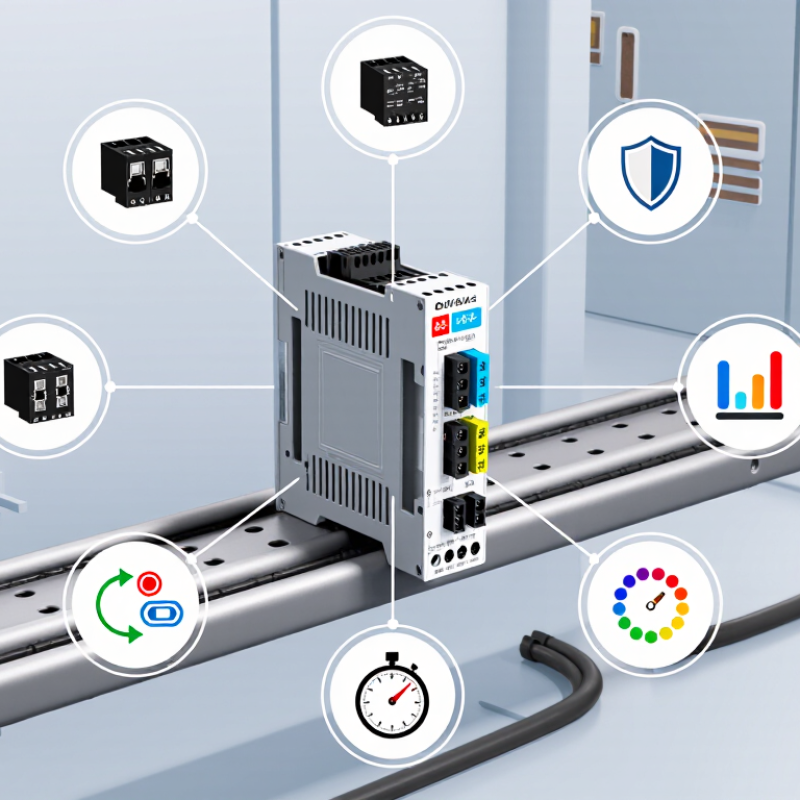
A safety light curtain protects machinery by creating an invisible field across an access point. When a hand or object breaks the beams, the safety relay evaluates the signal and switches its safety outputs. Those outputs can stop hazardous motion through contactors or a drive’s safety inputs. The relay is not a substitute for correct machine design. Its response time, the machine’s stopping time, and the curtain’s mounting distance must work together.
The need for reliable safeguarding is real. The U.S. Bureau of Labor Statistics recorded 5,283 fatal work injuries in its 2023 Census of Fatal Occupational Injuries. That figure covers many causes, not light-curtain incidents specifically, but it underlines why machine hazards deserve careful control. A relay with monitored contacts can help detect certain output-device faults; however, wiring errors or poor placement can still defeat protection. Small details matter.
Buying tip: Check the required safety performance level against a documented risk assessment, then verify relay compatibility, reset behavior, and external device monitoring. Ask for response-time data and confirm the complete stopping distance on the actual machine. Test the system with a proper test rod, not just a hand wave. It is easy to assume the indicator light proves everything. It does not. Recheck after installation or changes, and keep records of the results.
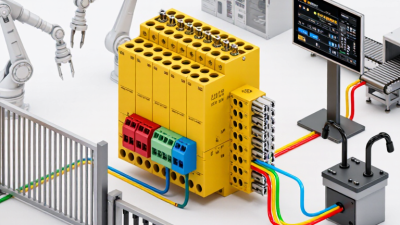
A safety relay is not a generic switch. Match its inputs to the light curtain’s dual OSSD outputs, including test-pulse compatibility and reset behavior. Check supply voltage, output contact ratings, and whether external-device monitoring is required. Small mismatch, big consequence. A relay that rejects diagnostic pulses may nuisance-trip; one that fails to detect faults weakens the safety design.
Start with the machine risk assessment, not the relay catalogue. IEC 61496-1 covers electro-sensitive protective equipment, while ISO 13849-1 guides safety-related control-system design and performance levels. A relay’s rating cannot compensate for weaker components elsewhere in the safety chain. Check the whole chain. Include curtain response time, relay switching time, machine stopping time, and measured approach distance in validation. Confirm the relay also suits the control system’s reset logic and contactor feedback circuit.
The U.S. Bureau of Labor Statistics’ 2023 Census of Fatal Occupational Injuries recorded 5,283 fatal work injuries. This broad figure is not specific to light curtains, but it underscores the importance of verified machine safeguards. Request safety data, wiring diagrams, and response-time figures before purchase, then test fault conditions on the actual machine. Leave room for review: real stopping behavior can differ from a tidy calculation.
Illustrative example only—not product specifications. The total response and stopping time is the sum of the light curtain response time, safety relay response time, and machine stopping time. Use verified manufacturer data and measured machine stopping time when selecting and positioning equipment.
For relay compatibility, also verify the light curtain’s output type, the relay’s input requirements, safety output contacts, reset and external device monitoring (EDM) requirements, and the required safety performance level.
A safety light curtain relay should match the machine’s assessed risk, not simply its price or convenience. Review the hazard’s severity, how often workers approach it, and whether they can avoid injury. Then confirm the required control-system performance level or safety integrity level with a qualified risk assessment. ISO 13849-1 and IEC 62061 provide established methods for evaluating safety-related control systems. A higher-rated relay cannot compensate for a poorly positioned curtain or an unsafe stopping distance.
Use documented evidence when comparing options. OSHA’s FY 2023 Top 10 report recorded 1,644 citations for machine guarding under 29 CFR 1910.212, highlighting how often guarding deficiencies appear in inspections. Check the relay’s safety rating, approved configurations, fault-detection behavior, and compatibility with the curtain and machine controls. Also verify the machine’s measured stopping time against the protective distance; brake wear can change that figure. Small details matter.
A risk score is not magic. Assumptions can become outdated after tooling, speed, or production routines change. Record the assessment, test the safety function during commissioning, and schedule rechecks after modifications. If the required performance level is unclear, pause the purchase and ask a competent machinery-safety professional to review the hazard and circuit design.
A safety light curtain relay must match the machine’s layout, not just its sensor output. Measure the approach distance and stopping time, then confirm the curtain protects every reachable opening. OSHA’s FY2023 Top 10 citation data recorded 1,644 machine-guarding violations, a reminder that guarding details deserve careful review. This figure covers machine guarding broadly, not light curtains alone.
Check reset behavior before ordering. A manual reset button should sit outside the hazard area, where the operator can see the danger zone without standing inside it. Confirm whether the relay supports manual or automatic reset, and whether it monitors external contactors for welded contacts. Automatic reset can create unexpected restart risks if the machine’s control design does not prevent them. Small detail. Big consequence.
Review diagnostics and installation requirements against the machine’s wiring diagram. Look for clear fault indicators, compatible supply voltage, suitable output configuration, and documented response to cross-faults or misalignment. Verify that the relay’s safety performance matches the risk assessment and required control-system architecture; a matching connector does not prove compatibility. During commissioning, test interruption at several points along the curtain and confirm the machine stops within its measured stopping time. Recheck after maintenance. In practice, teams sometimes skip documenting these checks when production is waiting. That is understandable, but it leaves the next technician guessing.
| No. | Buying Tip | What to Check | Why It Matters | Practical Verification |
|---|---|---|---|---|
| 1 | Confirm safety-system compatibility | Check that the relay is suitable for the light curtain’s safety outputs, such as OSSD outputs, and that its safety performance is appropriate for the machine’s risk assessment. | Electrical compatibility and the required safety performance depend on the complete safety function, not on the relay alone. | Review the light curtain and relay documentation together. Confirm the required performance level or SIL with the machine’s risk assessment and applicable standards. |
| 2 | Check installation and wiring requirements | Verify supply voltage, terminal assignments, wiring diagrams, conductor requirements, enclosure conditions, and separation of safety and non-safety circuits where specified. | Incorrect wiring, unsuitable electrical conditions, or poor installation can prevent the protective function from operating as intended. | Before purchase, compare the relay’s connection diagram with the light curtain and machine control design. Plan installation and commissioning by qualified personnel. |
| 3 | Choose the correct reset method | Determine whether the application requires automatic restart or manual reset, and confirm the relay supports the chosen mode. | Reset behavior affects how the machine can restart after the protective field is cleared. The appropriate method depends on the risk assessment and machine design. | For manual reset, plan a control location outside the hazardous area with a clear view of the hazard zone, where required by the machine design and applicable standards. |
| 4 | Review external device monitoring | Check whether the relay supports external device monitoring (EDM) and whether it can monitor the feedback contacts of external switching devices, such as contactors. | EDM can help detect certain faults in monitored external devices before a reset or restart is permitted. | Confirm the required feedback-contact arrangement and test the complete circuit during commissioning, following the manufacturers’ instructions. |
| 5 | Assess diagnostic information | Compare available status indicators, fault outputs, and diagnostic messages with the maintenance and control-system requirements. | Clear status and fault information can help technicians identify issues such as a blocked protective field, supply problems, or wiring faults. | Ask which conditions are indicated and whether diagnostic outputs are intended for status reporting only or are part of a specified safety function. |
| 6 | Match outputs to the machine circuit | Check the number and type of safety outputs, output ratings, switching characteristics, and compatibility with the connected control devices. | Outputs must be suitable for the connected load and control architecture. A status output should not be treated as a safety output unless specified for that purpose. | Compare the relay’s output specifications with the input requirements of contactors or the machine control system, including any required interface components. |
| 7 | Plan testing and maintenance | Review commissioning checks, periodic inspection needs, fault-response instructions, and any requirements for configuration records or proof testing. | A safety function must be verified as part of the complete machine system and maintained so that faults or changes do not undermine protection. | Include the relay and light curtain in the machine’s documented validation and maintenance plan. Follow the applicable instructions and site procedures. |
When comparing safety light curtain relays, check the exact standards and scope behind each certificate. IEC 61496 covers electro-sensitive protective equipment, while ISO 13849-1 addresses safety-related control parts. Ask suppliers for current certificates, safety data, and clear confirmation that the relay suits your curtain, machine, and required performance level. A certificate alone does not prove compatibility. Not just paperwork.
Supplier support matters when the relay reaches the control cabinet. Request wiring diagrams, configuration guidance, fault-response details, and realistic replacement lead times. For a practical test, ask how support staff would diagnose a blocked beam or a relay that will not reset. Generic answers are a warning sign. I would still verify claims with the machine’s risk assessment; a neat datasheet cannot replace that work.
Lifecycle costs include more than the purchase price. The U.S. Department of Energy’s Operations & Maintenance Best Practices guide (2010) estimates that operations and maintenance can represent 60–80% of a building’s lifecycle costs. That figure is not relay-specific, but it shows why maintenance deserves attention. Compare expected service life, spare-part availability, diagnostic time, and the cost of stopping production for replacement. A cheaper relay may cost more if troubleshooting takes hours or compatible spares are difficult to obtain.