How to Choose the Right Photoelectric Light Curtain?
Choosing the right Photoelectric Light Curtain begins with understanding the machine, not just comparing product prices. Each application has different hazards, distances, speeds, and environmental conditions. A press brake, packaging line, and robotic cell may require completely different sensing performance.
In practical installations, technicians examine the detection range, resolution, response time, protective height, and mounting position. They also check whether dust, vibration, bright sunlight, or oil mist could affect the signal. A curtain with fine resolution may detect smaller objects, but it can demand more careful alignment. That trade-off is easy to overlook.
Safety performance matters most.
Reliable selection should follow the machine risk assessment and the manufacturer’s verified specifications. Certification, testing records, operating temperature, and maintenance requirements deserve close attention. The control system must also respond correctly when the beam is interrupted. A sensor alone cannot create a complete safeguarding solution.
Installation details often decide real-world performance. A frame can flex slightly. A cable can loosen. A poorly placed reflector may create blind areas. These problems are not always visible during a quick inspection. No selection method is flawless, and product brochures cannot replace field testing. It is wise to review stopping distance, restart behavior, and fault indicators before production begins. Careful measurement, qualified advice, and periodic checks help connect technical claims with actual protection. This guide explains the main criteria clearly, while recognizing that every machine has its own limitations and practical challenges.
Understanding the Purpose and Working Principles of Photoelectric Light Curtains
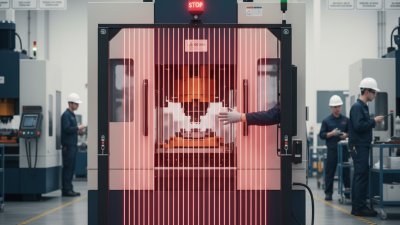
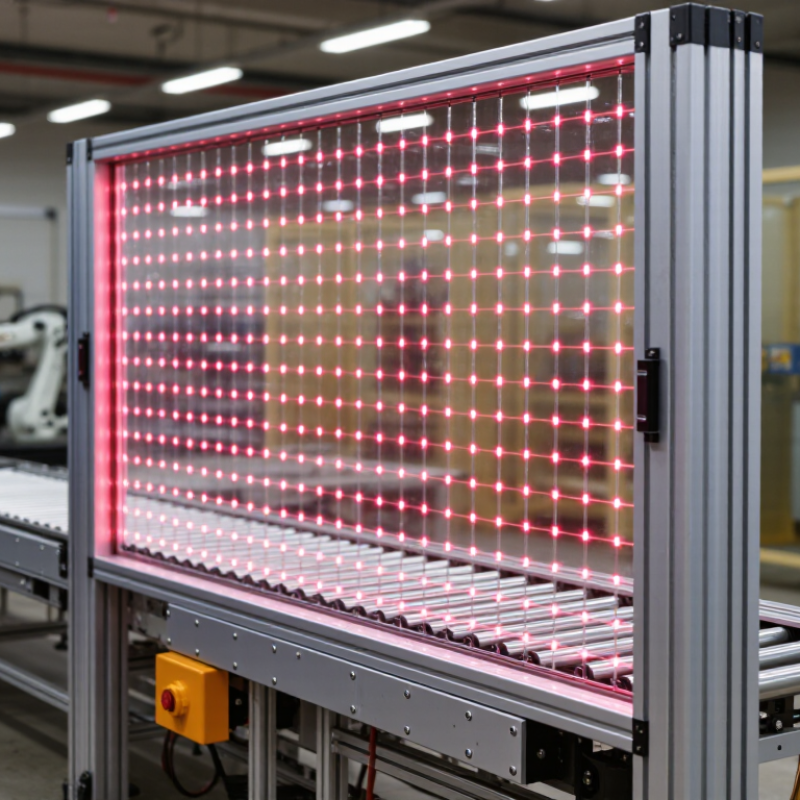
A photoelectric light curtain protects people by detecting entry into a hazardous area. It uses an emitter and receiver to create multiple infrared beams. When an object interrupts the beams, the safety controller sends a stop signal to the machine. The principle is simple. The application is not.
The curtain’s resolution determines the smallest object it can detect. A finger, hand, or full body may require different protection levels. Sensing height, operating distance, response time, and beam spacing also affect selection. Alignment matters. Even a slight shift can create an unreliable detection zone. Check the manufacturer’s technical data and the machine’s documented risk assessment before installation.
In real workplaces, dust, vibration, reflective surfaces, and changing temperatures can affect performance. Choose suitable environmental protection and provide clear access for cleaning and inspection. Test the emergency stop function at scheduled intervals, not only during commissioning. A reset button should be positioned where the operator can see the danger zone. Automatic restarting may appear efficient, but it can create unnecessary risk. It is tempting to focus on price or detection range alone. That approach needs reconsideration. A properly selected light curtain must match the hazard, machine behavior, and maintenance conditions. Safety depends on the complete system, not one sensor.
Identifying the Required Safety Level and Protection Area
How to Choose the Right Photoelectric Light Curtain?
Identifying the required safety level and protection area should guide every light curtain decision. Start with a documented risk assessment. Examine the machine’s movement, stopping time, access points, and possible injury severity. Higher-risk applications may require a Type 4 device, while lower-risk machinery may suit Type 2 protection. Confirm the choice against applicable standards, such as IEC 61496 and ISO 13849-1. Do not select by appearance or price alone.
Measure the protection area at the machine, not from a drawing. The curtain must cover the entire hazardous opening, including side gaps and spaces beneath the lowest beam. Resolution matters too. A hand-detection system cannot protect against finger access. Calculate the minimum safety distance using the machine’s stopping time, approach speed, and device response time. I have seen installations fail because stopping data was estimated rather than measured. That shortcut needs reconsideration.
Tips: Record measured stopping time. Check alignment after installation. Test every beam with the correct test rod. Watch for reflective surfaces, vibration, and changing access routes. If muting or blanking is necessary, define its limits carefully and verify the control logic. Keep the protected area visible to operators. A curtain can detect intrusion, but it cannot compensate for poor guarding design. When the work process changes, repeat the assessment. Small layout changes may create a large unprotected gap.
How to Choose the Right Photoelectric Light Curtain?
Compare common detection resolutions and protection heights when identifying the required safety level and protection area. Final selection should be confirmed by a documented risk assessment in accordance with applicable machinery-safety standards.
Lower resolution values detect smaller objects. Typical resolutions include 14 mm for finger detection, 30 mm for hand detection, and 50–90 mm for limb or body detection. IEC 61496 Type 4 equipment is commonly considered for higher-risk access points, while Type 2 may be suitable only where the risk assessment permits it.
Comparing Detection Range, Resolution, and Response Time
How to Choose the Right Photoelectric Light Curtain?
Comparing Detection Range, Resolution, and Response Time
A photoelectric light curtain is not chosen by range alone. In a live machine cell, range, resolution, and response time interact. The International Federation of Robotics reported 541,302 industrial robots were installed worldwide in 2023. More automated cells create more access points requiring measured protection, not guesswork.
Detection range should cover the guarded opening with margin for vibration, dust, and frame movement. Excessive range can invite alignment errors. Resolution describes the smallest object reliably detected, often by finger, hand, or body categories. A 14 mm model may detect fingers. It does not automatically prevent every reach-through hazard. Check the actual beam pitch and tested conditions. Real installations are less clean than brochures suggest.
Response time matters during stopping-distance calculations. ISO 13855:2024 requires protective-device positioning to reflect total system stopping time, including sensor and machine delays. IEC 61496-1:2020 defines requirements for electro-sensitive protective equipment. Ask for the measured worst-case response time, output delay, and restart behavior. Then verify the machine stop with a calibrated test. A fast curtain cannot compensate for a slow brake. Selection often favors resolution while ignoring stopping performance. That trade-off deserves another review.
How to Choose the Right Photoelectric Light Curtain? - Comparing Detection Range, Resolution, and Response Time
| Light Curtain Type |
Typical Detection Range |
Typical Resolution |
Typical Response Time |
Sensing Height |
Suitable Applications |
Selection Considerations |
| Compact Object Detection |
0.3–3 m |
10–25 mm |
5–15 ms |
100–600 mm |
Small conveyors, packaging lines, part counting, material presence checks |
Choose a shorter beam pitch when small parts must be detected reliably. |
| General Industrial Automation |
1–6 m |
20–40 mm |
8–20 ms |
300–1,500 mm |
Machine guarding, assembly stations, conveyor monitoring, access detection |
Balance operating distance and resolution according to the smallest object or body part to be detected. |
| High-Resolution Finger Detection |
0.2–4 m |
10–14 mm |
5–12 ms |
150–1,200 mm |
Press access points, robotic cells, narrow openings, small-object inspection |
Higher resolution improves detection of fingers and small objects but may reduce allowable optical distance. |
| Hand Detection |
1–8 m |
25–40 mm |
8–25 ms |
300–2,000 mm |
Material feeding, operator access monitoring, palletizing and loading areas |
A moderate resolution is usually sufficient and provides a practical balance of range and stability. |
| Body Detection and Area Guarding |
2–10 m |
40–90 mm |
10–30 ms |
600–2,400 mm |
Large machine openings, production cell entrances, vehicle and pallet access points |
Use only where the required safety assessment confirms that body detection is adequate. |
| Long-Range Material Handling |
5–20 m |
40–100 mm |
15–40 ms |
500–3,000 mm |
Warehouse conveyors, logistics transfer points, large-area object profiling |
Verify alignment tolerance, ambient light immunity, and performance across the full sensing distance. |
Note: The values shown are representative industry ranges for comparison purposes. Actual performance depends on optical alignment, beam pitch, ambient light, contamination, cabling, controller logic, and the required safety standard. For personnel protection, select a safety-rated light curtain based on a formal risk assessment and the applicable regional regulations.
Evaluating Installation Conditions and Environmental Compatibility
How to Choose the Right Photoelectric Light Curtain?
Evaluating Installation Conditions and Environmental Compatibility
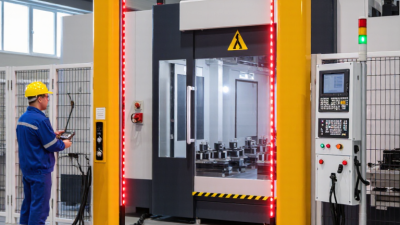
Choosing a photoelectric light curtain starts with the machine’s real installation conditions. Measure the opening, sensing distance, and required detection resolution. A few millimeters can affect reliable protection.
Check whether the mounting frame is rigid. Vibration may shift the emitter and receiver out of alignment. Keep both units parallel and leave enough space for cleaning and adjustment. Avoid placing them near reflective metal surfaces or strong direct sunlight. These conditions can create unstable signals. They often do.
Environmental compatibility matters just as much. Dust, oil mist, water spray, and temperature changes can reduce optical performance. Select suitable enclosure protection for the surrounding area. Confirm the operating temperature range from technical documentation, not guesswork. Route cables away from motors and high-power lines to reduce electrical interference. Inspect connectors regularly. Small faults become serious quickly.
The curtain’s resolution must match the hazard and stopping distance. A safety assessment should consider machine speed, access points, and the required response time. Installation should follow applicable machinery safety standards and be verified by a competent professional. In practice, installers sometimes focus on detection distance and overlook restart behavior. That is a useful warning. Test muting, reset controls, and fault responses under normal and abnormal conditions. Record the results, then review them after production begins. Real equipment behaves differently from a clean workshop test.