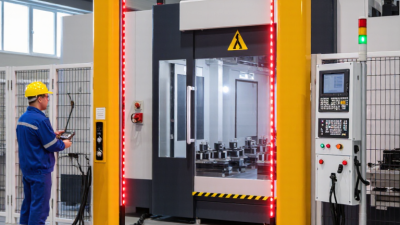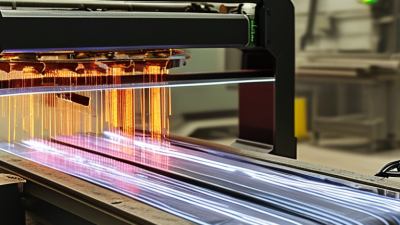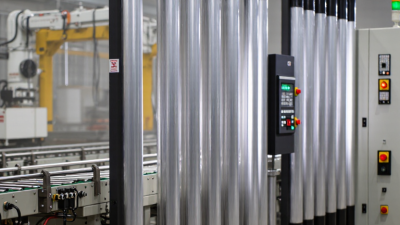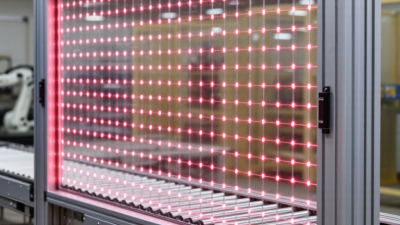
A Safety Light Barrier can stop a machine before a hand reaches a hazardous point. Its invisible beams create a protective field around presses, packaging lines, and robotic cells. When that field is interrupted, the system can signal the machine to stop. It sounds simple. The engineering is not.
The International Labour Organization’s 2019 report, Safety and Health at the Heart of the Future of Work, cites estimates of 2.78 million work-related deaths and 374 million non-fatal work injuries each year. Those figures cover many industries and hazards; they are not specific to machine guarding. Still, they show why well-designed protective measures matter. Choosing a barrier requires more than comparing detection resolutions. Teams must consider stopping distance, access points, operating conditions, and integration with the machine’s control system. IEC 61496 and ISO 13855 offer relevant technical frameworks, but they do not replace a site-specific risk assessment.
This guide compares seven Safety Light Barrier options and the practical details that can shape a selection. A strong product specification cannot compensate for poor placement or maintenance. There is a limitation here: no source material was provided to verify a named industry expert’s quotation, so attributing a sentence to one would risk inventing a claim. That omission deserves attention, too. A reliable buying decision should rest on traceable evidence, qualified review, and clear installation requirements—not a memorable quote alone.

A safety light barrier uses aligned light beams to create a sensing field near a machine hazard. A transmitter sends beams to a receiver across an opening. If a person or object interrupts the field, the system sends a signal to a safety controller. The controller can stop hazardous motion or prevent a new cycle from starting. That matters. Unlike a metal guard, the barrier allows operators to load parts without opening a door. It does not physically block access, though, so placement and machine response are critical.
Protection depends on matching the barrier to the task and the machine’s stopping time. For example, a press may need more distance between the sensing field and its moving parts than a slower conveyor. Dust, vibration, misalignment, or damaged cables can also affect reliable operation. Regular checks should confirm that breaking a beam stops the machine as intended. A practical test uses the specified test piece, not a hand waved through the opening. There is a catch: operators may be tempted to reach around or over the field if production feels rushed. Barrier design cannot fix every workflow problem. Reassessing access points and training people to report awkward setups can reveal gaps that a neat installation misses.
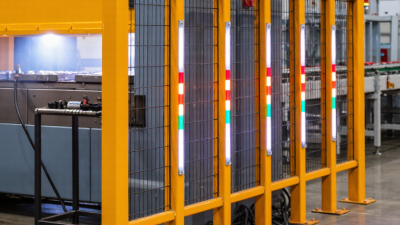
A safety light barrier creates an invisible detection field using paired light emitters and receivers. When a person or object interrupts the beams, a safety-rated controller signals the machine to stop or enter a safe state. The beam breaks. But the barrier is not a physical shield, and cutting power does not always stop motion instantly. ISO 13855 guidance calls for positioning safeguards according to approach speed and total stopping time.
OSHA’s FY2023 Top 10 list recorded 1,644 citations for machine guarding under 29 CFR 1910.212. This figure signals a persistent guarding concern; it does not measure light-barrier performance. Proper protection also depends on the machine’s risk assessment, suitable device selection, correct installation, and verified stopping performance. Dust, misalignment, or an unsuitable reach-through opening can weaken protection.
Tips: Measure the machine’s actual stopping time, then confirm the barrier’s safety distance with a qualified safety professional. Test interruption and restart behavior during commissioning and scheduled inspections. Keep the sensing area clear of pallets and coolant mist. A barrier can help prevent access, but it cannot fix every unsafe process; that part deserves a hard look.
Representative nominal resolutions commonly used for different access-protection needs. Lower values indicate detection of smaller objects.
When a beam is interrupted, the safety system signals the machine to stop. Resolution alone does not determine safe placement: required separation depends on factors such as approach speed and the machine’s total stopping time. Available resolutions vary by model and application.
Choosing a machine safety light barrier starts with the hazard, not the product dimensions. Identify where an operator can reach a danger point, how quickly the machine stops, and whether people approach from the side or above. The required protective height and resolution depend on those details. A barrier that detects fingers may not suit a task where an arm can pass through. Easy to miss.
Check the machine’s stopping time under real operating conditions, including wear and load changes. The sensor’s response time also matters when calculating the safe distance from the hazard. Use the applicable risk assessment and installation guidance; a guessed distance can leave too little stopping space. Consider restart behavior, reset location, and whether muting or blanking is genuinely needed for material flow. Extra functions add setup and validation work.
The work area can affect reliability. Dust, coolant mist, vibration, or nearby reflective surfaces may interrupt or distort the optical path. Review the enclosure rating, operating temperature, and alignment method against the actual site, not just a clean test bench. That matters. Confirm that the barrier can connect correctly to the machine’s safety control system, and have the completed installation tested by qualified personnel. A specification sheet helps, but it cannot reveal every awkward reach or maintenance habit on the shop floor.
Finger-resolution light barriers detect small objects near presses, assembly fixtures, and compact work cells. Their closely spaced beams offer strong access protection, but mounting and alignment need care. A narrow gap can still invite awkward reaching.
Hand-resolution models suit loading points where fingers need not be detected individually. Body-resolution barriers use wider beam spacing for larger access openings, such as pallet transfer zones. For both, stopping distance matters: measure the machine’s actual response time, not just the sensor’s range.
Long-range models serve broad production lines, while compact units fit tight machine frames. Muting-capable barriers allow controlled passage of materials, such as a box on a conveyor, when configured with suitable sensors and logic. Blanking-capable models ignore defined beam areas for fixed machine parts or approved workpiece movement. These functions can create blind spots if set poorly. Fit matters.
Compare beam resolution, protected height, range, response time, and environmental rating against the task. Dust, vibration, and reflective surfaces can complicate installation. I would not choose by price or range alone; a convenient specification can be wrong for the opening. Final selection should follow a documented risk assessment and be verified on the installed machine.
A safety light barrier protects only when its position matches the machine’s real stopping behavior. Measure total stopping time at the hazard, then calculate the separation distance using ISO 13855. Include control-system response and likely access paths. Mount the transmitter and receiver on rigid supports. Vibration can shift alignment. Small shifts matter. Keep reflective metal, coolant mist, and chips away from the sensing path. A clear status indicator is not proof of safe installation. Test that beam interruption stops hazardous motion and that restart requires the intended deliberate action.
Testing should cover each beam, the safety output, reset logic, and linked stop devices. Use the specified test rod and record results, machine state, and repairs. OSHA’s FY 2023 Top 10 Most Frequently Cited Standards data lists 1,644 citations for machine guarding under 29 CFR 1910.212. That figure is a reminder: guarding failures are a practical inspection concern. During maintenance, isolate hazardous energy before cleaning or realigning components. Inspect lenses, cables, brackets, and connectors for scratches, looseness, or oil ingress. Repeat validation after relocation, repair, or control changes. Keep dated records, but paperwork alone cannot reveal a worn brake that lengthens stopping time. Schedule measured stop-time checks, not just visual inspections.