Leave Your Message

2026 Top Safety Light Grid Types Which One Is Best?

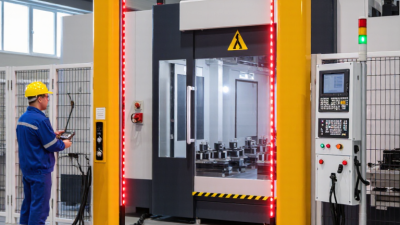
Choosing the right Safety Light Grid can protect workers, equipment, and production continuity. In 2026, manufacturers offer several types, including standard models, cascading grids, muting systems, and advanced solutions with diagnostic communication. Each design addresses different risks. The best option depends on the machine opening, stopping distance, detection range, environmental conditions, and required safety performance.

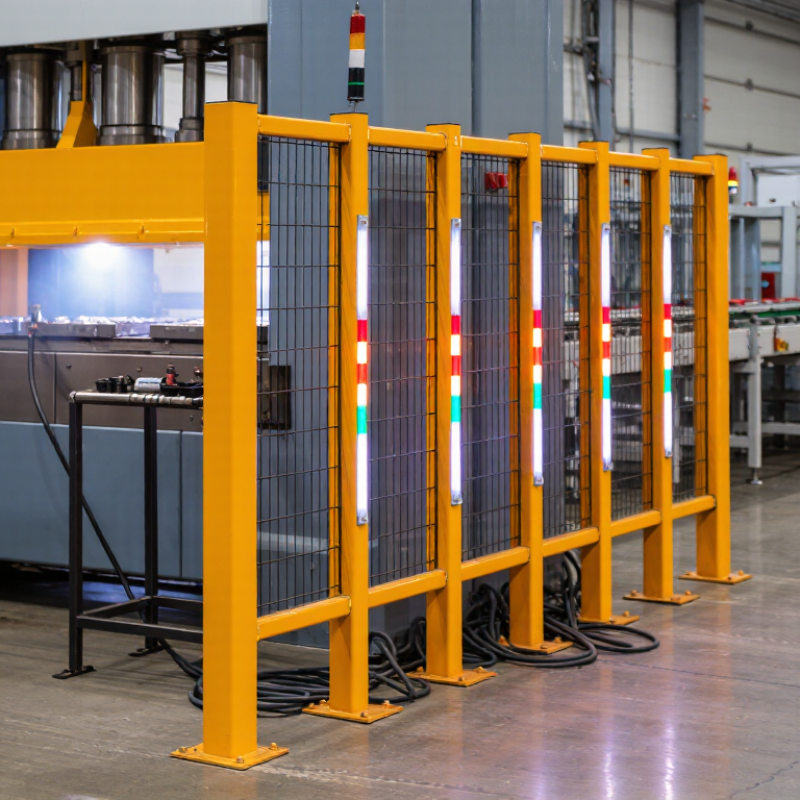
Real factory experience shows that installation details matter as much as product specifications. A light grid mounted beside a stamping press may face vibration, oil mist, reflective metal, and frequent access. A model with strong alignment feedback and clear status indicators can reduce troubleshooting time. In a packaging line, muting functions may support controlled material movement, but poor sensor placement can create dangerous gaps. Small details matter.

Not every advanced feature improves safety.

This comparison will examine sensing resolution, response time, protection height, operating range, enclosure strength, diagnostics, and integration options. It will also consider maintenance demands and operator usability. Technical documents, risk assessments, and manufacturer guidance should support every selection. Independent certification is valuable, but it does not replace correct application engineering.

The most expensive Safety Light Grid is not automatically the safest choice. A simpler model may perform better when the hazard is clear and access patterns are stable. However, relying only on price can create hidden costs through downtime, false trips, or difficult inspections. This guide compares the main 2026 types carefully, while recognizing one uncomfortable truth: product performance depends heavily on how people install, test, and maintain it.
2026 Top Safety Light Grid Types Which One Is Best?

What Is a Safety Light Grid and How Does It Work?

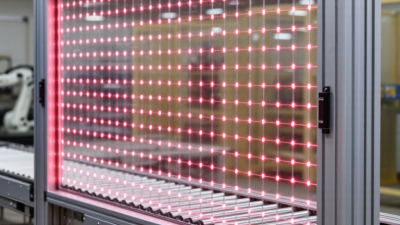
A safety light grid is an electro-sensitive protective device used around hazardous machine areas. It contains aligned transmitters and receivers that create multiple infrared beams. When a hand, body, or object breaks the protected field, the receiver sends a signal to the safety control system. The machine should then stop or prevent its hazardous movement. It works quickly, but it cannot correct poor system design. IEC 61496 requires safety-related performance for these protective devices, while ISO 13855 helps determine their safe installation distance.

The best type depends on the hazard, opening size, resolution, and required detection range. A through-beam grid suits larger access points, while high-resolution models detect fingers or hands near moving tools. Cascaded systems can protect connected zones, but wiring and validation become more demanding.

The International Labour Organization estimated nearly three million work-related deaths and 395 million non-fatal injuries worldwide in 2023. Reliable guarding therefore deserves careful engineering, not casual replacement.

I have seen installations fail because operators ignored stopping time, reflective surfaces, or restart control. Small details matter. A light grid may stop a machine, yet it cannot prevent someone from reaching around it. Risk assessment, measured stopping performance, and regular functional testing remain essential. Choosing by price alone is a weak decision.

Which Safety Light Grid Types Are Available in 2026?

2026 Top Safety Light Grid Types: Which One Is Best?

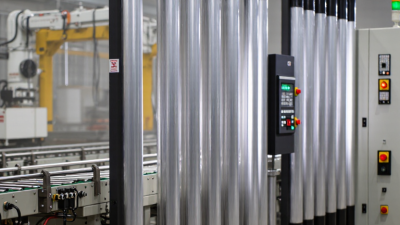
In 2026, safety light grids are available in several practical types. Through-beam grids use separate emitters and receivers. They suit large openings and dusty production areas. Integrated grids place both functions in one housing. Installation is simpler, but alignment can be less forgiving. Single-beam systems detect body entry, while multi-beam systems protect hands, fingers, or smaller access points. Type 2 and Type 4 classifications under IEC 61496 remain important. Type 4 equipment generally provides stronger fault detection for higher-risk machinery.

Modern options also include cascading grids, blanking functions, muting interfaces, and extended sensing ranges. These features support conveyors, pallet transfer stations, robotic cells, and automated storage equipment. The International Federation of Robotics reported 541,302 industrial robot installations worldwide in 2023. That growth increases demand for reliable presence detection. MarketsandMarkets’ 2024 Machine Safety Market report forecasts growth from about USD 5.0 billion in 2024 to USD 7.6 billion by 2029. The figure is useful, though forecasts can shift.

Tips: Match resolution to the hazard, not the budget. Check stopping distance, reach-through risks, ambient light, and cleaning routines. A short-range integrated grid may work well near a press. A long-range through-beam model may perform better around a wide conveyor. In real factories, perfect alignment is not always realistic. Test it during maintenance, not only during commissioning. Always verify the risk assessment against ISO 13849 and IEC 61496 requirements.

How Do Safety Light Grids Compare by Protection and Performance?

Safety light grids differ mainly in resolution, sensing range, response time, and installation flexibility. Finger-resolution grids detect smaller intrusions near hazardous points, but they demand careful alignment and cleaner operating conditions. Hand-resolution models offer broader coverage for presses, conveyors, and automated cells. Multi-beam grids protect access routes, yet they may not detect a person reaching between beams. That gap matters.

Protection depends on the hazard, not only the sensor type. A short stopping distance can make a high-speed machine safer, even when its detection range is modest. Response time, machine stopping time, and safety distance must be measured together. In field installations, vibration, dust, reflective metal, and changing ambient light can reduce reliability. An experienced technician checks these conditions during commissioning, not only on a drawing.

Performance also involves daily operation. A grid with diagnostics can reveal blocked beams, alignment drift, or wiring faults quickly. Blanking functions may improve productivity, but incorrect settings can create hidden access points. Keep them tightly controlled. I have seen systems perform well in testing and struggle after operators moved a guard or changed a conveyor height. That is an uncomfortable reminder: protection is a system result. The grid, controller, guard, reset location, and maintenance routine must work together. Selecting the highest-resolution model may still be poor engineering if it causes frequent nuisance stops or encourages unsafe bypass attempts.

What Factors Determine the Best Safety Light Grid for Your Application?

Choosing the best safety light grid depends on the application, not the catalog headline. A grid protecting a palletizer needs different coverage from one guarding a press. Start with the hazard zone, access direction, stopping distance, and required detection resolution. IEC 61496 defines electro-sensitive protective equipment requirements, while ISO 13849-1 helps engineers evaluate control-system performance. These standards guide selection, but they do not replace a site-specific risk assessment.

Automation is expanding quickly. The International Federation of Robotics reported 541,302 industrial robots installed worldwide in 2023. More robots mean more points where people and moving equipment may interact. For fast machinery, response time and calculated stopping distance are critical. For large openings, sensing height and beam spacing matter more. Check operating range, alignment tolerance, environmental protection, vibration resistance, and resistance to dust or oil. Poor alignment is common. It is often underestimated during commissioning.

The U.S. Bureau of Labor Statistics reported about 2.6 million nonfatal workplace injuries and illnesses in private industry during 2023. That figure reinforces the need for practical guarding, not merely compliant paperwork. Select suitable safety performance levels, controlled muting, cascading options, and clear diagnostics. Test the complete system after installation, including restart behavior and access around the grid. A technically advanced device can still fail as a solution when operators can walk around it. Specifications can mislead. Field conditions decide. Consult the equipment risk assessment, maintenance team, and trained safety professionals before final selection.

2026 Top Safety Light Grid Types: Which One Is Best? — Factors That Determine the Best Safety Light Grid for Your Application
Safety Light Grid Type Typical Detection Resolution Typical Protective Range Typical Response Time Main Strengths Key Limitations Best-Fit Applications Important Selection Factors Overall Suitability
Finger-Detection Light Grid Approximately 14–30 mm, depending on the model and required safety distance. Commonly about 0.2–7 m between the emitter and receiver. Typically 5–25 ms; the exact value depends on beam count, scanning method, and configuration. Provides high sensitivity for detecting fingers and small objects; suitable where access to a hazardous point must be prevented. Requires accurate alignment and a larger safety distance than lower-resolution systems; optical contamination can reduce availability. Presses, small assembly machines, compact automation cells, and point-of-operation guarding. Required resolution, stopping time, minimum object distance, alignment stability, ambient light, and protection against dirt or oil. Best for small openings
Hand-Detection Light Grid Approximately 30–40 mm. Commonly about 0.2–10 m, depending on optical power and environmental conditions. Typically 5–30 ms. Balances protection, sensing range, installation space, and operating cost; widely applicable to machine access points. May not adequately detect a finger entering a hazardous area if the selected resolution is too large. Machine doors, loading stations, robotic cells, conveyors, and material-transfer openings. Whether fingers can reach the hazard, required safety distance, access frequency, restart behavior, and minimum object size. Best general-purpose choice
Body-Detection Light Grid Approximately 50–90 mm. Commonly about 0.5–15 m. Typically 10–40 ms. Suitable for detecting a person entering or passing through a protected zone; usually offers greater operating range and easier installation. May allow a hand or arm to pass between beams; not appropriate for safeguarding small point-of-operation hazards. Large machine entrances, pallet handling areas, robot perimeter access, and personnel passageways. Whole-body access risk, beam spacing, access direction, restart prevention, supplemental guarding, and site layout. Best for personnel access
Multi-Beam Access Guard Usually 2–4 widely spaced beams for body or torso detection. Commonly about 1–20 m, depending on the optical design and installation environment. Typically 10–50 ms. Efficient for large access points; simple status indication and comparatively straightforward mounting. Large beam gaps can permit access by a person or limb; it generally requires careful layout and additional safeguards against reaching around or under the beams. Large press access points, conveyor transfer areas, palletizers, and automated storage interfaces. Number and position of beams, access height, reach-over and reach-under distances, hazardous zone visibility, and reset location. Best only for controlled access
Cascadable or Linked Light Grid System Depends on the connected segments; commonly 14–90 mm per segment. Typically about 0.2–15 m per sensing section. Often 8–50 ms, with additional delay possible from system logic and connected sections. Allows multiple guarding sections to share a coordinated safety circuit; useful for complex machine geometries and modular layouts. System design, diagnostics, and validation are more complex; the complete cascade must be assessed as one safety function. Multi-sided robotic cells, interconnected machines, transfer lines, and applications with several access openings. Total system response time, cascade length, fault detection, wiring architecture, safety controller compatibility, and validation requirements. Best for complex layouts
Muting-Ready Light Grid Usually 30–90 mm, selected according to whether the protected zone must detect hands, bodies, or loads. Commonly about 0.5–15 m. Typically 10–50 ms, excluding the controlled muting sequence. Can temporarily distinguish authorized material movement from human entry when correctly integrated with muting sensors and safety logic. Incorrect muting design can create a serious safety risk; timing, sensor placement, and load dimensions must be validated. Pallet conveyors, packaging lines, warehouse transfer points, and automated material handling. Load size, transport direction, muting sensor arrangement, maximum muting duration, bypass prevention, and safe restart control. Best for material transfer
Outdoor or Harsh-Environment Light Grid Typically 30–90 mm, depending on the required protection level and environmental conditions. Commonly about 3–30 m, subject to weather, optical power, and enclosure design. Typically 10–60 ms. Designed for greater resistance to dust, moisture, vibration, temperature changes, and long sensing distances. Rain, snow, fog, condensation, sunlight, and contamination can cause nuisance trips or reduce detection reliability. Outdoor loading areas, washdown zones, dusty production areas, and large industrial entrances. Ingress protection, operating temperature, sunlight immunity, condensation control, heating requirements, vibration, and maintenance access. Best for demanding environments
Blanking- or Reduced-Resolution Light Grid Varies by active and blanked zones; reduced-resolution areas must be specifically risk-assessed. Commonly about 0.2–15 m. Typically 8–50 ms. Can accommodate fixed machine structures, tooling, or regularly positioned workpieces while retaining protection in active zones. Incorrect blanking can create undetected access paths; changes in tooling or workpiece position may invalidate the safety function. Presses, fixtures, assembly stations, and processes where fixed obstructions interrupt the sensing field. Blanked-zone dimensions, intrusion risk, fixture repeatability, configuration control, change management, and validation testing. Best for specialized installations
The ranges shown are representative industry values rather than universal specifications. Final selection must be verified against the machine risk assessment, required performance level or safety integrity level, stopping time, installation geometry, applicable local regulations, and the complete safety system documentation.

How Should You Select, Install, and Maintain a Safety Light Grid?

Choosing a safety light grid starts with the hazard, not the product name. Measure the opening, stopping distance, and required detection resolution. A fine resolution suits fingers, while wider spacing may suit larger body access. Small details matter. Select a sensing range that remains stable under dust, vibration, and changing light. Check the enclosure rating for the surrounding environment. Confirm response time, restart behavior, and compatibility with the machine’s safety control system. A risk assessment and applicable machinery safety standards should guide every decision.

Installation requires careful alignment. Mount the transmitter and receiver on rigid supports, with no visible gap between beams. Keep reflective surfaces away from the sensing path. Test access from every direction, including underneath and around the sides. Verify that the machine stops within the calculated safety distance. A qualified technician should test the emergency stop circuit and document the results. In practice, rushed alignment causes many avoidable faults. The sensor may appear healthy, yet a slight vibration can interrupt protection.

Maintenance should include cleaning the lenses with a soft, non-abrasive cloth. Inspect brackets, cables, connectors, and indicator lights during scheduled checks. Test beam interruption with a suitable test object, rather than relying only on status lights. Record each test, adjustment, and fault. Dust buildup is easy to underestimate. Replace damaged parts promptly through approved technical channels. Review the setup after tooling changes, because a safe grid can become poorly positioned when the work area evolves.