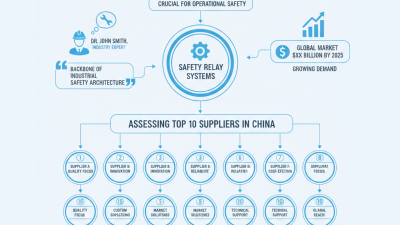
China Top 10 Safety Relais Manufacturers for Global Buyers
Choosing a reliable Safety Relais manufacturer requires more than comparing catalogue prices. Global buyers must examine engineering experience, product consistency, documentation, and practical support. A relay may look compact, yet it can control access guards, emergency stops, light curtains, and two-hand controls. One wiring mistake can create a serious safety gap.
Peter Pilz, founder of Pilz GmbH & Co. KG, stated, “Safety is not a state, but a process.” This principle remains relevant when evaluating China’s leading manufacturers. A capable supplier should explain safety categories, performance levels, diagnostic functions, contact configurations, and expected service life in clear technical language. It should also provide traceable test records, installation guidance, and responsive after-sales communication. Certifications matter. They do not replace engineering judgment.
This guide reviews ten Safety Relais manufacturers serving international buyers. The comparison considers production capability, quality systems, export experience, technical documentation, customization, and application support. Factory photographs and polished brochures can help, but they are not proof alone. Request samples. Check terminal markings. Review response times. Ask how faults are detected during real machine operation.
Some evaluations remain imperfect. Public information can be incomplete, and supplier performance may vary between product families. Buyers should verify current certificates and conduct application-specific risk assessments before ordering. That caution is not a weakness. It is part of responsible sourcing.
The selected companies represent different strengths, including industrial automation expertise, flexible production, competitive pricing, and international service. Together, they offer a practical starting point for engineers, distributors, and machine builders seeking dependable Safety Relais solutions from China.
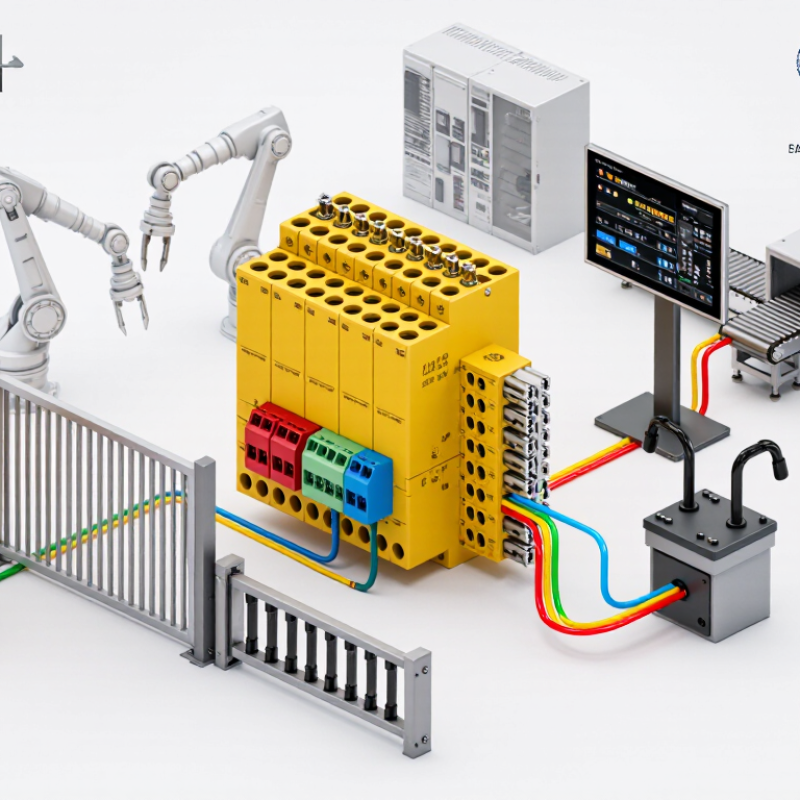
Safety Relay Fundamentals: IEC 61810-1, PL d, SIL 3, and 24 VDC
For global buyers, safety relay selection begins with the application, not a catalog ranking.
IEC 61810-1 defines general requirements and tests for electromechanical relays, including insulation, switching performance, and endurance. It does not automatically prove a complete safety function. That distinction is easy to miss.
PL d under ISO 13849-1 and SIL 3 under IEC 61508 or IEC 62061 describe system performance, not a relay’s marketing label. Achieving either target depends on architecture, diagnostics, fault exclusions, wiring, and the connected devices. A relay may support a high safety level, yet the complete circuit can still fail its assessment. Check the manufacturer’s safety data, including B10D, diagnostic coverage, mission time, and proof-test assumptions.
24 VDC is common in control cabinets because it suits sensors, emergency-stop circuits, and compact power supplies. Measure the real voltage at the relay terminals. Long cables, shared loads, and voltage drops can cause uncertain operation. Also verify contact ratings for the actual load, especially inductive valves or motor contactors. Forced-guided contacts are valuable when feedback monitoring is required, but they do not replace correct wiring.
In practice, I compare certificates, circuit diagrams, and test conditions together.
Specifications can look convincing. A minor omission in reset monitoring may change the whole assessment. I still recheck this point. Reliable purchasing requires technical evidence, not only a stated PL d or SIL 3 claim.
Selection Metrics for China’s Top 10: B10d, MTTFd, and 0.1 s Response
Selecting China’s top ten safety relay manufacturers requires more than comparing prices or product counts. For global buyers, B10d, MTTFd, and response time provide stronger evidence of safety performance. B10d indicates the number of operating cycles before 10% of components may experience dangerous failure. A higher value supports longer service life, but only under stated load and switching conditions.
MTTFd measures the mean time to dangerous failure. It helps engineers evaluate whether a relay can support the required performance level within a complete safety circuit. Ask for calculation methods, test conditions, certificates, and safety manuals. Do not rely on a single number. Wiring, contactor feedback, diagnostics, and maintenance intervals also affect the final result.
The 0.1 second response target equals 100 milliseconds. That figure sounds precise, yet it may exclude sensor filtering, controller logic, output switching, or mechanical release time. Check the complete stop-time chain. Request test data from realistic loads, including inductive motors and emergency-stop devices. A laboratory value may not survive a dusty factory floor. I would also question unclear test boundaries and inconsistent documents. Some comparisons remain imperfect, but transparent evidence is still the most reliable starting point.
China’s Top 10 Safety Relay Manufacturers: Products, Certifications, and Markets
China’s top ten safety relay manufacturers serve machine builders, system integrators, and industrial distributors worldwide. Their product ranges commonly include emergency-stop relays, guard-door monitors, light-curtain interfaces, two-hand control units, and expansion modules. Many models use forcibly guided contacts, redundant circuits, diagnostic LEDs, and 24 V DC control inputs. These details matter on a factory floor, where a failed contact can stop an entire packaging line.
Certification depth varies between manufacturers. Stronger suppliers usually operate under ISO 9001 quality systems and provide test records for IEC 60204-1, ISO 13849-1, IEC 62061, or IEC 61508 applications. Products sold in Europe may carry CE marking, while exports to North America often require UL or CSA recognition. Some manufacturers also support TÜV assessment for safety functions. Buyers should check the certificate scope, model number, and current revision. A certificate alone is not enough.
Their main markets include automotive assembly, warehouse automation, food processing, elevators, robotics, and general machinery. Export teams commonly provide wiring diagrams, response-time data, failure-rate calculations, and samples for panel testing. I have seen product pages with impressive claims but limited diagnostic evidence. That gap deserves attention. Enclosure quality, terminal strength, relay lifespan, and after-sales engineering can differ widely. One practical test is simple: install the relay with the intended safety controller, then verify every fault condition before shipment.
China Safety Relay Manufacturers: Standards Shaping Global Buyer Requirements
This chart compares the publication years of major international standards commonly referenced when evaluating safety relays, safety control systems, machinery protection, and functional safety compliance. Newer editions generally reflect updated risk-assessment, performance-level, and safety-integrity requirements for global industrial markets.
References: ISO 12100:2010, ISO 13849-1:2023, IEC 60204-1:2016, IEC 62061:2021, and IEC 61508-1:2010.
Supplier Verification: ISO 9001, IEC 61508, Traceability, and Export Support
When comparing China’s top 10 safety relay manufacturers, supplier verification should begin with evidence, not rankings. ISO 9001 certification is useful only when its scope covers relay design, assembly, and testing. Check the certificate number, issuing body, validity date, and factory address. A copied PDF proves little.
IEC 61508 documentation deserves closer review. Ask whether certification applies to the complete safety relay or only selected components. Request safety integrity level data, failure-rate assumptions, validation reports, and production test procedures. The answers should match the technical datasheet. Small differences matter. A missing revision number can create confusion during approval or maintenance.
Traceability should reach the production line. Reliable suppliers can link a relay’s serial number to its batch, test results, component records, and operator station. Request a sample traceability report before placing a large order. I once focused too heavily on certificates and overlooked weak record retrieval. That was a practical mistake. Export support also needs testing. Confirm commercial invoices, packing lists, export labels, documentation language, and shipment terms. Ask how the supplier handles damaged cartons, replacement units, and technical questions across time zones. Clear answers, consistent records, and willingness to disclose limitations usually reveal more than a polished sales presentation.