2026 Top Safety Relay Manufacturers for Global Buyers?
Choosing a Safety Relay manufacturer in 2026 requires more than comparing catalog prices. Global buyers need dependable switching, clear diagnostics, stable supply, and documented technical support. A relay inside a control cabinet may protect an emergency-stop circuit, guard switch, or two-hand control. Small design differences can affect machine downtime and operator safety.
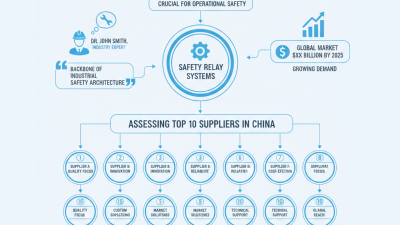
This guide reviews leading Safety Relay manufacturers through practical buyer criteria. These include product quality, application experience, certification evidence, response time, lifecycle support, and international distribution. It also considers modular designs, dual-channel monitoring, fault detection, reset functions, and compatibility with modern safety controllers. Factory testing and traceable documentation matter greatly. So does support after installation.
No ranking is perfect. Market availability changes.
Some manufacturers excel in engineering but offer limited regional service. Others provide broad distribution but less flexible customization. Buyers should verify current certificates, technical datasheets, warranty terms, and local support before placing orders. Independent validation remains important, especially for machinery used in demanding production environments.
The strongest suppliers usually demonstrate consistent manufacturing controls and long-term product stability. They explain limitations clearly instead of promising universal compatibility. That honesty deserves attention. A reliable comparison should also examine lead times, replacement planning, software tools, and training resources. This approach helps procurement teams reduce technical uncertainty and select manufacturers suited to their machines, industries, and operating regions.

What Is a Safety Relay and How Does It Protect Machinery?
What Is a Safety Relay and How Does It Protect Machinery?
A safety relay monitors emergency stops, guard switches, light curtains, and two-hand controls. When a dangerous signal appears, it removes power from hazardous motion through redundant switching channels. Its internal monitoring also detects welded contacts, broken wiring, and timing differences. The machine should stop safely.
The risk is substantial. The International Labour Organization reported about 2.93 million work-related deaths and 395 million non-fatal injuries worldwide in 2023. These figures do not describe safety relays directly, but they show why dependable machine protection matters. In practice, a properly selected relay supports the control architecture required by ISO 13849-1 and IEC 60204-1. However, installation quality remains decisive. A certified component cannot correct poor wiring, incorrect reset logic, or an untested stopping distance.
Look beyond the product label. Check the required Performance Level, input compatibility, response time, contact arrangement, diagnostic coverage, and environmental rating. A dusty packaging line needs different protection from a clean automated cell. Test the complete safety function, not only the relay. That step is often missed.
Reports from the European Agency for Safety and Health at Work also emphasize risk assessment and worker involvement, reminding buyers that hardware alone cannot manage every hazard. I have seen specifications focus heavily on switching capacity while ignoring restart behavior. That is a costly blind spot. A dependable safety relay should make dangerous movement stop, stay stopped, and restart only after a deliberate, verified action.
Which Standards Govern Safety Relay Design and Certification?
Safety relay design is governed by several standards, not one universal rule. IEC 61508 addresses functional safety across a product’s lifecycle. It examines failure rates, diagnostic coverage, and safe failure behavior. For machinery, ISO 13849-1 evaluates performance levels, from PL a to PL e. IEC 62061 uses safety integrity concepts for machine control systems. These standards influence circuit architecture, monitoring, redundancy, and fault response.
IEC 60204-1 covers electrical equipment on machinery, including emergency stops and control circuits. ISO 14119 becomes relevant when safety relays connect with interlocking devices. IEC 60947-5-1 also affects control-circuit components and switching performance. Certification normally requires documented testing by a competent conformity assessment body. The assessment may include dielectric strength, thermal endurance, contact reliability, electromagnetic compatibility, and single-fault behavior. Regional requirements can differ.
The difficult part is interpretation. A certificate may cover a specific model, wiring method, or operating condition. It may not validate the complete machine. Buyers should review the certificate scope, safety manual, calculated mission time, and required proof-test interval. Ask for traceable test records. Check the relay under real voltage, temperature, and load conditions. Small details matter, such as welded-contact detection and reset monitoring. Standards guide the design, but installation errors can still defeat a well-tested device. That uncomfortable gap deserves more attention.
Leading Safety Relay Manufacturers for Global Buyers in 2026
Leading Safety Relay Manufacturers for Global Buyers in 2026
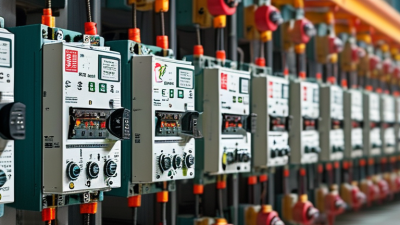
In 2026, leading safety relay manufacturers serve factories, machine builders, and automated warehouses worldwide. Their strongest products combine dependable switching with clear diagnostic feedback. Buyers should examine contact ratings, response time, reset functions, and performance under vibration. Small details matter. A relay cabinet may face dust, heat, oil mist, or frequent emergency stops.
Experienced manufacturers provide traceable testing records and practical technical support. Look for documented safety ratings, operating temperature ranges, insulation data, and production quality controls. International buyers also need stable export packaging, clear wiring diagrams, and replacement availability. A well-designed relay should fit existing control panels without forcing expensive modifications.
Price alone is a weak guide. I have seen low quotations become costly after unclear specifications caused installation delays. That lesson still deserves attention. Ask suppliers for sample units, lifecycle test results, and realistic delivery schedules. Check whether their engineers can explain fault detection in plain language. Regional compliance requirements may differ, so independent verification remains valuable. Some manufacturers communicate impressively but offer limited after-sales help. That gap can appear only after a machine stops. Feedback from integrators, maintenance teams, and long-term users often reveals more than polished catalog pages.
How to Evaluate Safety Relay Manufacturers and Product Options
When evaluating safety relay manufacturers for 2026 projects, begin with evidence, not catalog claims. The International Federation of Robotics reported 541,302 industrial robots installed worldwide in 2023. This expanding automation base increases demand for dependable emergency-stop, guard-door, and light-curtain control. Ask manufacturers to provide IEC 61508 and ISO 13849 documentation, including safety integrity data, diagnostic coverage, and mission-time assumptions.
Check how the relay performs in your cabinet. Review response time, contact configuration, reset logic, short-circuit protection, and compatibility with sensors and contactors. A compact relay may suit a single guard door, while modular systems offer better expansion for multi-zone machinery. Request lifecycle testing records and failure-rate calculations. Demand proof. Also examine terminal access, labeling, replacement procedures, and technical support across your operating region.
The International Labour Organization estimates nearly three million work-related deaths occur annually, including those linked to hazardous workplace conditions. That figure makes supplier reliability more than a purchasing concern. Assess production traceability, quality audits, cybersecurity controls for connected models, and spare-part availability. A low purchase price can hide expensive validation work. I would still question laboratory results tested under ideal conditions. Ask for application references, independent certificates, and a witnessed functional test using your actual voltage, load, wiring, and restart sequence. Test it cold.