Lidar Laser technology is moving from laboratory demonstrations into vehicles, robots, surveying equipment, and industrial safety systems. China has become a significant manufacturing base, supported by strong optical engineering, semiconductor supply chains, and large domestic mobility markets. According to Yole Group’s 2024 automotive lidar analysis, the automotive lidar market is expected to expand substantially through 2029, driven by advanced driver-assistance systems and automated driving programs. The report also highlights continuing pressure on cost, reliability, and integration.
This guide examines ten leading Chinese Lidar Laser manufacturers for global buyers. It considers product maturity, wavelength options, ranging performance, scanning architecture, production capability, certifications, and after-sales support. Companies such as Hesai, RoboSense, Livox, Seyond, Benewake, and other specialist suppliers represent different technical approaches. Some focus on automotive perception. Others serve mapping, robotics, security, or industrial measurement. Small details matter, including connector protection, thermal control, calibration records, and software documentation.
Independent market research should support every purchasing decision. MarketsandMarkets and IDTechEx both identify lidar as a growing sensing segment, while also noting challenges involving pricing, standardization, and commercial deployment. A ranking is never perfectly neutral. Product specifications can change quickly, and public data may not reveal factory yield or long-term field performance. Therefore, this list is a practical starting point, not a final verdict. Buyers should request samples, review IEC 60825-1 laser safety evidence, verify ISO 26262 or relevant quality processes, and test units under rain, dust, vibration, and strong sunlight. Performance must survive real roads, not only a polished datasheet.
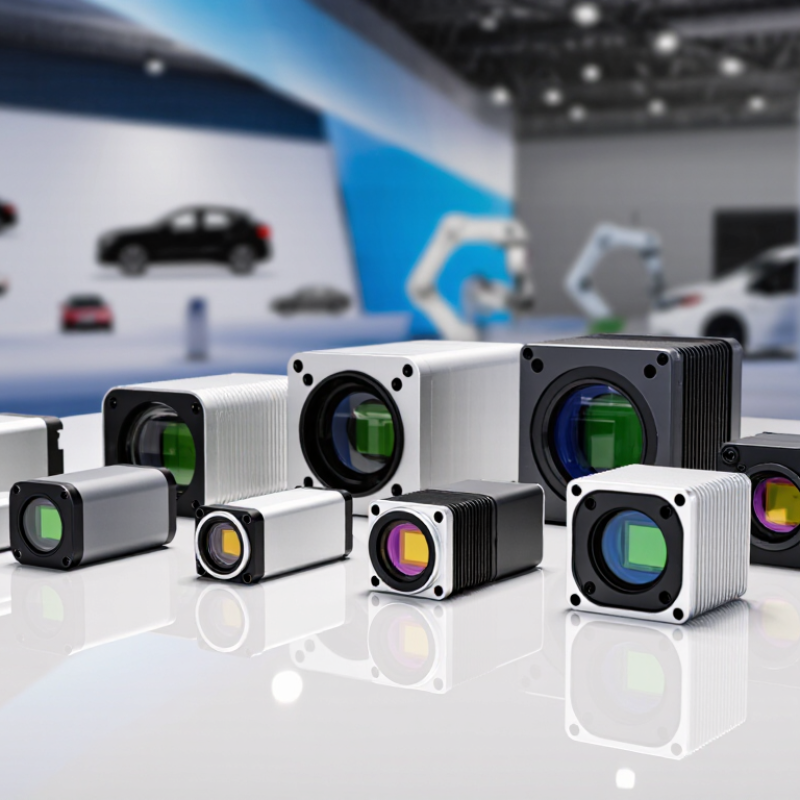
Lidar laser manufacturers produce more than laser emitters. They build complete sensing chains. These may include laser diodes, optical drivers, scanning modules, receivers, timing circuits, and calibration software. Some suppliers also develop compact solid-state units for vehicles, mapping equipment, robots, and industrial inspection systems.
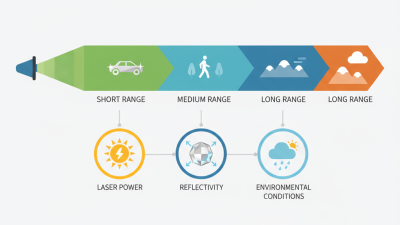
The laser source controls range, resolution, and energy use. A 905-nanometer design may support cost-sensitive applications, while a 1550-nanometer design can enable higher pulse energy under suitable safety controls. The choice is not simple. Weather, surface reflectivity, heat, vibration, and operating distance can change field results. A specification sheet rarely shows the whole picture.
Reliable manufacturers document production tolerances and test each critical module. They may use thermal cycling, vibration checks, optical alignment tests, and aging inspections. Traceable records matter when buyers need stable performance across thousands of units. Compliance with relevant laser safety and electromagnetic standards also reduces deployment risk. Ask for test methods, not only certificates.
Small details matter. A loose connector can distort timing. Dust can weaken a return signal. Poor calibration can create false confidence. In practical evaluations, point density often receives too much attention. Signal stability may matter more. Even experienced buyers can misjudge total ownership costs when software updates, replacement optics, and field calibration are excluded. Manufacturers that explain these limitations clearly are easier to assess and more dependable for long-term cooperation.

Evaluating China’s top lidar laser manufacturers requires more than comparing advertised range or resolution. Global buyers should inspect the engineering evidence behind each specification. Ask for measured data, not showroom claims. A reliable supplier provides test conditions, wavelength options, pulse energy, beam divergence, and temperature limits. I would request raw performance records from indoor and outdoor trials. Rain, dust, reflective metal, and dark fabric can change results sharply. This is where attractive brochures often become less convincing.
Manufacturing depth is another practical test. Review optical assembly methods, calibration equipment, component traceability, and process controls. A factory visit can reveal whether clean work areas and inspection steps match written procedures. Production samples should show stable output across repeated batches. Buyers should also examine laser safety documentation and conformity files for destination markets. These documents need current versions, clear test standards, and responsible signatories. Missing paperwork is not a minor inconvenience. It can delay integration and weaken accountability.
Long-term service deserves equal attention. Request failure-rate data, repair timelines, firmware policies, and spare-part availability. A pilot order can test packaging, delivery accuracy, technical support, and response speed. Keep acceptance criteria measurable, such as range accuracy within a stated tolerance. Cost still matters, but the lowest quotation may hide calibration labor or short component life. I have seen evaluation plans overvalue peak distance. That is a useful warning. Real deployment needs repeatability, not a single impressive reading. A checklist can still miss field problems, so record every deviation before approving the next batch.
China’s leading lidar laser manufacturers serve different technical needs rather than one universal market. One specializes in 905 nm edge-emitting lasers for automotive ranging systems. Another develops 1550 nm fiber-laser sources, supporting longer detection distances and stricter eye-safety targets. A third focuses on compact VCSEL arrays for short-range sensing, robotics, and industrial equipment.
Several manufacturers build high-power pulsed laser modules with customized wavelengths, pulse widths, and repetition rates. One profile stands out for wafer-level packaging, which can reduce assembly size and improve production consistency. Another combines laser chips with driver circuits, helping buyers simplify system integration. A specialist in optical testing supplies calibrated components and records temperature, output power, and beam divergence during inspection. Details matter.
The remaining manufacturers emphasize different strengths. One operates automated assembly lines for stable volume production. Another offers rapid engineering samples before full-scale orders. A precision-focused supplier develops narrow-beam emitters for mapping and surveying applications. One company serves research laboratories with flexible specifications and small batches. The final profile concentrates on reliability testing, including vibration, thermal cycling, and extended operating trials.
Buyer feedback suggests that documentation quality can matter as much as quoted power. Datasheets may not always explain measurement conditions clearly. That deserves attention. Experienced procurement teams should request test reports, sample history, warranty terms, and production traceability. Independent verification remains wise, especially when performance claims differ between laboratory and field environments. Some suppliers appear technically strong but need clearer communication about lead times and after-sales support.
China Top 10 Lidar Laser Manufacturers for Global Buyers
Key Differences in Technologies, Applications, and Production Strengths
China’s top ten lidar laser manufacturers differ more than their product photos suggest. Some focus on 905 nm time-of-flight systems, while others develop 1550 nm units with higher eye-safety margins and longer detection ranges. Mechanical scanning can provide broad coverage, but it may add moving parts. Solid-state and MEMS designs reduce that burden. Flash lidar captures dense scenes quickly, although its range and resolution may require careful evaluation.
Applications shape the engineering choices. Automotive buyers usually examine point-cloud stability, heat management, vibration resistance, and software integration. Robotics customers may value compact size and low power consumption instead. Surveying projects often need centimeter-level accuracy, clear calibration records, and reliable performance under dust or rain. Ports, warehouses, and industrial sites may prioritize wide coverage over maximum range. The best specification is not always the best fit.
Production strength also separates serious suppliers from promising ones. Look for optical alignment equipment, automated calibration lines, environmental chambers, and traceable quality records. A large factory can support stable volume, but scale alone proves little. Ask for batch consistency data, failure-rate definitions, and sample test conditions. Some published ranges appear impressive because they use ideal targets and clean air. Real roads are less polite. Independent validation, local compliance checks, and field trials remain essential before a global purchase. An honest supplier should explain known limits, not hide them.
| No. | Anonymous Manufacturer Profile | Core Lidar Technology | Common Wavelength | Typical Technical Positioning | Primary Applications | Production Strengths | Best Fit for Global Buyers |
|---|---|---|---|---|---|---|---|
| 1 | Automotive Long-Range Specialist | Scanning solid-state or hybrid solid-state lidar with multi-return point-cloud processing | 905 nm | Long-range forward detection, high angular resolution, and vehicle-grade environmental monitoring | Highway pilot systems, autonomous shuttles, advanced driver-assistance systems, and vehicle perception | Strong emphasis on automotive validation, automated alignment, optical calibration, and end-of-line testing | Vehicle manufacturers and Tier-1 suppliers seeking scalable automotive integration |
| 2 | High-Volume MEMS Platform Builder | MEMS scanning lidar using a compact laser transmitter, receiving optics, and electronic beam steering | 905 nm | Compact package, balanced range, moderate power consumption, and broad field-of-view options | Passenger vehicles, delivery robots, smart-road systems, and industrial mobile equipment | Suitable for automated assembly, common optical components, modular product families, and cost control | Buyers prioritizing integration size, repeatable supply, and competitive unit economics |
| 3 | 1550 nm Fiber-Laser Specialist | Fiber-laser-based scanning lidar with sensitive receivers and high optical-power management | 1550 nm | High-power long-range sensing, strong performance on low-reflectivity targets, and extended detection capability | Premium autonomous vehicles, mining vehicles, long-range security, and infrastructure monitoring | Greater focus on laser-source consistency, thermal management, receiver sensitivity, and optical safety testing | Projects where detection distance and difficult-target performance are more important than minimum cost |
| 4 | Solid-State Flash Lidar Producer | Flash lidar using an array transmitter and wide-area receiver without mechanical scanning components | 940 nm 905 nm | Fast snapshot capture, high reliability potential, and limited moving-part maintenance requirements | Robotics, short-range vehicle perception, warehouse automation, cabin monitoring, and smart appliances | Efficient panel-level or batch optical assembly, compact electronics integration, and simplified mechanical design | Short- and medium-range applications requiring low maintenance and rapid scene capture |
| 5 | Industrial 3D Measurement Specialist | Precision time-of-flight lidar with configurable scanning rates, multi-echo detection, and industrial interfaces | 905 nm | Stable ranging, repeatable point-cloud output, configurable scan patterns, and reliable target recognition | Factory automation, port equipment, logistics systems, safety barriers, and process measurement | Mature calibration procedures, rugged enclosure assembly, connector customization, and application engineering | Industrial integrators needing dependable interfaces, field support, and customized configurations |
| 6 | Robotics and AMR Sensor Supplier | Compact 2D and 3D scanning lidar with configurable horizontal coverage and real-time obstacle detection | 905 nm | High refresh rate, near-field awareness, low latency, and optimized indoor or semi-outdoor operation | Autonomous mobile robots, service robots, forklifts, cleaning robots, and warehouse navigation | Flexible small- and medium-batch manufacturing, software configuration, rapid customization, and connector options | Robotics companies requiring fast development cycles and multiple form factors |
| 7 | Mapping and Survey Lidar Manufacturer | High-resolution scanning lidar integrated with inertial, positioning, and geospatial data workflows | 905 nm 1550 nm | Dense point clouds, multi-return capability, broad coverage, and compatibility with post-processing software | Topographic surveying, corridor mapping, forestry, construction inspection, and mobile mapping | Strong system integration, calibration documentation, field-testing capability, and accessory development | Surveying firms and engineering contractors purchasing complete sensing systems rather than modules only |
| 8 | Cost-Optimized 2D Lidar Producer | Rotating or scanning 2D time-of-flight lidar with configurable detection zones and digital outputs | 905 nm | Practical planar measurement, predictable indoor ranging, and straightforward integration | Factory safety, AGV navigation, level detection, people counting, and building automation | High component commonality, simplified assembly, standardized housings, and efficient volume production | OEMs seeking a reliable, economical sensor for large deployment volumes |
| 9 | Rugged Outdoor Detection Supplier | Weather-resistant scanning lidar with adaptive filtering, multi-echo processing, and outdoor target tracking | 905 nm | Improved operation in rain, dust, sunlight, and changing outdoor backgrounds | Perimeter security, intelligent transportation, traffic monitoring, construction sites, and energy facilities | Focus on sealed enclosures, thermal design, environmental testing, vibration resistance, and long-term field stability | Infrastructure operators requiring outdoor reliability and customized detection zones |
| 10 | Research and Custom-Integration Manufacturer | Configurable combinations of mechanical scanning, MEMS, flash, and experimental solid-state architectures | 905 nm 940 nm 1550 nm | Broad customization range, prototype flexibility, adjustable field of view, and application-specific interfaces | University research, defense-related testing, robotics development, smart-city pilots, and specialized inspection | Strong engineering responsiveness, prototype fabrication, algorithm adaptation, and low-to-medium-volume customization | Buyers needing a tailored design, proof-of-concept unit, or specialized integration support |
Global buyers should assess a lidar manufacturer through measured evidence, not polished demonstrations. The 2024 MarketsandMarkets report estimates the global lidar market will grow from about USD 1.4 billion in 2024 to USD 3.1 billion by 2029. That expansion increases supplier choices, but also raises quality risks. Request test data for range, accuracy, angular resolution, frame rate, latency, and point-cloud consistency. Ask whether measurements were taken under sunlight, rain, dust, dark surfaces, and low-reflectivity targets.
A serious manufacturer should provide traceable calibration records and repeatability results from independent laboratories. Check compliance with IEC 60825-1 for laser safety, relevant electromagnetic compatibility requirements, and ISO 9001 quality procedures.
Automotive buyers should also examine evidence related to ISO 26262, IATF 16949, and ISO/SAE 21434 when applicable. These certificates do not prove product performance. They only show that defined processes exist.
That distinction matters.
Yole Group’s 2024 lidar analysis highlights falling sensor prices and stronger competition across automotive and industrial applications. Buyers should therefore compare total ownership cost, not only the unit quotation. Review software update policies, spare-part availability, failure analysis, warranty limits, and production capacity.
A factory visit can reveal calibration stations, environmental testing, and serial-number traceability. Still, one visit is not enough.
I would require pilot batches and acceptance testing before committing to volume orders. A bright showroom sample may hide unstable performance in fog, heat, or heavy traffic.
Manufacturers should disclose weak points clearly; buyers should treat vague answers as measurable risk.