Leave Your Message

How to Choose the Right Lidar Range in 2026?

Choosing the right Lidar Range in 2026 is not a simple race toward the longest specification. A warehouse robot may need reliable coverage across ten metres, while an autonomous vehicle may require much greater visibility. The correct choice depends on speed, target size, surface reflectivity, weather, mounting height, and processing capacity. More distance is not always better. It can increase cost, power consumption, and unnecessary data.

Real-world testing matters more than a product sheet. A sensor advertised for 200 metres may detect a large white target at that distance, yet struggle with a dark roadside object. Rain, fog, dust, glass, and sunlight can reduce useful performance. Engineers should compare detection range, accuracy, field of view, scan frequency, and minimum range together. Keep the target visible. Measure it repeatedly.

A practical evaluation begins with the actual scene. Mark distances on a test road or warehouse floor, then observe performance during daytime, darkness, and changing weather. Record missed detections and unstable measurements. The results may challenge the original plan. That is useful. A shorter-range unit with cleaner data may outperform a longer-range model in dense environments. Conversely, high-speed systems may need additional range for reaction time, not merely mapping. Trusted manufacturers should provide test conditions, limitations, and calibration guidance. Independent validation remains essential, because no specification can represent every installation. Choose a Lidar Range that supports the complete system, not just an impressive number.
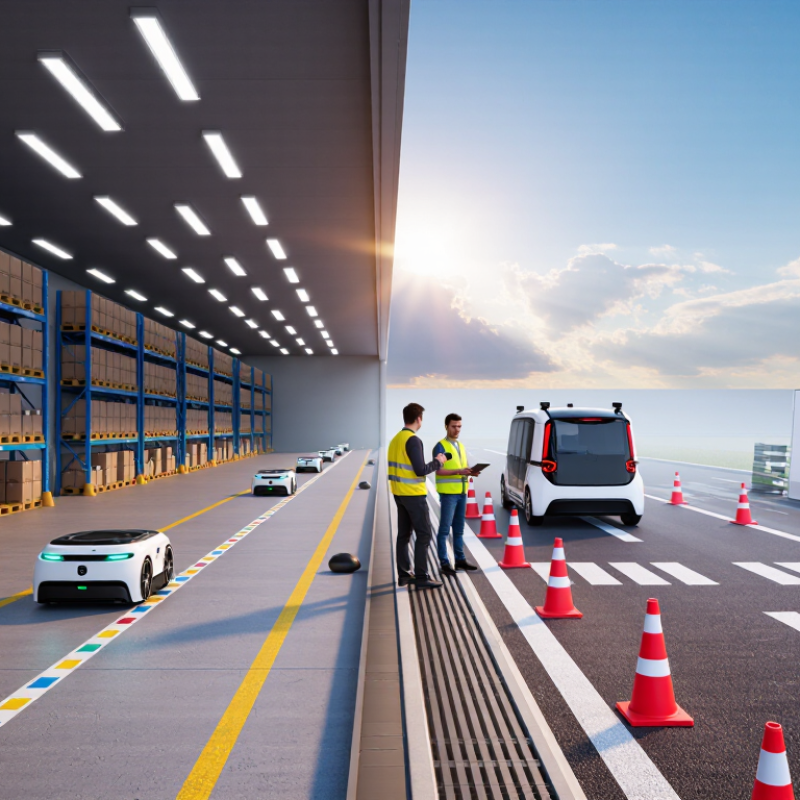
How to Choose the Right Lidar Range in 2026?

Define Lidar Range and Its Role in Real-World Performance

How to Choose the Right Lidar Range in 2026?

Lidar range means the distance at which a sensor can detect and measure an object reliably. It is not simply the farthest point shown on a specification sheet. Real performance depends on target reflectivity, object size, surface angle, and atmospheric conditions. A white road sign may return a strong signal, while dark clothing can become difficult much sooner. Small targets are harder to confirm.

Range affects more than visibility. It influences braking distance, mapping detail, navigation confidence, and the time available for decisions. In field tests, rain, dust, fog, and direct sunlight can reduce effective range. A sensor rated for 200 meters may deliver less useful data at a wet intersection. Resolution also matters. Detecting a distant object is different from measuring its shape accurately.

Choose a range that matches the real operating scene, not an ideal laboratory target. Review detection probability, point density, update rate, and performance across common surfaces. Installation height and mounting angle deserve careful testing. I have learned that range claims need context. A neat chart can hide uncertain edges. Test at night, during glare, and near reflective barriers. Keep the results. They may challenge your first choice.
Match Detection Distance to Your Environment and Application

How to Choose the Right Lidar Range in 2026?

Match Detection Distance to Your Environment and Application

Lidar range should match the scene, not the product specification alone. A warehouse robot may need only 15 meters for aisle navigation. Outdoor mapping vehicles may require 100 meters or more. Measure the farthest useful object, then add a practical margin for movement and alignment errors.

Surface quality changes detection distance. White walls and road signs usually return stronger signals than dark fabric, wet asphalt, or thin branches. Fog, rain, dust, and direct sunlight can also reduce reliable performance. During field testing, place targets at different distances and textures. Record missed detections, unstable points, and delayed readings.

My first estimate was too optimistic.

A sensor rated for 120 meters may not deliver stable data at that distance. A safer choice might be 80 meters in a bright, dusty environment. For indoor inspection, excessive range can add unnecessary data and processing demand. For security monitoring, a shorter range may miss critical movement near the boundary.

Check range under real operating conditions, not only in a controlled room. Test the intended mounting height, viewing angle, target colors, and weather exposure. Keep a margin for seasonal changes, but question every extra meter. More distance is not always better.

Compare Accuracy, Resolution, Field of View, and Scanning Speed

Choosing the right lidar range starts with the scene, not the longest specification. A roadside survey may need long detection distance, while indoor mapping often benefits from shorter, denser measurements. Accuracy matters when measuring pole positions, wall edges, or road grades. However, maximum range can fall in rain, dust, dark surfaces, or direct sunlight. Test the sensor in real conditions.

Resolution describes how closely points appear across a target. Higher resolution reveals narrow cables, curb edges, and small surface changes. It may also produce larger files and require more processing power. Field of view controls coverage. A wide view captures surrounding objects, but it can reduce detail at a fixed scanning rate. A narrow view concentrates measurements on a selected area.

Scanning speed affects motion performance. Fast scanning helps capture moving vehicles or handheld movement with less distortion. Slower scanning can improve point density and surface detail. These choices are connected. Increasing range, field of view, and speed together may weaken practical resolution. That is easy to overlook. In one deployment, a long-range setting looked impressive on paper but missed dark objects near the ground. The better choice came from field tests, overlap checks, and repeated measurements. Compare results at the distance you actually need. Leave room for weather, vibration, and imperfect alignment. Perfect specifications rarely survive real work.

Evaluate Weather, Reflectivity, Safety, and Operating Conditions

How to Choose the Right Lidar Range in 2026?

Evaluate Weather, Reflectivity, Safety, and Operating Conditions

In 2026, lidar range should match the scene, not simply the longest number on a specification sheet. Weather is the first practical filter. Rain, fog, dust, and wet snow can weaken returns or create scattered points. Test at dawn, after rainfall, and under headlights, because clean indoor trials can mislead. Record missed objects at several distances.

Reflectivity changes the usable range. Bright road signs may return strong signals, while dark clothing, matte paint, or wet asphalt may not. Place targets with different surface colors at 30, 60, and 100 meters. Compare detection consistency, not one impressive scan. Repeat the test. Small errors become important near moving equipment, narrow lanes, or blind corners.

Safety needs more than detection distance. Leave stopping distance for vehicle speed, sensor latency, processing time, and sudden obstacles. Mounting height, vibration, temperature, and power stability can also affect performance during long shifts. Use published test conditions, then verify them on the actual route. Independent measurements, maintenance logs, and documented safety margins make the choice more reliable. A common mistake is trusting clear-weather results too much. A range that fails twice in fog may be more honest than one that succeeds once in sunshine. That limitation deserves attention before deployment.

Balance Range Requirements Against Cost, Power, and Integration Needs

Choosing the right lidar range in 2026 starts with the driving scene, not a product brochure. Measure the distance needed for safe detection, tracking, and braking. Urban streets may require 80 to 120 meters. Faster roads can demand more. However, maximum range often increases sensor cost, power use, thermal load, and data volume. A long-range unit may also need stronger computing hardware and careful vehicle integration.

Tips: Map real routes before selecting a sensor. Record object distances at dawn, noon, night, and in rain. Leave practical margin, but do not buy excessive range without evidence. Check mounting space, network bandwidth, processing capacity, and cleaning access. Small integration details matter.

In field testing, I have seen teams focus on detection distance while overlooking power budgets. That mistake can create heat near sealed electronics and complicate installation. A sensor with moderate range may perform better when its data arrives reliably and calibration stays stable. Consider resolution at the target distance, not only the headline range. A bicycle at 100 meters needs different detail than a large vehicle. The first estimate is often wrong. Revisit it after collecting real measurements. Cost should include wiring, computing, software tuning, maintenance, and possible redesigns. Power savings can also simplify cooling and extend system life. Still, lower range is not automatically wiser. Poor visibility, road curvature, and unexpected obstacles may justify extra reach. A balanced choice connects range with the entire system.