
Choosing the right China Grating Support supplier requires more than comparing unit prices. It requires evidence, engineering judgment, and careful factory verification. China remains a major metal manufacturing base. The World Steel Association reported approximately 1.019 billion tonnes of crude steel production in China during 2023. This capacity can support competitive sourcing, but it does not guarantee consistent grating quality.
A reliable supplier should explain its material grades, load calculations, welding process, and surface treatment clearly. Ask for mill certificates, dimensional inspection records, and traceable batch numbers. The supplier should also understand standards such as EN ISO 14122-2 for access platforms and walkways. Project requirements may demand additional specifications, including ASTM, DIN, or customer-approved drawings. Small details matter. Check hole spacing, bearing-bar alignment, support angles, and coating thickness. These features affect installation and long-term safety.
The World Bank’s Commodity Markets Outlook and industry steel data also show how raw-material prices can change quickly. A supplier that offers an unusually low quotation may be reducing material thickness, inspection steps, or corrosion protection. That risk is easy to miss. Factory audits, sample approval, and third-party inspection can reduce uncertainty before shipment. However, no checklist is perfect. I have seen technically attractive quotations fail because communication was vague and revisions were poorly controlled. The best China Grating Support supplier combines production capability with documented quality systems, responsive engineering support, and honest limitations. Judge the process, not only the product.

Before choosing a China grating support supplier, define the working conditions precisely. Record the platform length, grating type, bearing-bar direction, support span, and required load. Include pedestrian, maintenance, rolling, and impact loads. A practical mistake is specifying only “standard steel supports.” That phrase hides critical details.
The U.S. Bureau of Labor Statistics reported 885 fatal workplace falls, slips, and trips in 2023. Your support design therefore needs more than a low purchase price. State the required safety factor, deflection limit, surface treatment, and drainage conditions. Coastal sites may require hot-dip galvanizing or stainless steel. Chemical areas need compatibility evidence, not assumptions. Provide drawings with hole positions, tolerances, weld details, and installation clearances. Small errors matter.
Ask suppliers for material certificates, dimensional inspection records, coating-thickness results, load calculations, and project references. ISO 14122-2 provides requirements for working platforms and walkways, while ISO 1461 covers hot-dip galvanized coatings. These standards help create measurable specifications. Request a sample or pre-production inspection. It may slow procurement. It can prevent expensive rework. The 2024 Global Construction Perspectives report highlights continuing pressure on infrastructure delivery and productivity, but speed should not replace verification. Specify packaging, labeling, corrosion protection, delivery milestones, and corrective-action procedures. Leave room for review. Requirements sometimes change after engineers inspect the site.
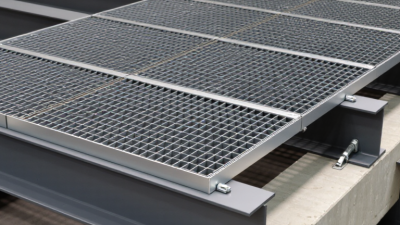
| Requirement Category | Requirement to Define | Recommended Specification or Selection Benchmark | Information to Request from the Supplier | Priority |
|---|---|---|---|---|
| Application | Installation environment | Indoor, outdoor, coastal, chemical-processing, wastewater, or high-humidity service conditions should be identified before material selection. | Ask for material recommendations, environmental suitability data, and examples of comparable service conditions. | High |
| Load Capacity | Design load and span | Define the uniformly distributed load, concentrated load, clear span, support spacing, and expected deflection limit. Industrial walkways commonly require engineering verification rather than a standard panel selection. | Request load tables, structural calculations, allowable deflection criteria, and stamped drawings when required by the project. | High |
| Dimensions | Panel size and tolerances | Confirm length, width, thickness, bearing bar depth, cross-bar spacing, cut-outs, edge bands, and acceptable dimensional tolerances. | Request a dimensioned drawing, tolerance statement, cutting schedule, and sample inspection report. | High |
| Surface Design | Grating surface type | Choose smooth or serrated bearing bars according to slip risk, drainage needs, cleaning requirements, and pedestrian traffic conditions. | Request surface drawings, anti-slip test information where applicable, and product samples. | High |
| Material | Base material | Common options include carbon steel, stainless steel, and fiber-reinforced plastic. The choice should reflect load, corrosion exposure, temperature, fire requirements, and maintenance expectations. | Request material grade, chemical composition or certificate, temperature limitations, and compatibility information. | High |
| Corrosion Protection | Finish and coating system | For steel products, hot-dip galvanizing is widely used for corrosion protection. Coating requirements should specify preparation, coating thickness, repair method, and inspection standard. | Request coating process details, measured coating thickness records, visual inspection criteria, and repair procedures. | High |
| Safety | Personnel and fall-through protection | Define opening size, toe-board requirements, handrail interfaces, stair-nosing details, and any site-specific safety regulations. | Request safety drawings, opening-size data, edge-detail drawings, and evidence of compliance with the applicable project standard. | High |
| Fabrication | Welding and assembly quality | Welds should be continuous or intermittent as specified by the design, free from visible defects, and suitable for the selected material and service environment. | Ask for welding procedures, welder qualifications, inspection methods, and nonconformance-control procedures. | High |
| Accessories | Fasteners and fixing systems | Select clips, bolts, clamps, or welded fixing details according to removability, vibration, theft risk, corrosion exposure, and maintenance access. | Request fixing drawings, fastener material grades, torque requirements, installation instructions, and a complete accessory list. | Medium |
| Standards | Applicable codes and specifications | Identify the governing structural, material, welding, galvanizing, fire, and safety standards before quotation and production. | Ask the supplier to list every standard used for design, manufacturing, testing, coating, marking, and documentation. | High |
| Quality Control | Inspection and traceability | Quality control should cover raw materials, dimensions, welds, surface finish, coating, load-related features, packaging, and final quantity. | Request inspection and test plans, batch traceability records, inspection reports, photographs, and nonconformance records when applicable. | High |
| Documentation | Technical submittal package | A complete package normally includes drawings, material certificates, coating records, installation instructions, packing lists, and inspection documentation. | Confirm document format, approval workflow, revision control, language, and submission schedule before placing the order. | Medium |
| Logistics | Packaging and delivery | Packaging should prevent bending, abrasion, moisture damage, and loss of small accessories during international transport. | Request packing specifications, shipping marks, loading photographs, estimated production lead time, and delivery terms. | Medium |
| Commercial | Quotation comparability | Compare suppliers using the same quantities, specifications, accessories, inspection requirements, packaging terms, delivery terms, and warranty conditions. | Require a line-item quotation with exclusions, assumptions, tooling charges, payment terms, validity period, and warranty scope. | High |
| Supplier Capability | Production and engineering capacity | The supplier should demonstrate suitable fabrication equipment, engineering support, quality personnel, production capacity, and experience with customized grating support systems. | Request facility information, process flow, capacity statement, relevant project references without confidential details, and quality-management certifications. | High |
| After-Sales Support | Installation and issue resolution | Clear communication channels, installation guidance, replacement-part availability, and a documented claim process reduce project risk. | Confirm response times, technical support scope, spare-parts policy, warranty procedure, and responsibilities for installation-related issues. | Medium |
Choosing a China grating support supplier requires more than comparing quotations. A qualified supplier should show legal registration, stable production capacity, and documented quality procedures. Ask for material certificates, welding records, dimensional inspection reports, and traceable batch numbers. These documents reveal whether quality is controlled or merely promised.
Experience matters. A supplier familiar with industrial platforms, walkways, and drainage projects can identify practical risks before production. Review its engineering capability through drawings, load calculations, and connection details. The team should understand steel grades, surface treatments, tolerances, and site conditions. Request a sample or a small trial order. Inspect flatness, weld penetration, bearing bars, and cut edges instead of judging appearance alone. A capable factory should explain its testing equipment and calibration schedule clearly. Visit the workshop if possible, and compare the stated process with actual operations. A polished showroom is not proof.
Reliable suppliers communicate realistic lead times and disclose production limits early. They should provide packaging plans, shipping documents, installation guidance, and responsive after-sales support. Check references from comparable projects, but verify them independently. One overlooked detail can delay an entire platform. Examine how the supplier handles a rejected piece or design change. The answer may be less impressive than the catalog, yet it shows accountability. No supplier is perfect, and rushed audits can miss hidden weaknesses. Keep written specifications, inspection points, and approval records throughout the order.
Material choice should match the installation environment, not only the purchase price. Carbon steel offers strong load capacity for industrial platforms and heavy grating. Stainless steel suits wet areas, chemical exposure, and frequent washing. Aluminum is lighter, but it may need careful design around higher loads. Hot-dip galvanizing can improve steel corrosion resistance when the coating is uniform.
Ask for material certificates, coating thickness records, and batch traceability. Material certificates matter.
Manufacturing standards reveal how consistently a supplier works. Request drawings showing dimensions, hole positions, weld sizes, and allowable tolerances. A reliable factory should explain which standards guide steel grades, welding, galvanizing, and inspection.
ISO 9001 certification can support process control, but it does not replace product testing. Check whether workers inspect weld penetration, sharp edges, surface defects, and fit-up accuracy. Small deviations can create difficult installation problems.
Product quality needs evidence from samples, not polished photographs. Ask for load-test reports, dimensional inspection records, and corrosion-control procedures. Compare a sample’s cut edges, weld appearance, bolt alignment, and coating coverage.
I once saw a support piece with a neat surface but poor hole alignment. It looked acceptable until installation began. That detail changed the evaluation.
Supplier communication also matters. Clear replies, realistic lead times, and honest limits usually indicate stronger reliability. If answers remain vague, keep questioning the specification.
Choosing the best China grating support supplier requires more than comparing catalog prices. In practical sourcing work, check what the quotation includes: material grade, surface treatment, tooling, packaging, and inspection. A low unit price can hide expensive mold charges or weak corrosion protection. Ask for a complete cost breakdown. Request samples. Measure hole spacing, load-bearing parts, and weld quality before approval. Small details matter.
Customization should be documented, not promised casually. Share drawings with tolerances, installation photos, and expected load conditions. A capable engineering team should confirm changes in writing and explain their limits. This is where judgment matters. Some suppliers accept every request, yet their production notes remain vague. That is a warning. Confirm prototype fees, revision rules, and whether final parts match the approved sample. I have seen attractive designs fail because drainage and access were overlooked.
Delivery performance depends on more than an estimated shipping date. Ask about production lead time, inspection points, export packing, and replacement procedures. Weekly progress photos can reveal delays before they become costly. Support should continue after arrival. Clear installation guidance, spare-part availability, and responsive technical answers reduce downtime. Still, no supplier is perfect. Build buffer time into the schedule. Verify claims through records, references, and a small initial order, rather than trusting confident language alone.
Ask for a live production audit, not only a polished video. Check cutting, welding, galvanizing, packing, and storage areas. Records should match what your eyes see. Review material certificates, calibration logs, worker procedures, and recent inspection reports. Measure finished supports against approved drawings. Look for uneven weld beads, sharp edges, missing holes, or trapped moisture. Small defects can create expensive installation delays. An audit has limits, so keep independent inspection in your plan.
Request samples before approving a large order. Use the same drawings, steel grade, coating requirements, and tolerances planned for production. Test the sample’s dimensions, hole alignment, weld quality, surface finish, and installation fit. If possible, assemble it with the actual grating and fasteners. Photograph each inspection point and record measurements. A sample can pass while later batches change. That possibility deserves attention.
A clear contract should define drawings, materials, tolerances, coating thickness, packaging, delivery dates, inspection rights, and corrective actions. State who pays for rework, replacement, or additional testing. Link final payment to documented approval, not promises. Include production-change notification requirements. Avoid vague terms such as “high quality.” They create arguments later. A practical contract protects both sides, although it cannot replace communication. Keep written records when specifications change. Suppliers that answer technical questions precisely are easier to evaluate and manage.