Leave Your Message
-
Phone
-
E-mail
Choosing the China best Safety Light Grid for machine safety requires more than comparing prices or sensing ranges. The right device must protect workers, communicate clearly with control systems, and perform reliably in demanding production environments. A packaging line may face oil mist, vibration, dust, frequent access, and rapid cycling. Each condition can influence detection stability and maintenance needs.
In practical machine assessments, engineers examine resolution, protective height, response time, operating distance, IP rating, and safety output design. They also review installation alignment, restart control, muting functions, and compatibility with the machine’s safety relay or controller. A dependable Safety Light Grid should support a documented risk assessment rather than replace one. Standards and certification records matter, but paperwork alone cannot prove performance on a real production floor. That assumption can fail.
Chinese manufacturers now offer many light curtain solutions for presses, conveyors, robotic cells, and automated assembly equipment. Some provide strong customization, technical documentation, factory testing, and responsive support. Others may appear attractive while leaving unclear information about testing methods, replacement parts, or long-term reliability. Careful buyers should request sample data, wiring diagrams, validation records, and field references. Ask difficult questions.
This guide compares the practical factors behind a safer selection. It considers sensing performance, integration, durability, supplier expertise, and total ownership cost. The “best” option is not always the most advanced model. It is the one that fits the hazard, works consistently, and can be verified by qualified professionals. Even experienced teams should revisit their assumptions before commissioning equipment. Mistakes can hide in ordinary details, such as poor alignment or an overlooked restart condition.
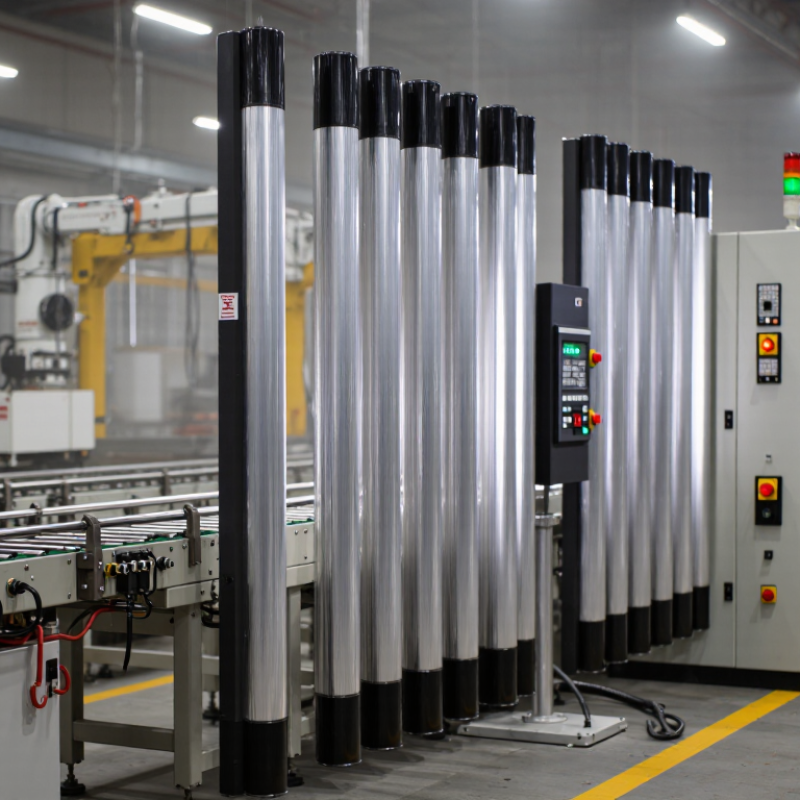
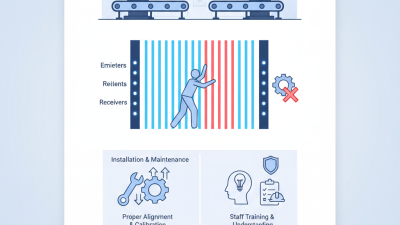
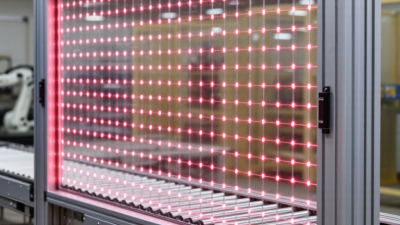
A safety light grid is an optoelectronic protective device for machinery. It uses aligned transmitters and receivers to create several invisible infrared beams. When a hand, arm, or object breaks the protected field, the control circuit sends a stop signal to the machine. The hazardous movement should stop before a person reaches the danger point.
In practical machine commissioning, correct distance matters as much as sensor quality. The grid must be installed far enough from the hazard to allow stopping time. Its resolution should match the smallest body part that could enter the area. A safety relay, suitable control system, and monitored reset button can help prevent unexpected restarting. Regular testing is essential. Dust, vibration, poor alignment, or reflective surfaces may reduce reliability.
A light grid is not magic. It cannot protect workers if someone can walk around it or reach behind it. Designers should assess access routes, stopping performance, maintenance tasks, and foreseeable misuse. Transparent guarding or additional protective devices may be necessary. China-based machinery projects should also verify applicable safety standards and inspection requirements before selection. One detail is often underestimated: operators need clear fault indicators and practical cleaning access. If maintenance is difficult, inspections may gradually become less frequent. That is a weakness worth admitting and correcting.
| Data Dimension | Typical or Standard-Based Data | How It Supports Machine Safety |
|---|---|---|
| Operating Principle | An emitter projects multiple infrared beams toward a receiver. An interruption in the protected field generates a safety stop signal. | Detects access to hazardous areas without requiring physical contact with the machine. |
| Common Safety Function | Presence detection, access guarding, point-of-operation protection, and perimeter protection. | Prevents or stops hazardous motion when a person enters the monitored zone. |
| Typical Detection Resolutions | Approximately 14 mm for finger detection, 20–30 mm for hand detection, and 40 mm for body or access detection. The actual selection depends on the risk assessment. | A smaller resolution detects smaller body parts, while a larger resolution is generally used for access protection. |
| Protected Height | Common product configurations cover roughly 150 mm to 1,800 mm or more, depending on the machine opening and required coverage. | Allows the light grid to match openings of presses, conveyors, robotic cells, and automated production equipment. |
| Sensing Range | Typical industrial sensing distances range from a few metres to more than 10 metres; the permissible distance depends on the optical design and installation conditions. | Supports both compact machine guarding and wider access-point protection. |
| Response Time | Usually measured in milliseconds and specified by the manufacturer for each model and protected height. | The response time is used with machine stopping time to calculate the required minimum safety distance. |
| Minimum Safety Distance | Calculated from detection resolution, approach speed, light-grid response time, control-system response time, and machine stopping time. | Ensures the machine stops before an operator can reach the hazard. |
| Safety Outputs | Common arrangements include dual-channel solid-state safety outputs or safety relay interfaces, subject to the device design. | Enables integration with safety relays, safety controllers, emergency-stop circuits, and machine control systems. |
| Typical Safety Performance | Industrial applications commonly specify Performance Level e or Safety Integrity Level 3 when supported by the complete safety system and validated installation. | Provides a framework for reducing the probability of dangerous control-system failure. |
| Relevant Safety Standards | ISO 13849-1, IEC 62061, IEC 61496, ISO 13855, and ISO 12100 are commonly referenced for design, performance, positioning, and risk assessment. | Helps engineers select, install, validate, and maintain the safety function correctly. |
| Reset Function | Manual reset is commonly used when the protected area cannot be fully observed from the reset location; automatic reset may be suitable only where the risk assessment permits it. | Reduces the risk of unexpected restarting after the light field is cleared. |
| Muting Capability | Optional muting can temporarily bypass detection for controlled material transfer when suitable sensors, timing, and safeguards are used. | Maintains production flow while preventing unauthorized human access to the hazard. |
| Environmental Protection | The enclosure rating must be selected for the environment; IP65 or higher is commonly considered for dusty or wet industrial areas, subject to the application requirements. | Helps protect optical and electronic components from dust, water, and industrial contamination. |
| Installation Requirements | The emitter and receiver must be aligned, securely mounted, protected from bypassing, and positioned according to the calculated safety distance. | Correct installation prevents blind spots, nuisance trips, and unsafe access around the protected field. |
| Main Advantages | Non-contact detection, fast response, improved operator visibility, flexible access protection, and compatibility with automated equipment. | Provides machine safeguarding while preserving access for loading, unloading, inspection, and material handling. |
Note: Actual performance, dimensions, detection resolution, response time, enclosure rating, and safety category must be confirmed from the selected device documentation and validated through a complete machine risk assessment.