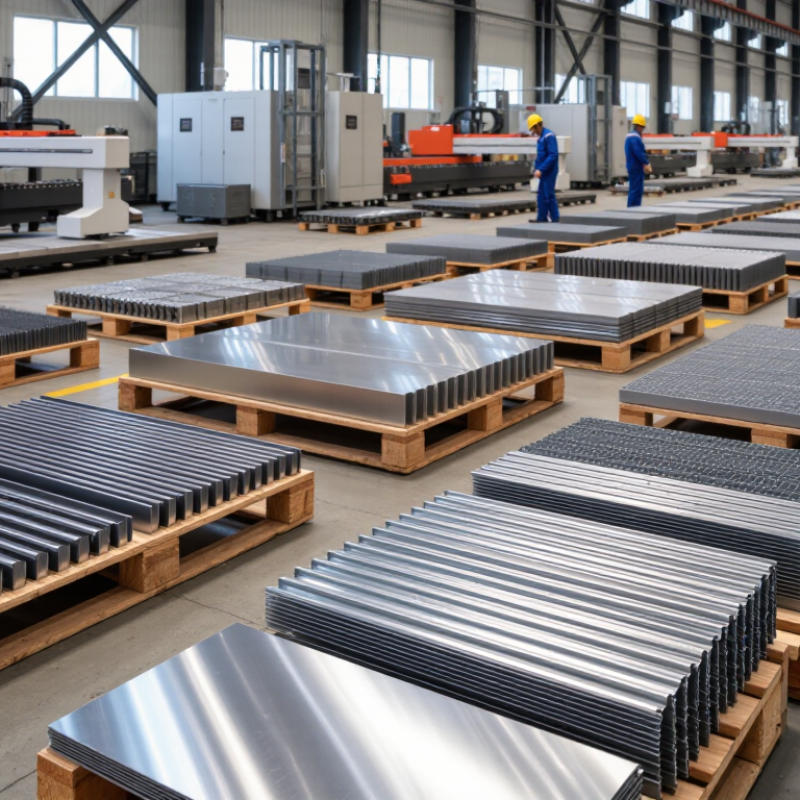
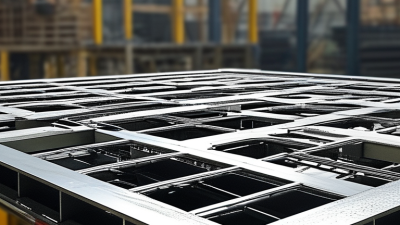
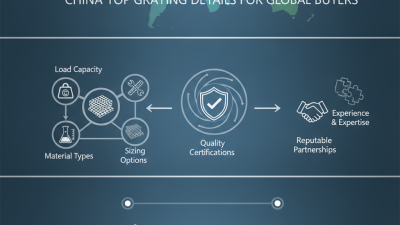
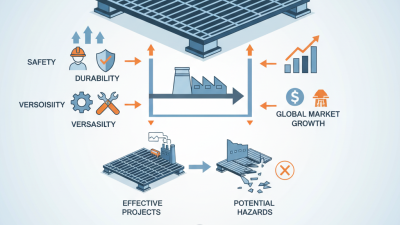
China has become a major sourcing center for industrial grating, with manufacturers serving construction, energy, wastewater, mining, and marine projects. This guide introduces China’s top Grating Products manufacturers and suppliers through practical buying criteria. It considers product quality, manufacturing experience, technical support, and export reliability. Details matter.
Steel bar spacing, panel dimensions, surface treatment, and load capacity directly affect site performance. Common options include welded steel grating, press-locked grating, stair treads, trench covers, and aluminum grating. Galvanized finishes can help resist moisture, while stainless steel suits demanding chemical environments. Buyers should verify material grades, welding methods, tolerances, and documented test results before placing an order.
A dependable supplier should provide clear drawings, samples, inspection records, and traceable production information. Factory photographs are useful, but independent inspections offer stronger evidence. Certifications may support credibility, yet they should match the actual product and project requirements. No supplier is perfect. Some catalogs simplify technical details, and delivery promises may change during busy production periods. Careful communication remains essential.
This overview will compare supplier capabilities, customization options, minimum order policies, packaging methods, and after-sales service. It will also consider whether a company supports international standards and project-specific calculations. Real project conditions can expose weaknesses that brochures never mention. That is why experienced buyers examine both polished documentation and small manufacturing details, such as weld consistency, cut-edge protection, and pallet stability during transport.
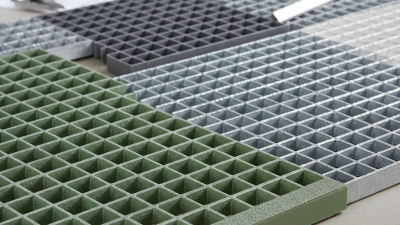
Grating products are open-grid panels designed for safe walking, working, drainage, and ventilation. They commonly use steel, aluminum, or fiberglass-reinforced plastic. Their flat bearing bars and crossbars create a strong surface with open spaces.
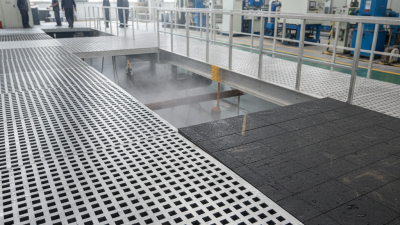
Factories use grating for platforms, stairs, mezzanines, maintenance walkways, and machine-access areas. Water treatment plants often install it around tanks and channels. Construction sites may use trench covers and temporary access panels. Offshore and chemical facilities usually need corrosion-resistant options. A good selection considers load capacity, span, surface finish, opening size, and local working conditions. There is no universal best grating. That detail is easy to miss.
Tips: Check the support direction before installation. Confirm the panel’s rated load, not only its appearance. Choose serrated surfaces where moisture or oil may reduce traction. Inspect welds, clips, and edges during routine maintenance. Small gaps can create real hazards. Measurements should be verified on site, because drawings are sometimes imperfect. For coastal or chemically exposed areas, compare material resistance with the actual environment. Fiberglass grating can resist corrosion well, but it still requires suitable fixing hardware. Steel may offer higher strength, yet poor coating maintenance can shorten its service life. Experienced suppliers should provide clear specifications, testing information, and installation guidance rather than vague performance claims.
China’s grating manufacturers commonly produce welded steel grating for platforms, walkways, drainage covers, and industrial stairs. Load-bearing bars are welded to cross bars, creating a rigid panel with reliable weight distribution. Galvanized surfaces help resist rain, moisture, and outdoor corrosion. Black steel versions are also available for projects with later coating requirements.
Press-locked grating uses deep slots to join the bearing bars and cross bars without welding at every intersection. It offers a clean appearance and accurate spacing. Swage-locked grating uses twisted or pressed cross bars, often with aluminum or stainless steel materials. These options suit lightweight platforms, ventilation areas, and architectural walkways. Riveted grating is another choice for heavy traffic, where stronger cross-bar connections may be useful.
Manufacturers also make stair treads, trench covers, ceiling grilles, and removable access panels. Each product needs a suitable bar size, opening pattern, surface finish, and support span. Serrated bars can improve grip in oily or wet areas. Smooth bars are easier to clean but may provide less traction. A neat appearance can mislead. During technical reviews, buyers should check load tables, welding quality, zinc thickness, dimensional tolerance, and material certificates. One weakness remains common: choosing by price alone can cause deflection, corrosion, or difficult installation later. Clear drawings and actual site conditions matter.
China’s grating manufacturers commonly use carbon steel, stainless steel, aluminum, and fiber-reinforced plastic. Carbon steel suits platforms, walkways, and drainage covers. Aluminum reduces weight in coastal or elevated installations. FRP resists corrosion near chemicals, saltwater, and persistent moisture.
Material selection must match load, span, temperature, and exposure. The World Steel Association reported China produced about 1.019 billion tonnes of crude steel in 2023. This scale supports a broad supply chain, but volume does not guarantee consistent grating quality. Buyers should request mill certificates, chemical composition, yield strength, and batch traceability.
ISO 1461 specifies hot-dip galvanized coating requirements, while ASTM A123 covers zinc coatings on iron and steel products. Local projects may also require GB standards, so one certificate rarely proves full compliance.
Manufacturing usually includes bar cutting, cross-bar placement, resistance welding, surface treatment, and dimensional inspection. Serrated bearing bars improve grip, especially where oil or rain collects. Weld spacing must remain uniform; uneven joints can create visible weakness under repeated loading. Suppliers with documented inspections should provide load tables, welding records, coating thickness results, and packaging photographs. Worldsteel’s 2024 data also showed China remained the largest crude steel producer, reinforcing its manufacturing capacity. Still, buyers sometimes confuse capacity with engineering experience. That assumption needs review. Traceability matters. Brands are less important than verifiable processes, calibrated equipment, and a clear response to nonconforming products.
How to Evaluate Chinese Grating Manufacturers and Suppliers
A reliable evaluation starts with evidence, not catalog photographs. In 2024, the World Steel Association reported China’s crude steel production at approximately 1.0 billion tonnes. This indicates strong material availability, but it does not prove grating quality. Ask suppliers to identify steel grades, loading standards, weld methods, and surface treatments for every quotation. Request mill certificates, dimensional inspection records, and coating test results. Samples should match the proposed production process, not receive special treatment.
Quality systems deserve careful checking. The ISO Survey 2023 recorded more than 1.26 million ISO 9001 certificates worldwide. Certification helps screen suppliers, but it cannot replace an on-site audit. Check whether procedures cover incoming steel, welding, galvanizing, packing, and corrective actions. Visit the factory if possible. Watch a batch being welded. Compare actual bar spacing with drawings. Small gaps can create major installation problems.
Supply reliability also needs measurable proof. Review production capacity, equipment maintenance, lead times, export experience, and traceability from heat number to final pallet. Ask for recent inspection reports from independent testing agencies. Confirm packaging for humid sea routes, especially when galvanized surfaces may be scratched. Payment terms matter too, but the cheapest quotation can hide thinner bearing bars or weaker welds. I would keep a written scorecard, although my first version was too focused on price. That mistake is easy to repeat.
| Evaluation Dimension | What to Verify | Relevant Technical Reference or Typical Requirement | Recommended Evidence | Evaluation Focus |
|---|---|---|---|---|
| Product Type | Confirm whether the supplier manufactures welded steel grating, press-locked grating, swage-locked grating, stair treads, trench covers, or removable access panels. | The product structure should match the intended use, span, loading condition, and installation method. | Product drawings, section details, technical datasheets, and representative samples. | Select suppliers with proven experience in the exact grating type required. |
| Load-Bearing Design | Check bearing-bar size, spacing, panel span, concentrated load, uniformly distributed load, and deflection limits. | Common bearing-bar heights include approximately 20–100 mm, while thicknesses often range from about 3–10 mm; final dimensions must be calculated for the project. | Stamped load tables, structural calculations, finite-element analysis where applicable, and test reports. | Do not compare prices before confirming the same span, load class, bar dimensions, and deflection criteria. |
| Opening and Pitch | Verify bearing-bar pitch, cross-bar pitch, clear opening, and orientation of the load-bearing bars. | Frequently specified pitches include 30 or 40 mm bearing-bar pitch and 50, 76, or 100 mm cross-bar pitch, subject to the applicable design standard and application. | Dimensioned drawings, inspection records, and sample measurements. | Smaller openings may be needed where tools, debris, or pedestrian footwear must not pass through. |
| Material Grade | Confirm the steel, stainless steel, or aluminum grade and its mechanical and chemical requirements. | Carbon-steel grating may use grades such as Q235 or Q355 under Chinese specifications; stainless-steel products commonly use grades such as 304 or 316. The specified grade must be confirmed in the purchase contract. | Mill test certificates, heat numbers, material traceability records, and independent laboratory verification when required. | Avoid accepting generic terms such as “mild steel” without a defined grade and certificate requirement. |
| Welding Quality | Assess weld penetration, weld size, weld spacing, alignment, distortion, and repair procedures. | Welds should be continuous or spaced according to the approved grating design and should be free from visible cracks, lack of fusion, excessive spatter, and unacceptable undercut. | Welding procedure specifications, welder qualifications, visual inspection reports, and non-destructive testing records when specified. | Consistent welding quality is especially important for heavy-duty platforms, vehicle areas, and safety-critical installations. |
| Surface Protection | Identify whether the product is hot-dip galvanized, painted, powder coated, stainless steel, or supplied untreated. | Hot-dip galvanizing should be specified to an applicable standard such as ISO 1461 or ASTM A123/A123M, with coating requirements agreed for the steel thickness and service environment. | Coating-thickness measurements, galvanizing records, surface-finish inspection reports, and photographs before packing. | The coating system should reflect exposure to moisture, salt, chemicals, abrasion, and operating temperature. |
| Dimensional Accuracy | Check panel length, width, squareness, flatness, bearing-bar alignment, end cuts, and tolerance control. | Tolerances should be defined by the selected grating standard, approved drawing, and installation requirements rather than by an informal supplier promise. | Inspection and test plan, calibrated measuring tools, dimensional inspection reports, and pre-shipment inspection records. | Accurate dimensions reduce field cutting, installation delays, and unnecessary material waste. |
| Safety Features | Review anti-slip surfaces, nosing on stair treads, edge protection, toe plates, fixing clips, and access-panel security. | Walkway and stair designs should be assessed against the project safety specification and relevant standards, including EN ISO 14122-2 and EN ISO 14122-3 where applicable. | Safety drawings, slip-resistance information, installation instructions, and application references. | Prioritize pedestrian safety, drainage, emergency access, and prevention of panel movement. |
| Customization Capability | Determine whether the supplier can provide cut-outs, mitered corners, removable panels, kick plates, ladders, supports, and special shapes. | Fabrication should follow approved shop drawings and preserve the required load-bearing-bar direction and edge strength. | Sample shop drawings, revision-control records, prototypes, and inspection photographs. | Evaluate engineering communication and drawing approval discipline, not only manufacturing capacity. |
| Quality Management | Review incoming-material control, production inspection, nonconformance handling, calibration, and final release procedures. | An ISO 9001-certified quality management system can support process consistency, but certification does not replace product-specific inspection. | Valid certificates, audit reports, quality manual extracts, corrective-action records, and batch inspection documents. | Check whether the certificate scope and issuing body can be verified independently. |
| Testing and Inspection | Confirm the inspection level, sampling plan, test methods, and acceptance criteria before production. | Typical checks include material verification, dimensions, weld appearance, load performance where required, and coating thickness. | Third-party inspection reports, factory acceptance test records, calibrated equipment certificates, and retained samples. | Use independent inspection for high-value, safety-critical, or technically complex orders. |
| Production Capacity | Assess available welding or press-locking lines, fabrication area, raw-material storage, workforce, and subcontracting dependence. | Capacity should be evaluated against the required quantity, panel sizes, customization level, and delivery schedule. | Factory audit, production schedule, equipment list, capacity statement, and recent anonymized quality records. | A large stated capacity is meaningful only when supported by equipment, personnel, and quality controls. |
| Packaging and Logistics | Check bundling, separators, lifting points, moisture protection, container loading, marking, and document control. | Galvanized surfaces should be protected from damage and prolonged trapped moisture during storage and transport. | Packing specifications, loading plans, shipping marks, photographs, and a complete packing list. | Proper packaging helps prevent deformation, coating damage, corrosion staining, and identification errors. |
| Commercial Terms | Compare quotation basis, currency, payment terms, tooling charges, packaging costs, inspection costs, taxes, and freight assumptions. | Use a clearly defined Incoterm, such as FOB, CIF, or DAP, with the named place and version stated in the contract. | Formal quotation, proforma invoice, contract, cost breakdown, and approved technical attachment. | Compare total delivered cost rather than unit price alone. |
| After-Sales Support | Evaluate response time, replacement policy, technical support, warranty coverage, and handling of nonconforming goods. | Warranty duration and remedies should be written clearly, including exclusions for improper storage, installation, or misuse. | Warranty terms, corrective-action procedure, service contacts, and records of resolved claims with sensitive details removed. | Prefer suppliers that provide documented corrective actions and practical installation support. |

Note: Dimensions, load ratings, materials, coatings, tolerances, and inspection criteria should be finalized in project drawings and the purchase contract after review by the responsible engineer.
Grating products support safe access in factories, water-treatment plants, offshore platforms, warehouses, and public infrastructure. Grand View Research estimated the global FRP grating market at about USD 547 million in 2023, with continued growth through 2030. This reflects demand for corrosion resistance and lighter installation. Steel remains practical where heavy loads, impact, or high temperatures dominate. Aluminum suits applications requiring lower weight.
Purchasing should begin with load calculations, not appearance. Confirm span, bearing bars, panel dimensions, surface finish, and deflection limits. Wet areas may require serrated surfaces for better slip resistance. Chemical sites need resin and coating compatibility. Check operating temperatures carefully. A supplier should provide test reports, tolerances, material certificates, and traceable quality records. The American Society of Civil Engineers emphasizes documented design assumptions in structural work; grating selection deserves the same discipline. Some buyers still compare only unit prices. That is a costly blind spot.
Tips: Ask for a load table and installation drawing. Inspect one sample before bulk purchasing. Compare total cost, including cutting, supports, transport, and replacement. Review applicable standards, such as ASTM, ISO, or local building requirements. Do not assume identical-looking panels perform identically. Real projects often reveal small gaps between drawings and site conditions. Allow a measured adjustment.