Top Tips for Choosing a Safe Infrared Sensor for Your Needs?
When selecting a Safe Infrared Sensor for your needs, the options can be overwhelming. It's crucial to understand their various features and potential applications. A reliable sensor ensures safety and efficiency in various environments.
Consider your specific requirements, as not all sensors are created equal. Some may offer advanced features, while others prioritize basic functionality. Your choice could impact performance, safety, and cost. Many factors must be assessed, including range, sensitivity, and application.
Research plays a vital role in making an informed decision. Seek expert opinions and user reviews. Engaging with professionals can reveal insights that are not immediately apparent. A Safe Infrared Sensor is an investment in security and efficiency, which should not be taken lightly. Reflect on current trends and innovations in the field to stay ahead.
Understanding Infrared Sensors: Types and Applications
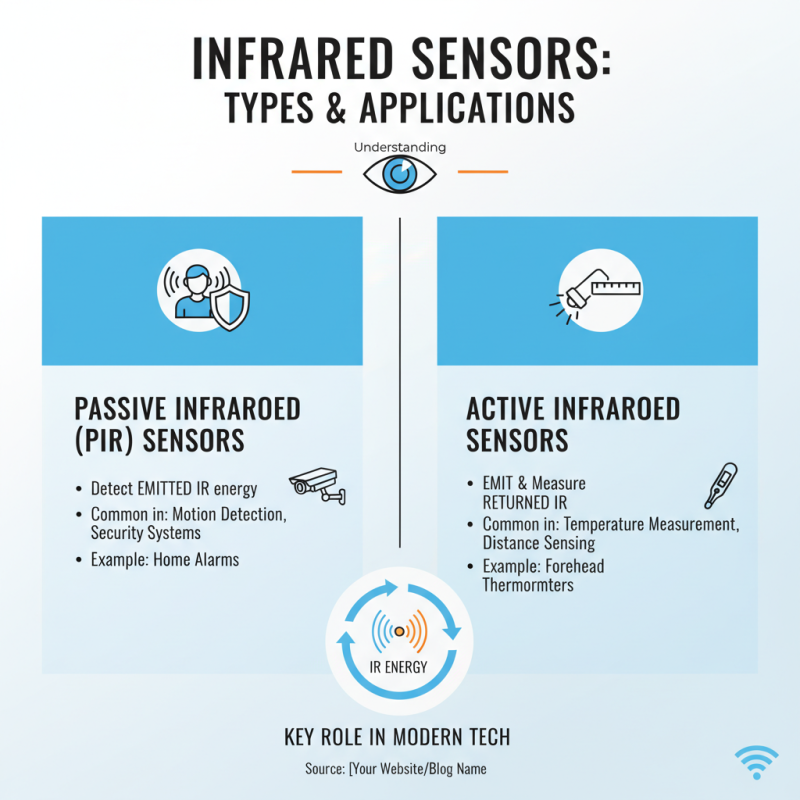
Infrared sensors play a crucial role in various applications, from motion detection to temperature measurement. They come in different types, each suited for specific tasks. Understanding these types is essential for effective use. Passive Infrared Sensors (PIR) are common in security systems. They detect infrared energy emitted by objects, like humans. Active infrared sensors, on the other hand, can emit energy and measure returns.
Choosing the right sensor involves knowing your needs. Evaluate the environment where the sensor will operate. Factors like temperature, humidity, and distance matter. Ensure the sensor can handle these conditions. For outdoor applications, look for weather-resistant models.
Don’t ignore the sensor's range and sensitivity. A sensor too sensitive can lead to false alarms. Conversely, one that is not sensitive enough might miss important movements. Test various options to find a suitable balance. Remember, sometimes the less obvious choice could best meet your requirements. Reflect on user reviews and industry standards to guide your decision-making process.
Key Features to Look for in a Safe Infrared Sensor
When selecting a safe infrared sensor, key features play a vital role. Begin with detection range. A sensor with a wide detection range can capture more data and respond to various situations. Consider the angle of detection as well. A broader angle ensures better coverage, which is crucial for safety applications.
Next, look for sensitivity settings. Adjustable sensitivity allows the sensor to operate effectively in different environments. Some environments may have backgrounds that trigger false alarms. Sensitivity settings help mitigate this issue and improve accuracy. Also, check for the sensor’s response time. A faster response can make a difference in critical safety scenarios.
Another element to consider is the built-in safety features. Built-in redundancy can enhance reliability, especially in high-stake applications. Ensure the infrared sensor has failsafe mechanisms. This adds a layer of security to prevent accidents. Lastly, read user reviews. They often highlight real-world performance and potential issues. This can help pinpoint the best choices for your specific needs.
Evaluating Sensor Specifications for Your Specific Needs
When selecting an infrared sensor, understanding its specifications is crucial. Look for parameters that fit your specific application. Key metrics include response time, sensing range, and sensitivity. For instance, a report from the International Journal of Electronics states that sensors with a response time of less than 100 milliseconds can enhance performance in motion detection.
Consider the environmental conditions where the sensor will operate. Sensors need to perform well in various temperatures and humidity levels. Data from the Sensors & Actuators journal indicates that some infrared sensors can function effectively in extreme conditions, while others may fail. Be clear about your operational environment.
Tip: Always check the manufacturer's documentation for detailed specifications. This includes data sheets that outline critical performance metrics. Additionally, gather firsthand feedback from users. Their experiences can guide you toward reliable products.
It’s important to weigh pros and cons. Some sensors may offer high sensitivity but suffer from noise issues. Others might excel in specific ranges but lack versatility. Understanding these trade-offs will help you make an informed choice.
Top Tips for Choosing a Safe Infrared Sensor for Your Needs
This bar chart illustrates key specifications for infrared sensors, including speed, detection range, temperature range, response time, and voltage. These metrics are crucial for selecting a safe infrared sensor tailored to your specific applications.
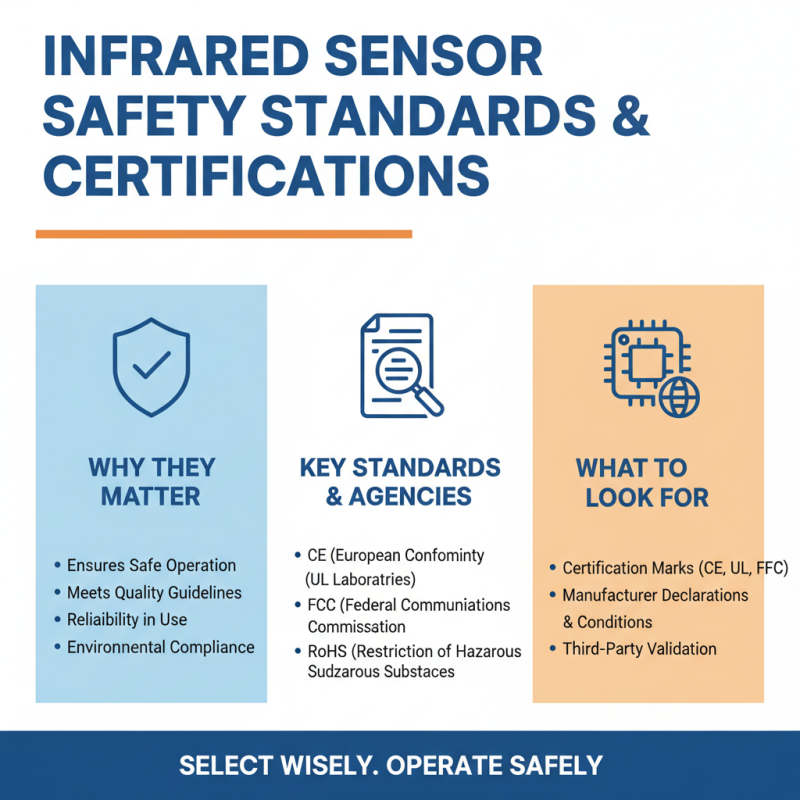
Safety Standards and Certifications for Infrared Sensors
When selecting an infrared sensor, understanding safety standards and certifications is vital. Various agencies set guidelines to ensure sensors operate safely. These standards often outline environmental conditions and operational limits. Look for sensors labeled with certifications like CE, UL, or FCC. These mark compliance with recognized safety regulations.
Being familiar with the test procedures is crucial. Each certification has its own testing methods. Sometimes, manufacturers may not specify the methods they used. This lack of transparency can lead to confusion. Review the documentation carefully. Check if it includes specific details about testing environments.
While safety ratings are important, do not rely solely on them. Consider how sensors will be used in real situations. Real-world challenges may expose deficiencies not covered by tests. Take a moment to evaluate potential risks before making a decision. Your application may require additional safety features. A thoughtful approach to choosing the right sensor can provide better assurance.
Common Mistakes to Avoid When Choosing Infrared Sensors
When selecting an infrared sensor, avoiding common pitfalls is crucial. Many buyers overlook their specific application needs. A sensor suitable for one environment may not perform well in another. Over 30% of companies report sensor failure due to mismatched specifications, suggesting that careful consideration is essential.
Another frequent mistake is prioritizing cost over quality. While low prices may seem attractive, they often lead to subpar performance. A study shows that investing in higher-quality sensors can enhance operational efficiency by up to 25%. Additionally, many consumers neglect to verify the manufacturer's reputation or historical performance data. Choosing a reputable manufacturer is key. A reliable provider typically has a proven track record and offers better customer support.
Calibration is another area where mistakes occur. Skipping proper calibration can lead to inaccuracies. Over 40% of sensor issues arise from inadequate calibration procedures. Ensure to review the recommended calibration methods from the manufacturer. This step is vital to enhance the sensor's reliability and lifespan. Being mindful of these factors can help you make informed decisions in the infrared sensor market.
Top Tips for Choosing a Safe Infrared Sensor for Your Needs - Common Mistakes to Avoid When Choosing Infrared Sensors
| Feature |
Importance |
Common Mistakes |
Tips for Selection |
| Detection Range |
High |
Choosing sensors with too short range |
Assess your area size and select accordingly |
| Response Time |
High |
Ignoring response time specifications |
Check manufacturer response time ratings |
| Temperature Range |
Medium |
Not considering environmental conditions |
Match sensor temperature ratings to your conditions |
| Power Supply Type |
High |
Overlooking power requirements |
Ensure compatibility with existing systems |
| Size and Design |
Low |
Choosing based on aesthetics over functionality |
Prioritize functional design |
| Sensitivity |
High |
Selecting low sensitivity for important applications |
Determine required sensitivity for your application |