What is Measurement Light Curtain Grating and How Does It Work?
Measurement Light Curtain Grating serves as a critical component in various precision measurement applications. This sophisticated technology utilizes a system of light beams and gratings to detect objects, ensuring accuracy and efficiency in measuring parameters such as dimension and position. Light curtain gratings have gained popularity in industries ranging from manufacturing to automation, where reliable measurements are paramount.
Understanding how Measurement Light Curtain Grating works requires delving into its design and operational intricacies. The light curtain typically consists of a series of infrared beams projected across a defined space. When an object interrupts these beams, the system registers this interruption and calculates the relevant data. This method not only enhances measurement precision but also speeds up the monitoring process.
Despite its benefits, the technology invites scrutiny. The installation and calibration require careful consideration to avoid errors. Misalignment or environmental factors can affect performance, leading to inaccurate readings. Users must remain vigilant about these potential pitfalls. In the quest for precision, recognizing and addressing the limitations of Measurement Light Curtain Grating is essential for achieving optimal results.
What is a Measurement Light Curtain Grating?
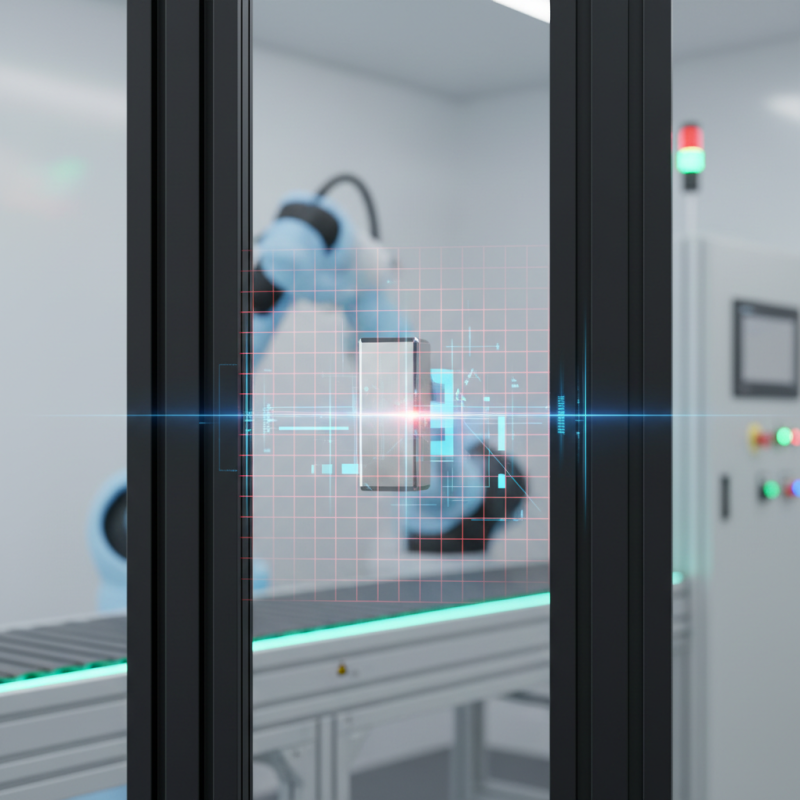
A measurement light curtain grating is a precise optical device. It captures measurements of objects that pass through its light beams. Composed of an array of lasers or LEDs, the system creates an invisible barrier. When an object interrupts the beams, it generates a signal. This signal indicates the presence, size, and speed of the object.
In industrial settings, these gratings ensure accurate counting and dimensional checks. They offer a non-contact method for gauging dimensions or detecting motion. Manufacturing processes use light curtain gratings for quality control. They help in detecting malfunctions in real-time without the need for physical contact. However, environmental factors can pose challenges. Dust or reflective surfaces may interfere with readings.
Tips for optimizing use include regular maintenance checks. Ensure the lenses are clean and properly aligned. Adjust the sensitivity settings to fit your specific needs. Fine-tuning increases accuracy in diverse conditions. Always consider the surroundings when placing the grating. Each installation site is unique, and what works in one area may not in another.
Measurement Light Curtain Grating Overview
This chart illustrates the effectiveness of measurement light curtains in various applications. The data represents the percentage of usage in different sectors.
Principles of Operation for Measurement Light Curtain Gratings
Measurement light curtain gratings are essential in various industrial applications. They function by detecting interruptions in light beams that cross a defined area. This interruption signals an object’s presence, ensuring prompt and accurate measurements. Each grating consists of multiple light emitting and receiving components, aligned precisely to create a grid.
The principles behind their operation are straightforward yet effective. When an object passes through the light curtain, it obstructs the beam, interrupting the light flow. This disruption triggers a response in the system. For instance, it may halt a machine or send an alert to an operator. This real-time response is critical in maintaining safety and efficiency in high-speed environments.
However, installing these systems is not without challenges. Alignment can be tricky, requiring careful calibration. Dust and debris may also interfere with performance. Regular maintenance is crucial to ensure reliability. Understanding these factors can help in achieving optimal performance and longevity of measurement light curtain gratings.
Applications of Measurement Light Curtain Gratings in Various Industries
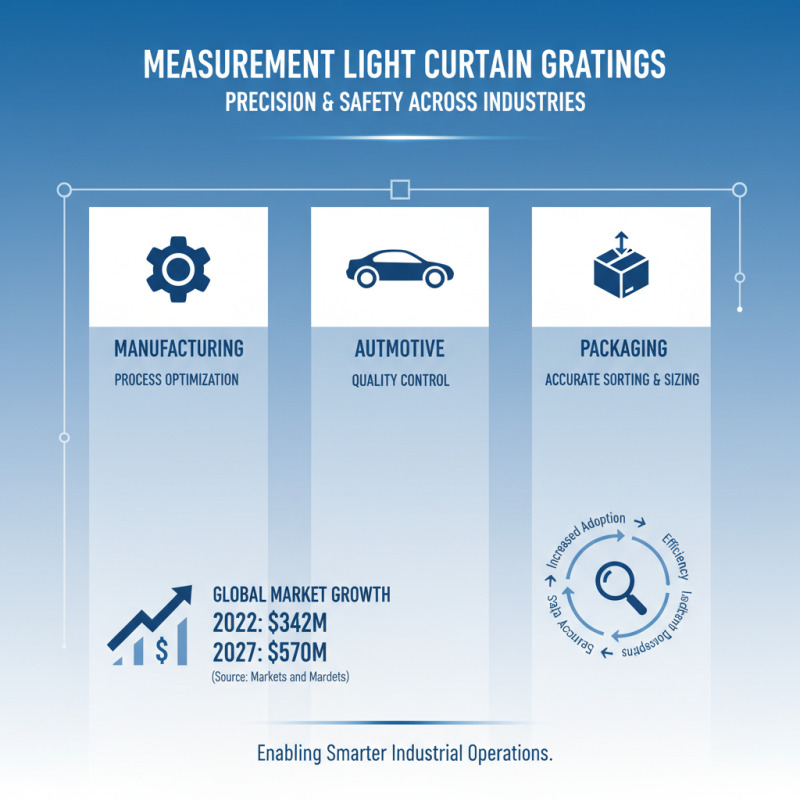
Measurement light curtain gratings are crucial in various industries, offering precision and safety in operations. These systems are widely used in manufacturing, automotive, and packaging industries. They help ensure that processes run smoothly while providing accurate measurement data. A report from Markets and Markets indicates that the global market for measurement light curtains is predicted to grow from $342 million in 2022 to $570 million by 2027. This growth reflects their increasing adoption across sectors.
In manufacturing, light curtain gratings act as safety devices. They create an invisible barrier that detects the presence of objects. This technology prevents accidents by stopping machines when someone inadvertently enters the area. In automotive production, precise measurements are critical. Grating systems ensure components are correctly aligned. In packaging, they aid in quality control by measuring dimensions of products swiftly. These applications are vital to maintaining operational efficiency.
Yet, there are challenges. Calibration is essential for accurate measurements. Failing to calibrate regularly can lead to errors. Additionally, variations in light conditions can affect performance. Despite these issues, the benefits of light curtain gratings remain significant. They enhance productivity while ensuring safety. As technology advances, new features can improve accuracy and ease of use. This evolution will further solidify their role across industries.
Key Specifications and Technical Data for Light Curtain Gratings
Light curtain gratings are essential in various industrial applications. They enable precise measurements of object dimensions and serve as safety devices in machinery. Understanding their key specifications is crucial for effective use.
When selecting a light curtain grating, several technical parameters stand out. These include the resolution, response time, and operating range. A typical resolution might range from 1 mm to 10 mm, ideal for most applications. The response time is often under 20 milliseconds, ensuring real-time performance. Operating ranges can vary, with many systems functioning effectively over several meters.
It's important to remember that not all gratings are equal. Some may fail under extreme conditions, such as dust or moisture. This variability can lead to inaccuracies or safety hazards. Regular testing and maintenance are necessary to ensure optimal performance. Balancing costs and specifications is also a challenge. Users must often reflect on which features are essential for their specific context.
Benefits and Limitations of Using Measurement Light Curtain Gratings
Measurement light curtain gratings are vital in many industrial settings. They allow accurate measurement of objects passing through them. The benefits include improved precision and the ability to measure multiple objects in real-time. These systems use a grid of light beams to detect and calculate dimensions. This makes them suitable for quality control in manufacturing.
However, there are limitations. Light curtain gratings can be affected by ambient light conditions. This can alter their accuracy. Calibration might be needed regularly to ensure reliability. Their installation requires careful planning to avoid interference with other equipment. Moreover, their cost can be a barrier for some companies, especially smaller ones.
These devices sometimes miss smaller or very thin objects. This can lead to measurement errors. Users need to understand these limitations to use the technology effectively. Continuous training and periodic assessments are crucial. This ensures optimal performance and helps mitigate potential issues. Overall, while measurement light curtain gratings offer significant advantages, awareness of their limitations is essential for successful implementation.
What is Measurement Light Curtain Grating and How Does It Work? - Benefits and Limitations of Using Measurement Light Curtain Gratings
| Dimension |
Description |
Benefits |
Limitations |
| Accuracy |
Measurement light curtain gratings provide high precision in non-contact measurement applications. |
Improved accuracy over traditional measurement methods. |
Sensitivity to environmental conditions, such as dust or fog. |
| Response Time |
Light curtain systems typically have a fast response time suitable for dynamic measurements. |
Quick data acquisition improves workflow efficiency. |
Requires calibration to maintain optimal performance. |
| Installation |
Relatively easy to install and integrate into existing systems. |
Low installation costs compared to complex measurement setups. |
May not be suitable for all measurement environments. |
| Maintenance |
Requires regular maintenance to ensure accuracy. |
Consistent maintenance can lead to long-term reliability. |
Ongoing costs associated with calibration and servicing. |