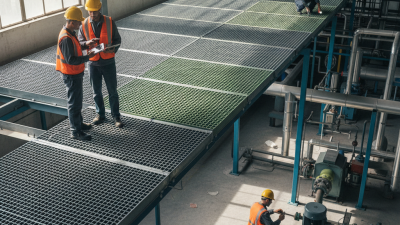
Grating is an open-grid structure designed to support people, equipment, or airflow while allowing light, water, and debris to pass through. You may see it beneath your boots on a factory platform, across a drainage channel, or forming a walkway above machinery. Its open spaces look simple. Choosing the right pattern is not.
For this Grating Details introduction, the key principle is: “Match the grating to the load, span, and environment—not appearance alone.” This is original editorial wording, not a verified quotation from a named industry expert; no source for an expert’s name or published statement was provided. That distinction matters. Reliable technical guidance should identify its author and evidence, especially when selection affects structural performance and worker safety.
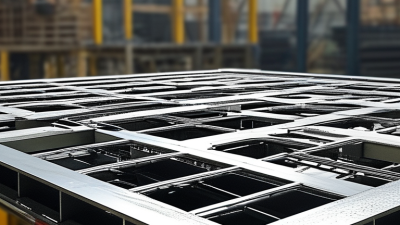
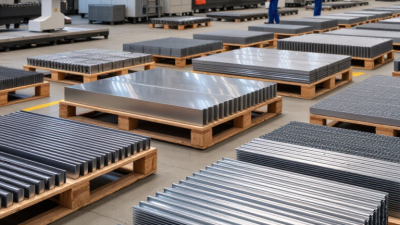
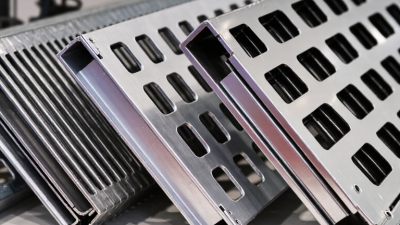
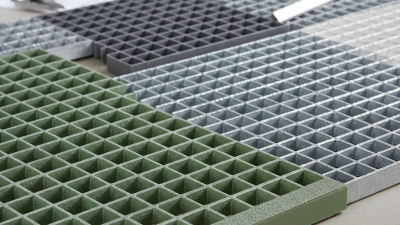
Grating types vary by material, manufacturing method, and intended use. Welded steel grating is common in demanding industrial settings, while stainless steel may suit areas exposed to moisture or corrosive conditions. Aluminum offers lower weight, and molded fiberglass grating can provide corrosion resistance where metal may need more upkeep. Each option brings trade-offs. Even a sturdy-looking panel can be unsuitable if its bearing bars, opening size, support span, or load rating do not fit the application. This guide will explain the main types, their practical differences, and the details worth checking before selection. Some installations are less obvious than they seem; that deserves a second look.
What Is a Grating?
In optics, a grating is a surface or material with many regularly spaced lines or grooves. When light meets those repeating features, it can bend and separate into different directions. This effect is called diffraction. A grating does not create new colors; it sorts wavelengths already present in the light. The spacing between grooves matters. Smaller changes can alter the angles where colors appear.
Gratings are commonly described as transmission or reflection types. A transmission grating lets light pass through its patterned surface, while a reflection grating directs light back from it. Some are made with precisely ruled grooves; others use patterns formed through optical recording methods. The best choice depends on the setup, wavelength range, and required resolution. In practice, alignment and cleanliness matter too. A tiny smear can blur a result. The word “grating” can also describe a coarse grid in other fields, so context is important.
Tips: Check the grating’s specified groove spacing and working wavelength before use. Keep the surface clean, and avoid touching the patterned area. If the spectrum looks faint or uneven, recheck the light source and alignment before assuming the grating is faulty.
A diffraction grating separates light by directing different wavelengths along different paths. Its surface contains many evenly spaced grooves or slits. When light reaches them, each opening acts like a tiny wave source. The waves overlap, strengthening at some angles and cancelling at others. The result is a spectrum. That is the core. For a grating with spacing d, the bright directions follow mλ = d(sin θᵢ + sin θₘ), with angles defined relative to the surface normal. In practical terms, closer grooves generally spread the colors farther apart. A simple picture helps, though real instruments also depend on groove shape, coating, and alignment.
Gratings can be reflective, where light bounces from ruled grooves, or transmissive, where light passes through patterned openings. Ruled gratings have mechanically formed grooves; holographic gratings record an interference pattern, often producing more uniform spacing. Their performance is checked against known wavelengths. The National Institute of Standards and Technology’s Standard Reference Material 2034 certificate lists 14 holmium-oxide wavelength peaks from 241.5 to 640.5 nanometers, providing reference points for spectrometer calibration. This illustrates why precise spacing matters: a small wavelength error can shift a measured peak. Real setups are messier. Dust, a tilted beam, or a poorly focused slit can blur the spectrum, and I would not treat the grating equation alone as a full performance prediction.
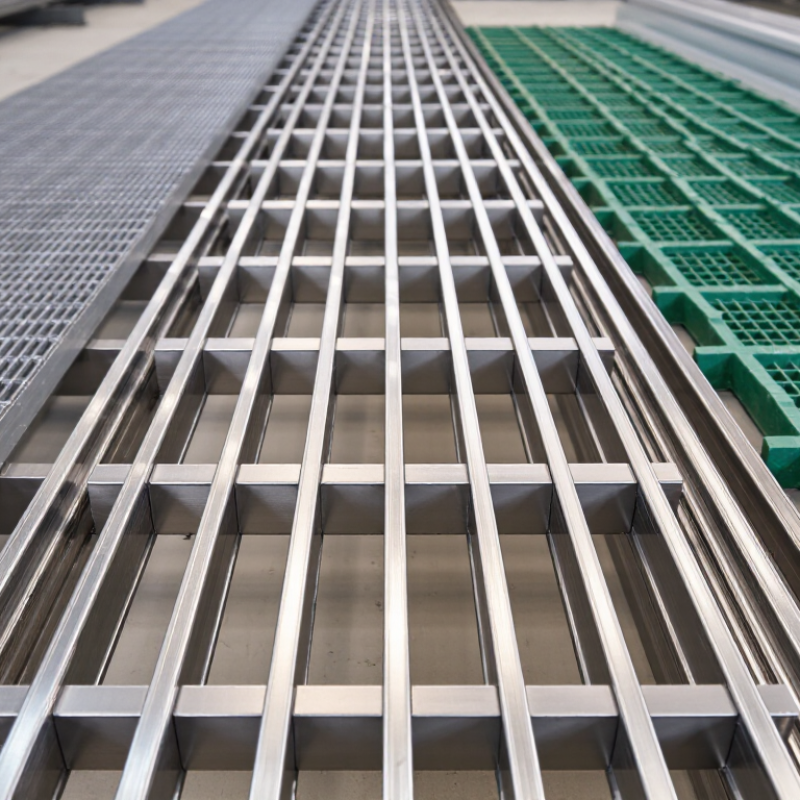
Industrial grating is commonly grouped by how its bearing bars are joined. Welded grating uses fused intersections and suits many walkways, platforms, and drainage areas. Press-locked grating mechanically locks bars together, creating a uniform surface. Swage-locked grating secures crossbars through pre-punched bearing bars, while molded fiberglass grating offers corrosion resistance and electrical insulation. The choice matters. Load direction, span, environment, and maintenance needs all affect performance.
Spacing changes how a panel feels underfoot and how easily debris passes through. The NAAMM Metal Bar Grating Manual, MBG 531-17, lists common bearing-bar spacings of 1 3/16, 15/16, 11/16, and 7/16 inches. These dimensions help engineers compare open area and support, but they do not establish a panel’s safe capacity by themselves. Check the manufacturer’s load tables and project requirements. A detail that is easy to overlook: narrow openings can still collect fine debris. Material, coating, and support conditions matter just as much as the grating type.
An optical grating is a surface with many closely spaced lines or grooves. These repeating features separate light into its component wavelengths through diffraction. The spacing and shape of the grooves influence the angles and brightness of the resulting spectrum. Small changes matter.
Gratings differ in both construction and purpose. A transmission grating lets light pass through narrow openings or patterned transparent material. It is often used in compact spectrometers, where a beam spreads into colored bands after passing through the grating. A reflection grating instead has grooves on a reflective surface. Light bounces from it and separates by wavelength, making this design useful in many optical instruments.
The grooves may be ruled mechanically or formed holographically. Ruled gratings can be designed with specific groove profiles, while holographic methods can produce evenly spaced patterns with low stray light. Some gratings are blazed: their angled groove faces direct more light toward a chosen wavelength range. Crossed gratings have lines in two directions, helping separate light across two dimensions. The choice is not always obvious. A grating that gives strong brightness in one setup may perform less well across a broader range, so practical testing still matters.
Grating appears wherever air, water, light, or people need a controlled path. In factories and public buildings, metal bar grating often forms walkways, stair treads, and maintenance platforms. Its open gaps let rain and debris pass through, while the bars support foot traffic. Drain covers use similar designs. Ventilation grilles also rely on grating to protect openings without blocking airflow.
Optical gratings serve a different purpose. Their closely spaced lines separate light into wavelengths, so they are used in spectrometers and other measurement instruments. The setting matters: a floor grating needs suitable load capacity and slip resistance, while an optical grating needs precisely spaced lines. It is easy to focus only on the material. That can be a mistake; spacing, environment, and cleaning needs also affect performance.
Tips: Check the expected load, exposure to moisture, and opening size before choosing a grating. For walkways, inspect edges and supports regularly. For optical equipment, keep the surface clean and follow the instrument maker’s handling guidance. A small detail can matter.
| Grating Type | How It Is Made | Typical Characteristics | Common Uses |
|---|---|---|---|
| Welded steel bar grating | Bearing bars are joined to perpendicular cross bars, commonly by welding. | Strong, open construction that allows water, air, and light to pass through. Often made from carbon steel or stainless steel. | Industrial walkways, platforms, stair treads, drainage covers, and equipment access areas. |
| Press-locked steel grating | Cross bars are forced into pre-punched slots in the bearing bars to form a tight mechanical connection. | Has a uniform appearance and can be produced with close bar spacing; load capacity depends on the bar dimensions and span. | Building facades, ceilings, screens, partitions, and pedestrian areas where a neat grid pattern is desired. |
| Riveted steel grating | Connecting bars are secured to the bearing bars with rivets. | The connected bars can provide a resilient surface suited to some applications involving repeated movement or vibration. | Heavy-duty industrial flooring, bridges, and selected transport or processing facilities. |
| Expanded metal grating | A metal sheet is slit and stretched to create a continuous mesh with diamond-shaped openings. | No separate cross bars or welded intersections; the pattern and sheet thickness affect strength and slip resistance. | Walkways, ramps, machine guards, ventilation screens, and protective enclosures. |
| Molded FRP grating | Glass-fiber reinforcement and resin are combined in a mold to create a panel with integral bars. | Corrosion-resistant and electrically nonconductive; resin choice affects chemical and temperature suitability. | Chemical plants, water and wastewater facilities, marine environments, and areas where electrical insulation is useful. |
| Pultruded FRP grating | Continuous glass-fiber-reinforced profiles are formed through a resin bath and heated shaping die, then assembled into panels. | Directional strength follows the pultruded bearing profiles; panel design and support spacing determine its load capacity. | Long-span walkways, platforms, cable-tray areas, and corrosive industrial settings. |
| Aluminum bar grating | Aluminum bearing bars and cross bars are joined using a grating-making process such as welding or mechanical locking. | Lightweight and naturally corrosion-resistant in many environments; suitability depends on alloy, finish, and loading conditions. | Roofs, access platforms, walkways, and structures where reducing dead load or resisting atmospheric corrosion is important. |
| Grating is an open grid or mesh panel used for flooring, access, screening, or protection. Select a type according to the required load capacity, span, opening size, slip resistance, environment, and applicable safety requirements. | |||