How to Choose the Best Wholesale Lidar Sensor Suppliers in 2025
In the rapidly evolving field of technology, the demand for high-quality Lidar sensors is on the rise, driven by applications across various industries such as autonomous vehicles, robotics, and environmental monitoring. As we approach 2025, businesses and developers are increasingly seeking reliable and effective solutions to meet their needs. This highlights the importance of choosing the right
Wholesale Lidar Sensor Suppliers, who not only provide the necessary equipment but also support their clients with expertise and service.

Selecting a supplier involves more than just comparing prices; it's essential to consider factors such as
product quality,
technological advancements, and the supplier's reputation in the market. As the Lidar technology landscape continues to evolve, suppliers that offer innovative products and responsive customer support will stand out in a competitive market.
Therefore, understanding what to look for in
Wholesale Lidar Sensor Suppliers
will empower businesses to make informed decisions, ensuring they partner with those capable of fulfilling their specific requirements now and into the future.
Understanding the Different Types of Lidar Sensors and Their Applications in 2025

Lidar sensors have become integral across various industries, including automotive, agriculture, and urban planning, as they provide precise distance measurements through laser technology. In 2025, understanding the different types of Lidar sensors is crucial for selecting the right one for specific applications.
Time-of-Flight (ToF) sensors are among the most common, utilizing laser pulses to determine distance. They are widely applied in autonomous vehicles, enabling real-time 3D mapping and obstacle detection.
Another category is Frequency Modulated Continuous Wave (FMCW) Lidar, which offers higher accuracy and resolution, making it suitable for applications such as surveying and environmental monitoring. Additionally, Solid-State Lidar sensors are emerging as a compact and cost-effective solution, ideal for integrating into smaller devices like drones and handheld units.
Recognizing these variations in sensor types and their respective functionalities is essential for businesses looking to adopt Lidar technology to enhance their operations effectively in this innovative landscape of 2025.
Key Factors to Consider When Selecting Wholesale Lidar Sensor Suppliers
When selecting wholesale LiDAR sensor suppliers in 2025, several key factors should guide your decision-making process. Firstly, it is crucial to assess the technological capabilities and product quality of potential suppliers. According to a recent report by MarketsandMarkets, the LiDAR market is projected to grow from $1.1 billion in 2020 to $2.5 billion by 2025, indicating rapid technological advancements. Ensure that the suppliers you consider not only offer state-of-the-art sensor technology but also provide robust data accuracy and reliability, which are vital for applications ranging from autonomous vehicles to environmental monitoring.
Another important factor is the supplier’s reputation and customer reviews in the industry. A study by Grand View Research highlighted that brands with established trust tend to dominate market share, making them preferable partners. Look for suppliers with proven track records of delivering quality products on time and offering excellent customer support. It is also beneficial to evaluate their after-sales services and warranty policies, as these can significantly impact your long-term operational efficiency and cost-effectiveness. By focusing on these essential factors, you can make a more informed choice while navigating the competitive landscape of wholesale LiDAR sensor suppliers.
Evaluating Supplier Reliability and Reputation in the Lidar Industry
When selecting the best wholesale lidar sensor suppliers in 2025, evaluating the reliability and reputation of suppliers in the lidar industry is crucial. According to a report by MarketsandMarkets, the global lidar market is projected to grow at a CAGR of 14.3% from 2023 to 2028, reaching a valuation of approximately $6.1 billion by the end of this period. This rapid growth emphasizes the importance of partnering with suppliers that not only offer cutting-edge technology but also demonstrate solid financial stability and a proven track record in delivering quality products.
 One of the significant metrics for assessing supplier reliability is their adherence to industry standards and certifications. Leading suppliers often possess certifications such as ISO 9001, which ensures quality management systems are in place. A report from Research and Markets highlighted that suppliers with a history of quality assurance are 30% more likely to experience repeat business and positive reviews from clients. Additionally, consider seeking suppliers with robust customer support and after-sales services, as these factors significantly contribute to long-term partnerships and overall satisfaction.
Assessing Cost-Effectiveness and Pricing Structures of Lidar Sensor Suppliers
When selecting the best wholesale LiDAR sensor suppliers in 2025, it is essential to assess the cost-effectiveness and pricing structures of potential partners. With the rising demand for accurate and efficient LiDAR solutions across various industries, understanding the pricing dynamics will help in making informed decisions. Consider not only the initial costs of sensors but also the total cost of ownership, which includes maintenance, data processing, and any additional software or training needs.
Tips: Always request a comprehensive quote from suppliers that outlines all potential costs involved. Look for suppliers that offer flexible pricing models, which can adapt to your specific project requirements. Additionally, seeking references or case studies showcasing the suppliers' performance in real-world applications can provide insights into their reliability and value.
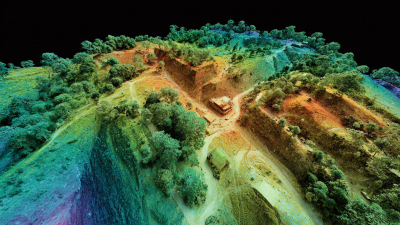
It's also beneficial to stay updated with emerging technologies and advancements in LiDAR applications. For instance, innovations in mobile LiDAR and aerial solutions are becoming increasingly cost-effective, making them suitable for diverse use cases, such as agricultural assessments and environmental monitoring. Engaging with suppliers who adopt cutting-edge technology can ensure that you receive the most efficient and effective solutions tailored to your needs.
Exploring Future Trends and Innovations in Lidar Sensor Technology for 2025
As we move towards 2025, the landscape of Lidar sensor technology is set to evolve significantly, reflecting a decade of innovation. Advances in laser technology are being driven by trends such as the miniaturization of components, improved resolution and accuracy, and the integration of artificial intelligence. These developments are not only enhancing the capabilities of Lidar sensors across various industries, including automotive and environmental monitoring but also enabling the proliferation of new applications, such as automated driving and advanced surveying techniques.
In addition to these trends, the rise of mid-infrared lasers is a notable innovation that promises to revolutionize sectors like medical diagnostics and remote sensing. The ability of mid-infrared lasers to provide precise imaging and spectroscopic analysis is reshaping our approach to diagnostics and monitoring, opening up new avenues for research and application. As companies adapt to these advancements, the potential for enhanced performance and new market opportunities in the sensor industry is immense, highlighting the importance of remaining agile and informed about emerging technologies in the Lidar and laser sectors.