How to Choose the Best Laser Curtain Sensor for Your Needs?
Choosing the right Laser Curtain Sensor can be challenging. Many factors come into play when making this decision. These sensors are essential for various applications, including security and automation.
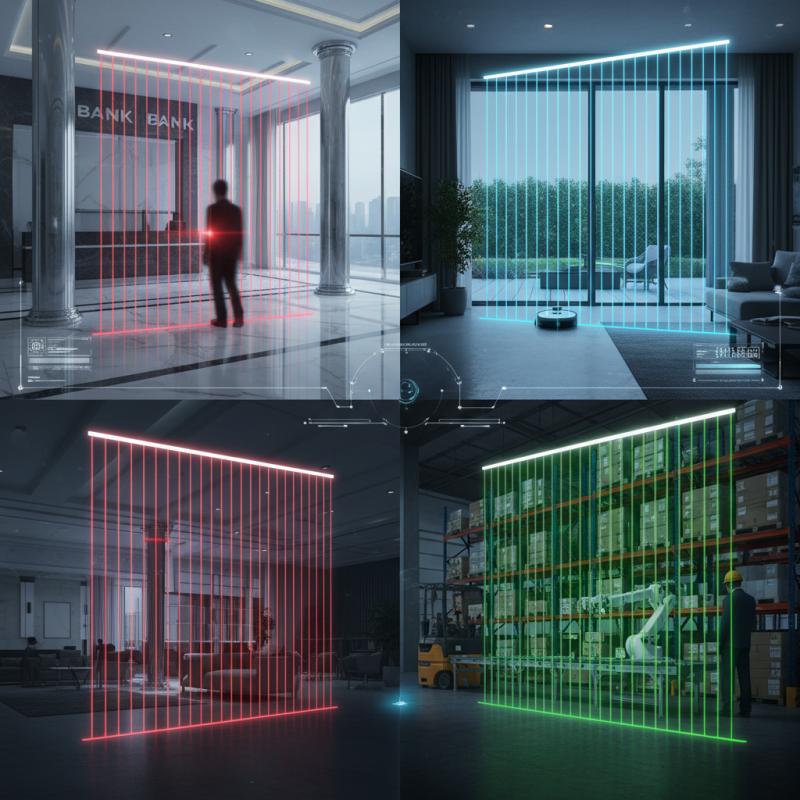
A Laser Curtain Sensor detects movement and creates invisible barriers. These barriers enhance safety in areas like banks, homes, and warehouses. Selecting one requires understanding your specific needs. For instance, consider the sensor's range, sensitivity, and environmental conditions. A sensor designed for outdoor use might not perform well indoors.
Users often overlook certain details. Not all sensors are created equal. Some may have features that seem compelling but might not fit your needs. Reflecting on your requirements before purchasing is crucial. This will help ensure you invest in the right Laser Curtain Sensor for your situation.
Understanding Laser Curtain Sensors: Definition and Functionality
Laser curtain sensors are pivotal in various industries. They provide detection solutions that enhance safety and operational efficiency. These sensors create an invisible protective barrier using laser technology. When an object or person breaches this barrier, the sensor triggers an alert, ensuring immediate response.
Understanding their functionality is crucial. According to industry reports, the use of laser curtain sensors has surged by 25% in the past three years. This growth reflects their reliability and effectiveness. Facilities use them for access control, perimeter security, and safety in industrial settings. The accuracy of laser sensors often surpasses that of traditional systems. They are less prone to false alarms caused by environmental factors.
Tips: When choosing a laser curtain sensor, consider the installation environment. Not all sensors perform equally under different conditions. Look for specifications that match your needs. Also, assess the coverage area. A wider coverage means fewer sensors are needed, saving costs. Consider potential limitations. If the sensor does not suit your space, the entire system may fail to protect adequately.
Comparison of Laser Curtain Sensor Features
Key Factors to Consider When Choosing a Laser Curtain Sensor
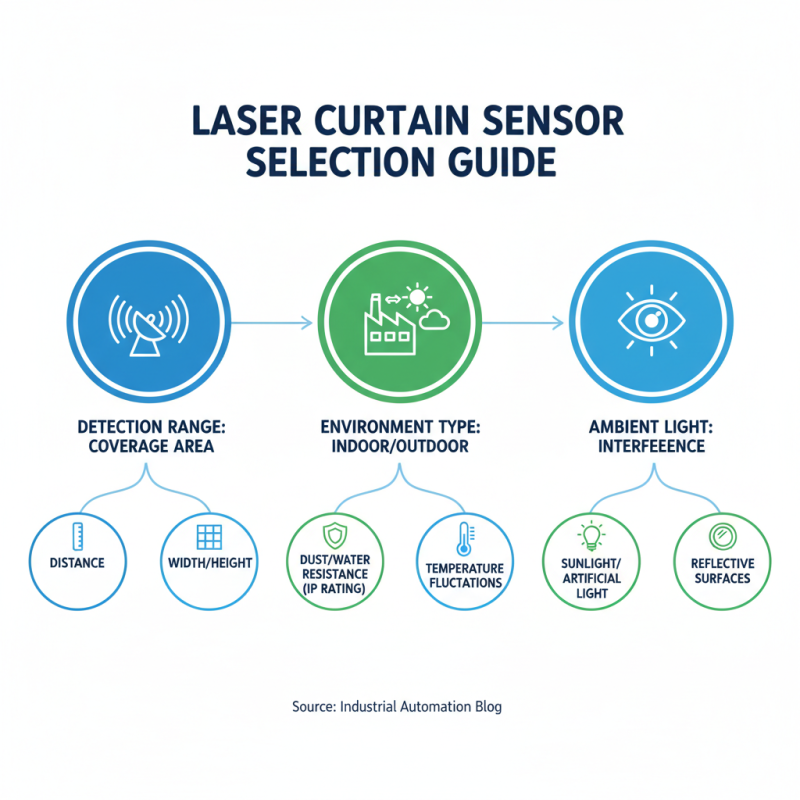
When selecting a laser curtain sensor, several key factors require attention. The detection range is critical. You need a sensor that covers your intended area adequately. It's also important to consider the type of environment. Indoor and outdoor installations may have different requirements. Beyond just size, the ambient light conditions can impact sensor performance.
Another aspect to evaluate is the sensor's response time. A faster response ensures better safety and efficiency, especially in busy areas. Additionally, compatibility with existing systems is vital. The sensor must integrate seamlessly with alarms or automation systems. Adjustability is a beneficial feature too. Some sensors allow for sensitivity and angle adjustments.
Price is often a deciding factor. But remember, a cheaper option may lead to higher costs in the long run due to potential malfunctions. It’s common to overlook warranty details as well. A good warranty means you have support if issues arise. Ultimately, thorough research and understanding of your specific needs are essential before making a purchase.
Types of Laser Curtain Sensors: Pros and Cons
When considering laser curtain sensors, understanding their types is crucial. There are typically three main types: the time-of-flight sensors, triangulation sensors, and phase-shift sensors. Each type has its own advantages and disadvantages.
Time-of-flight sensors are popular for their range and precision. They measure the time it takes for a laser beam to return after bouncing off an object. These sensors can cover long distances, making them suitable for large spaces. However, they can be affected by environmental factors like fog or rain, which can interfere with measurements. According to industry reports, about 20% of users reported issues with reliability in changing weather conditions.
Triangulation sensors offer high accuracy for shorter ranges. They calculate distance using an angle method, allowing for detailed object detection. This makes them ideal for smart home applications. However, their performance drops at longer distances. Some users found this limitation frustrating when trying to create comprehensive monitoring systems.
Phase-shift sensors work by analyzing the phase difference of the reflected laser beam. They deliver high accuracy and can function effectively over substantial distances. However, they are often more expensive. About 30% of installations reported that cost was a significant barrier. Each type comes with trade-offs that must be carefully evaluated based on specific needs and environments. Always consider these factors before making a choice.
How to Choose the Best Laser Curtain Sensor for Your Needs?
| Type of Laser Curtain Sensor |
Pros |
Cons |
| Active Infrared |
High accuracy, effective in various environments |
More expensive than passive sensors, may require calibration |
| Passive Infrared |
Cost-effective, easy to install |
Limited range, prone to false alarms from moving objects |
| Laser Beam |
Long detection range, high precision |
Sensitive to obstructions, installation can be complex |
| Ultrasonic Sensors |
Good performance in outdoor settings, detects motion effectively |
Can be affected by environmental noise, generally lower accuracy |
| Microwave Sensors |
Works well in various conditions, can penetrate obstacles |
Higher chance of false alarms, potential interference from other devices |
Installation Requirements and Considerations for Laser Sensors
When selecting a laser curtain sensor, installation is a key factor. You need to evaluate the environment where it will be placed. Is it an indoor or outdoor setting? Consider the mounting height and angle. These factors can impact performance significantly. The area should be free from obstructions. Objects can interfere with the sensor's laser beam.
Wiring requirements also play a vital role. Check the power source needed for the sensor. It should match your installation site. Ensure you have the necessary tools for installation, such as screws and brackets. If the setup is complicated, it might be wise to seek expert help. They can provide insights that you might overlook.
Testing the sensor after installation is crucial. You may encounter false positives or missed detections. Make adjustments as needed. This step can be frustrating, but it's essential for optimal performance. Reflecting on the installation process can reveal areas for improvement. Each setup is unique, and learning from each experience is important.