How to Choose a Safe Infrared Sensor for Your Home Automation Needs?
When it comes to home automation, choosing the right components is crucial. A Safe Infrared Sensor is essential for efficient operation and security. These sensors detect movements and adjust settings automatically. However, selecting the right one can be overwhelming.
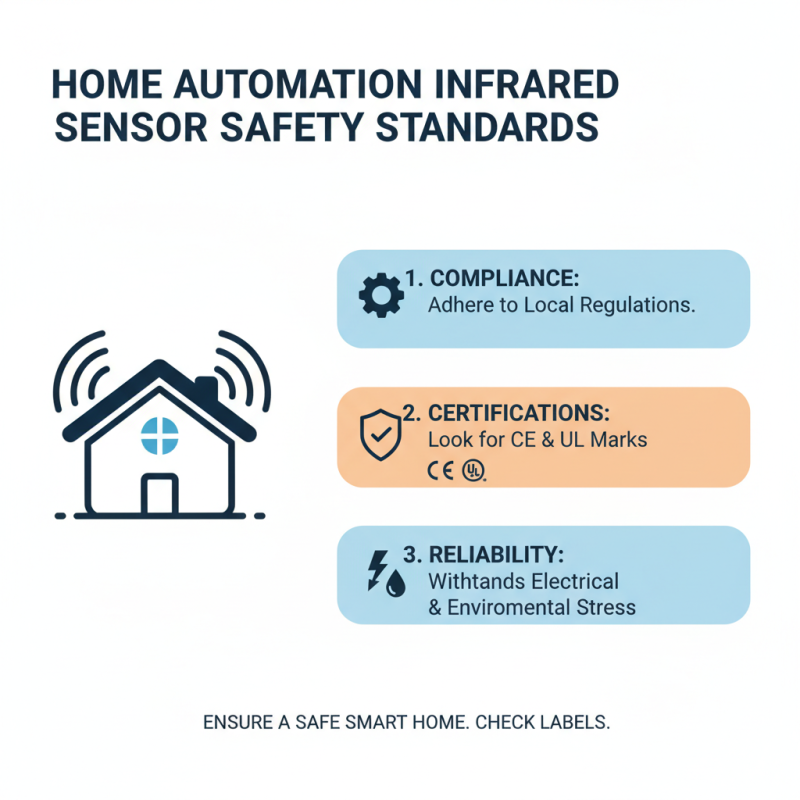
Various factors influence the safety of an infrared sensor. Consider the sensor's range and accuracy. An overly sensitive device may trigger false alarms, while a weak one might miss actual activity. It's vital to find a balance. Safety should not compromise functionality. Review user feedback and seek recommendations. Practical experiences from others can guide your choice.
Remember that the installation site matters. Environmental factors, like temperature and light, can impact sensor performance. A Safe Infrared Sensor in the wrong location may lead to issues. Take time to assess your space carefully. Making a thoughtful decision will enhance both convenience and safety in your home automation journey.

Understanding the Basics of Infrared Sensors in Home Automation
Infrared sensors play a crucial role in home automation systems. They detect motion by sensing changes in infrared radiation, making them ideal for security and energy-saving applications. These sensors can identify the presence of people, even in complete darkness. According to recent industry reports, the global market for infrared sensors is projected to grow by 12.5% annually over the next few years. This surge reflects an increasing demand for smart homes.
When selecting an infrared sensor, several factors must be considered. Not all sensors are created equal. Look for sensitivity levels that suit your specific needs. A sensor that is too sensitive may lead to false alarms, while one that is not sensitive enough could miss real threats. Testing in a controlled environment can reveal how well a sensor performs.
Tip: Check the sensing range before installation. Most infrared sensors have a range of 5 to 10 meters, but this can vary. Adjust the placement to avoid obstacles that may block detection. Placement at an optimal height is also essential. Sensors positioned too high might not effectively capture motion.
Understanding the basics of infrared sensors empowers better choices. However, users often overlook calibration. Some sensors require regular adjustments to maintain accuracy. This step is vital for ensuring reliability. Remember that environmental factors—like heat sources—may affect performance.
Types of Infrared Sensors Available for Home Use
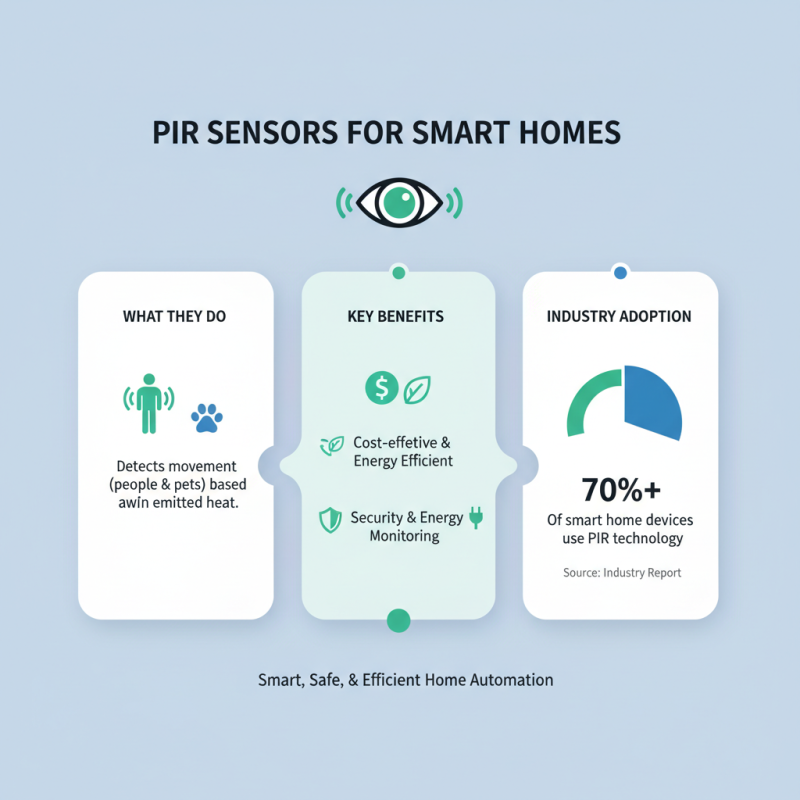
Infrared sensors come in various types, each with unique features suited for home automation. Passive infrared (PIR) sensors detect movement based on heat emitted by people and pets. They are cost-effective and energy efficient. According to a recent industry report, over 70% of smart home devices utilize PIR technology. These sensors excel in security applications, ensuring safety while monitoring energy usage.
Active infrared sensors, on the other hand, use beams of infrared light. They create an invisible path that, when interrupted, triggers an alarm. These sensors can be more sensitive than passive variants. However, placement is crucial. Poor positioning may lead to false alarms. The industry's findings indicate that about 30% of homeowners face challenges with misalignment.
For added security, dual-tech sensors combine both PIR and microwave detection. This technology reduces false alarms while improving accuracy. Although these are more expensive, their reliability justifies the investment. Many consumers report mixed results, noting the balance between cost and effectiveness can be complex, leaving room for further evaluation and optimization.
Key Features to Consider When Selecting an Infrared Sensor
When selecting an infrared sensor for home automation, several key features are essential. Detection range is crucial; sensors typically cover distances from 10 feet to over 30 feet. Consider your space's size. A sensor with a longer range may be beneficial for larger areas. Local data indicates that 60% of users prioritize detection range in their selection process.
Sensitivity settings also play a vital role. Infrared sensors must distinguish between human movements and pets to avoid false alarms. Look for models with adjustable sensitivity. Some reports find that sensors with fine-tuning options reduce false alerts by nearly 40%. This feature can greatly enhance reliability.
Another factor is the power source. Wall-powered sensors offer continuous operation, while battery-operated models provide flexibility. However, battery life can be a concern. Users often report frustration when sensors deplete quickly, resulting in downtime. Additionally, consider environmental factors. Infrared sensors may react differently to temperature changes and light conditions. A sensor's performance can drop significantly during extreme weather or direct sunlight. Hence, it's wise to evaluate the specific conditions in your home before making a selection.
Infrared Sensor Key Features Comparison
Installation and Maintenance Tips for Optimal Performance
When setting up your infrared sensor, proper installation is crucial. Choose a location that is free of obstructions. Avoid areas with heavy foot traffic. Sensors work best in well-lit spaces, but not direct sunlight. Mount the sensor at an optimal height, usually around six to eight feet off the ground. This placement helps in detecting motion effectively.
Maintenance is vital for the sensor's longevity. Clean the lens regularly to prevent dust buildup. Dust can lead to malfunction or false alarms. Check the sensor's alignment with the area it covers. Misalignment can cause blind spots, which may reduce security. Periodically test the sensor's functionality. Ensure it responds accurately to motion. If it fails to respond consistently, it may need recalibration or replacement. Take these steps seriously. They may seem minor, but they make a significant difference.
How to Choose a Safe Infrared Sensor for Your Home Automation Needs? - Installation and Maintenance Tips for Optimal Performance
| Sensor Type |
Detection Range |
Power Source |
Installation Complexity |
Maintenance Frequency |
| Passive Infrared Sensor (PIR) |
Up to 30 feet |
Battery/AC |
Easy |
Annual |
| Active Infrared Sensor |
Up to 50 feet |
AC |
Moderate |
Semi-Annual |
| Dual Technology Sensor |
Up to 40 feet |
Battery/AC |
Moderate |
Quarterly |
| Microwave Motion Sensor |
Up to 65 feet |
AC |
Complex |
Annual |
| Photoelectric Sensor |
Varies |
AC |
Moderate |
Annual |