2026 Best Light Curtain Muting Sensors for Safety Applications?
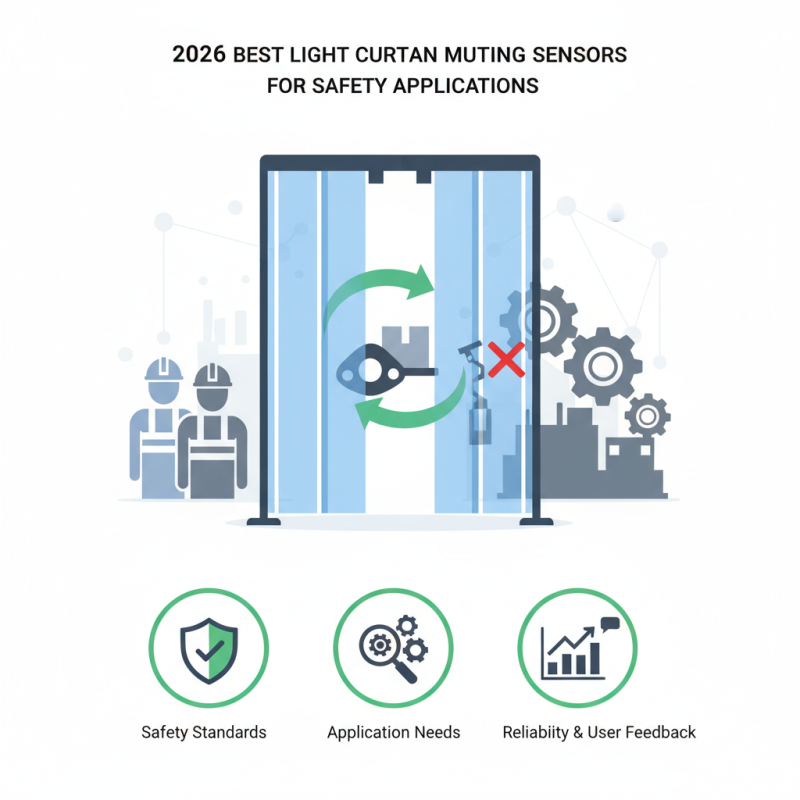
In the realm of safety applications, Light Curtain Muting Sensors emerge as a vital technology. These sensors play a crucial role in protecting workers while maintaining operational efficiency. They use light beams to detect obstacles, ensuring that machines operate safely without unnecessary downtime.
The 2026 market offers a selection of these sensors that promise enhanced reliability and performance. Choosing the right model can be challenging, given the variety of options available. Each sensor should not only meet safety standards but also fit specific application needs.
While technology advances, some products may fail to deliver as expected. It’s essential to critically assess features and user feedback. The future of industrial safety depends on these reliable systems. Investing time to evaluate different Light Curtain Muting Sensors now will pay off in safe, productive workplaces.
2026 Overview of Light Curtain Technologies for Safety Applications
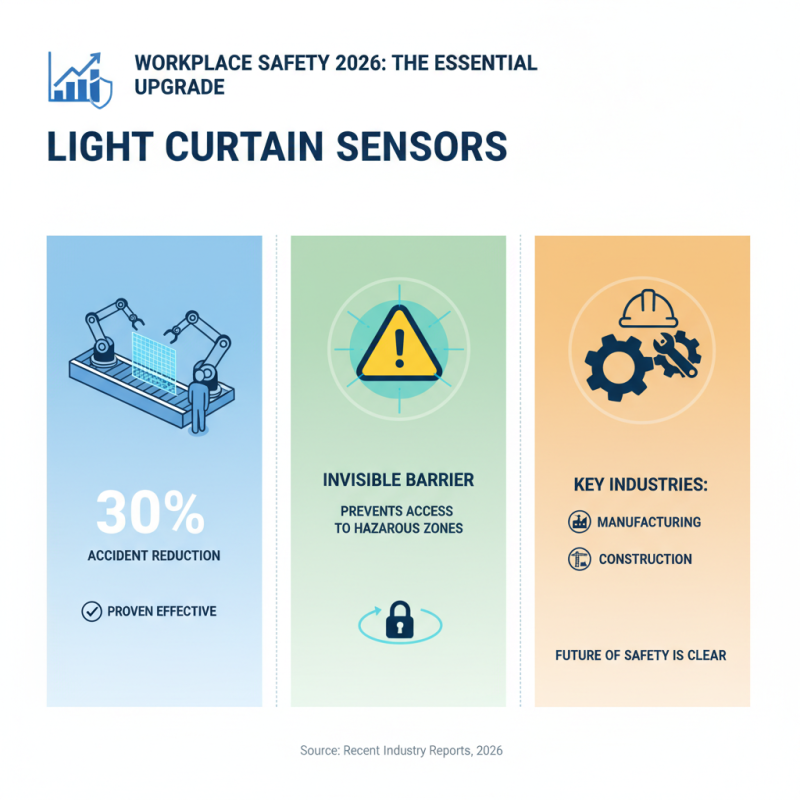
Light curtains play a crucial role in safety applications. They are used to create invisible barriers that detect the presence of an object or person. This technology is integral in manufacturing settings, especially around machinery. Light curtains can prevent accidents by stopping operations when an obstruction is detected. The challenge lies in choosing the right type for specific environments.
Different light curtain technologies exist, each with its unique features and benefits. Some use infrared beams, while others may employ laser technology. Understanding the working principle of these sensors is vital for effective usage. A poorly chosen light curtain could lead to safety breaches, resulting in accidents. Regular testing and maintenance of these devices are essential.
Tips: Always ensure alignment of light beams for optimal detection. Consider the environment's dust and debris levels. These factors can affect sensor performance. Choosing a light curtain for the wrong setting can result in false readings or missed detections. Proper training for personnel is also essential. Mistakes happen, and understanding sensor limits can reduce risks.
Key Features of High-Efficiency Light Curtain Muting Sensors
Light curtain muting sensors are crucial in safety applications. They ensure high protection while maintaining productivity. These sensors can detect when a safety barrier should be temporarily disabled. Such functionality is vital in automated manufacturing and similar environments. According to a recent industry report, the market for light curtain sensors is expected to grow by 7% annually over the next five years.
Key features of high-efficiency light curtain muting sensors include fast response times and reliable detection ranges. Most advanced models operate within a range of 14 feet, providing quick feedback for safety measures. Users report lower downtime due to these sensors, enhancing overall workflow. However, some sensors may have inconsistent muting capabilities. This can lead to accidental risks in high-speed operations.
Efficiency is not just about speed. It involves how well these sensors integrate with other safety equipment. Compatibility issues can arise, making installations less smooth than expected. Data indicates that systems with optimized integration can improve safety performance by as much as 30%. Still, industry professionals note the need for regular testing. Regular maintenance can prevent malfunctions and ensure that muting functions perform as intended.
Leading Manufacturers of Safety Light Curtain Sensors and Market Trends
Safety light curtain sensors are essential in industrial settings. They prevent accidents and protect workers. Recent reports indicate that the market for these sensors will grow significantly. The global safety light curtain market is projected to reach approximately $400 million by 2026. This growth is driven by increasing automation in manufacturing.
Leading manufacturers are innovating to enhance safety measures. They develop sophisticated muting sensors that adapt to different environments. This technology reduces false alarms significantly. In fact, recent studies show that effective muting technology can decrease downtime by up to 30%. However, challenges remain. Some operators still struggle with sensor calibration, leading to inefficiencies.
Market trends indicate a shift towards smart sensors. These devices can integrate with IoT systems. They offer real-time data for monitoring. Yet, the adoption rate is uneven across industries. Not every company is ready to invest in smart technology. Reflecting on this can help manufacturers develop better solutions that meet diverse needs.
Comparative Analysis of Cost and Performance for Light Curtain Solutions
Light curtain muting sensors play a crucial role in enhancing safety in various industrial applications. These devices allow for the detection of individuals or objects in hazardous areas, while enabling the continuation of operations. In a recent industry report, data highlighted that integrating light curtain solutions can decrease workplace accidents by up to 35%. This is significant for manufacturing and assembly line environments.
Cost efficiency varies widely among different light curtain solutions. A comparative analysis reveals that initial setup costs can range from $500 to $2,500. While some may opt for cheaper alternatives, performance is not always guaranteed. Reports indicate that higher-priced models generally offer better reliability and advanced features. In terms of long-term benefits, investing in durable sensors can lead to reduced maintenance costs and fewer accidents.
Notably, there are gaps in the market where performance doesn’t always align with cost. Some light curtains may not perform effectively in certain environments, such as those with high ambient light sources. Data suggests that about 18% of installations fail to meet safety requirements due to this. This comes as a reminder to businesses to carefully evaluate their needs before making a purchase. A deeper focus on specific operational contexts could lead to better safety outcomes.
2026 Best Light Curtain Muting Sensors for Safety Applications - Comparative Analysis of Cost and Performance for Light Curtain Solutions
| Model |
Price ($) |
Detection Range (m) |
Response Time (ms) |
Muting Capability |
Safety Category |
| Model A |
500 |
2.5 |
12 |
Yes |
ISO 13849-1 |
| Model B |
750 |
3.0 |
8 |
Yes |
EN 61496 |
| Model C |
650 |
2.8 |
10 |
No |
IEC 61508 |
| Model D |
800 |
3.5 |
6 |
Yes |
PL d |
| Model E |
900 |
4.0 |
5 |
Yes |
Type 3 |