What is the Best Lidar Range for 2026 Applications?
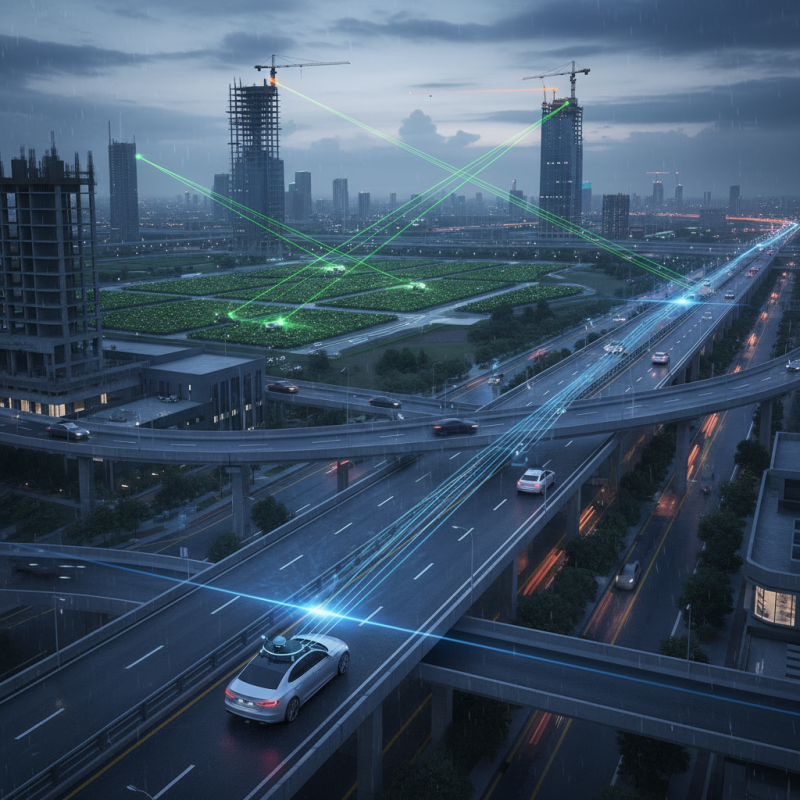
Lidar Range plays a crucial role in various applications, especially as we look toward 2026. Technological advancements will shape how industries utilize Lidar systems. The effectiveness of these systems largely depends on their range capabilities.
In autonomous vehicles, for example, Lidar Range can affect navigation and safety. The longer the range, the more time a vehicle has to react. Yet, challenges remain. Environmental factors like weather can impact performance. Certain limitations still need to be addressed.
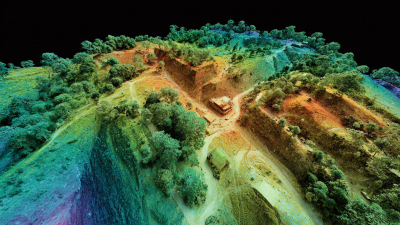
Moreover, industries such as agriculture and construction rely heavily on Lidar. Accurate range data enables better decision-making. But what happens when the range falls short? It may lead to costly errors and inefficiencies. Exploring new Lidar technology can help mitigate these risks, making it an exciting area for future research and development.
Overview of Lidar Technology Developments by 2026
Lidar technology has evolved significantly in recent years. By 2026, we can expect advanced systems with improved accuracy and longer ranges. Reports suggest that lidar systems will achieve a range of up to 500 meters, which is vital for applications in autonomous vehicles and aerial surveying. Enhanced signal processing algorithms will improve data quality in challenging environments.
Tips: Always consider your specific application needs. Different tasks require different lidar specifications.
The integration of artificial intelligence and machine learning will enhance data interpretation. This will allow users to extract more valuable insights from the lidar data. A comprehensive study notes that over 70% of surveyed companies view AI integration as a game changer. However, the complexity of systems may present a learning curve for new users. Testing and training will be essential.
Tips: Conduct field tests before full deployment. It’s crucial to understand system limitations.
Key Applications Driving Lidar Range Requirements in 2026
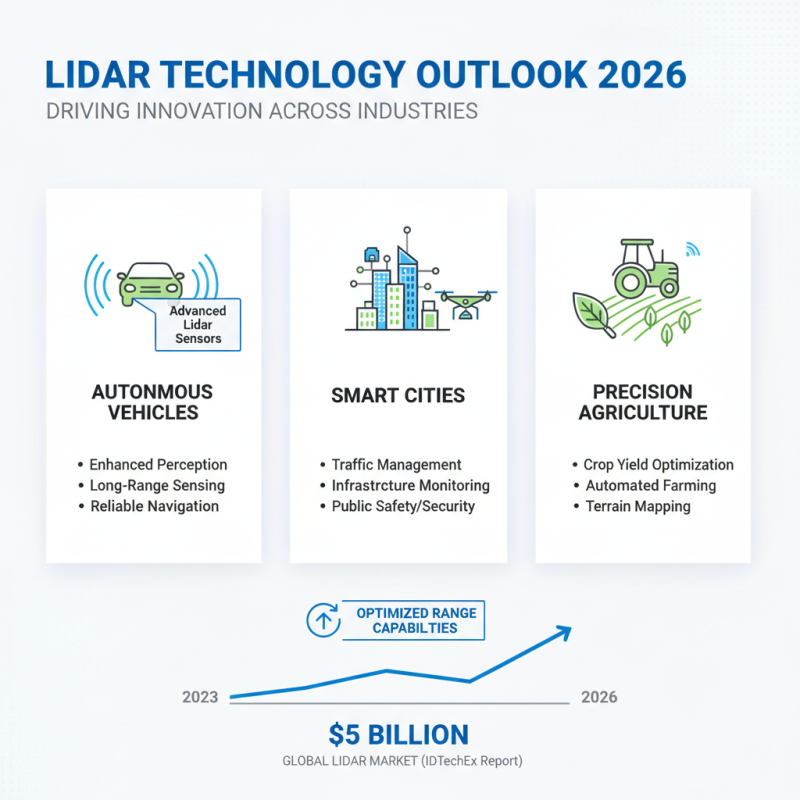
In 2026, the demand for advanced Lidar technology will center on key applications such as autonomous vehicles, smart cities, and precision agriculture. According to a recent report by IDTechEx, the Lidar market is expected to reach $5 billion by 2026. This growth highlights the pressing need for optimized range capabilities.
Autonomous vehicles will require Lidar systems that can detect objects over long distances. A range exceeding 200 meters is ideal for ensuring safety and efficiency. Many experts believe that achieving this without sacrificing accuracy will be a significant challenge. Meanwhile, smart cities will leverage Lidar for urban planning and traffic management. Data from MarketsandMarkets indicates that smart city initiatives will push Lidar range requirements to new limits.
Precision agriculture is another rising sector. Farmers increasingly rely on Lidar for crop monitoring and terrain analysis. Reports suggest that Lidar can enhance yield predictions while identifying irrigation needs. However, integrating Lidar systems into existing frameworks can be complex. Achieving the right balance between range and cost-effectiveness will be crucial for all these applications. The industry must adapt quickly to ensure these technologies meet the growing demands of 2026.
Factors Influencing Optimal Lidar Range for Various Industries
Lidar technology is rapidly evolving, making optimal range a key discussion for 2026 applications. Various industries, including automotive, agriculture, and construction, have unique requirements. Each sector influences the ideal lidar range based on its specific needs. For instance, the automotive industry often requires ranges between 30 to 200 meters to ensure safety and navigation accuracy. In contrast, agricultural drones may benefit from shorter ranges of 50 to 100 meters, focusing on detail over distance.
Consider the factors affecting lidar range. Environmental conditions play a major role. Rain, fog, and dust can significantly reduce effective range. Additionally, the intended application alters the requirements. A construction site might need high-resolution scanning within limited distances, while autonomous vehicles focus on distant object detection. The balance between resolution and range can be challenging to achieve, requiring constant evaluation.
**Tip:** Always assess your specific needs before investing in lidar technology. Choose a range that matches your application and environmental conditions. This consideration can optimize performance and avoid wasted resources. Gathering data from previous projects can also aid in making the best decision.
Optimal Lidar Range for Various Industries in 2026
Comparative Analysis of Lidar Range Options for 2026 Technologies
The lidar range for upcoming applications in 2026 is critical. A recent report from the Lidar Technology Association estimates that optimal ranges will vary based on use cases. For autonomous vehicles, a lidar range of 200 meters may become standard. This is essential for safety in high-speed environments.
Drones, another significant application, benefit from greater ranges. The analysis suggests that ranges of 400 to 500 meters may be favored for aerial mapping. This allows for comprehensive data collection from larger areas. However, achieving such ranges comes with challenges. The trade-off between precision and range often leads to data that requires refinement.
Additionally, emerging technologies demand continuous innovation. The projected market growth for lidar is expected to exceed $1 billion by 2026. This highlights the importance of understanding various range options. Scientists and engineers must balance performance with practicality. As we move closer to these applications, the discussion around lidar range continues to evolve. There are no perfect solutions yet.
Future Trends and Innovations in Lidar Range Capabilities
Lidar technology is evolving rapidly. According to a recent industry report, the global Lidar market is projected to reach $2.5 billion by 2026. This surge is driven by advancements in sensing capabilities. In the next few years, lidar range will likely extend beyond 200 meters with improved accuracy. Innovations are emerging from various sectors, including automotive and agriculture.
The future of lidar lies in its integration with AI. This allows for real-time data processing and enhanced object detection. The ability to differentiate objects in complex environments is key. For instance, systems must distinguish between pedestrians and cyclists. This is crucial for safety in autonomous vehicles. Yet, challenges remain. Environmental factors, like weather conditions, can impact performance.
Tips: Consider the operational environment when assessing lidar capabilities. Wet or foggy conditions may require specialized technology. Also, evaluate the platform's mobility and how it will enhance data collection. Balancing precision with range will define success in 2026. As lidar continues to develop, regular assessments will be essential to adapt to changing needs and overcome operational limitations.
What is the Best Lidar Range for 2026 Applications? - Future Trends and Innovations in Lidar Range Capabilities
| Application |
Optimal Lidar Range (meters) |
Expected Accuracy (cm) |
Energy Consumption (Wh) |
| Autonomous Vehicles |
200 |
3 |
15 |
| Aerial Mapping |
1500 |
5 |
35 |
| Infrastructure Monitoring |
300 |
2 |
10 |
| Robotics |
100 |
4 |
8 |
| Agricultural Monitoring |
1200 |
6 |
30 |