Choosing the right Grating Products for international projects requires more than comparing prices or viewing attractive catalog images. Buyers must connect product design with real site conditions, expected loads, corrosion exposure, walking safety, and installation practices. A platform that looks strong in a warehouse may perform differently beside a salty coastline or under repeated forklift traffic.
Industry specialist Mark A. Garrison offers a useful reminder: “A grating is only as reliable as its load path, surface finish, and fit.” This principle guides our comparison of welded steel, press-locked, aluminum, and stainless steel grating. Each type has a different balance of strength, weight, durability, and maintenance demand. Serrated surfaces can improve footing in wet areas. However, they may complicate cleaning in some industrial spaces.
Reliable global suppliers should provide drawings, material certificates, load tables, coating details, and traceable inspection records. Buyers should also check whether dimensions follow relevant ASTM, EN, or ISO-based project requirements. Certifications alone are not enough. Supplier experience matters.
Small details matter.
A 3-millimeter tolerance can affect installation. An incomplete weld can affect confidence. Packaging can influence whether edges arrive damaged after a long shipment. These points are easy to overlook when purchasing remotely.
No single grating solution suits every market. That is the uncomfortable part. Product selection still depends on engineering judgment, local conditions, and honest communication with the manufacturer. This guide examines the practical qualities that help China-made Grating Products compete globally, while recognizing that supplier claims deserve careful verification rather than automatic trust.
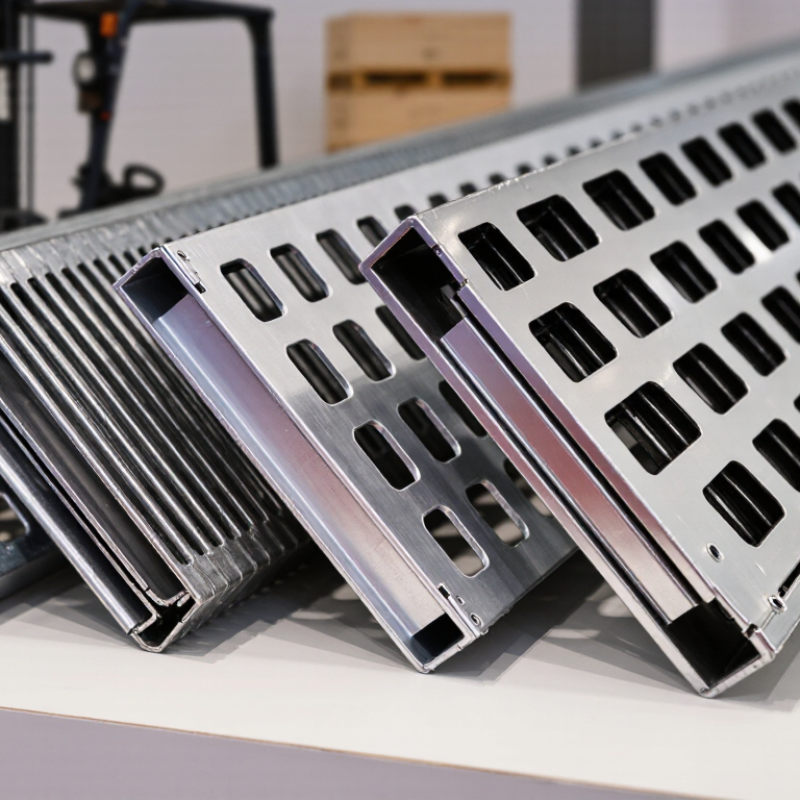
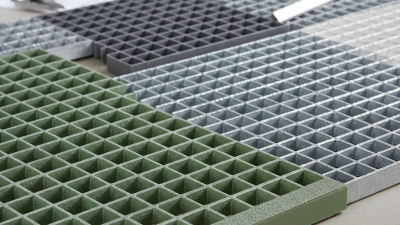
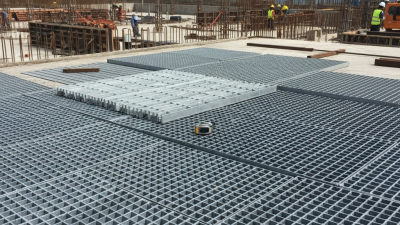
China grating products mainly serve platforms, walkways, stair treads, drainage channels, and trench covers. Common options include welded steel grating, press-locked grating, aluminum grating, and fiberglass-reinforced plastic grating. Welded steel suits factories, warehouses, power facilities, and municipal infrastructure. Serrated surfaces improve traction in wet areas. That detail matters.
Material selection should follow the working environment. Carbon steel offers strength and competitive pricing, while hot-dip galvanized steel improves resistance to moisture and outdoor exposure. Aluminum reduces weight, making it useful for access platforms and maintenance areas. FRP grating performs well near chemicals, wastewater, and coastal facilities.
However, load span, opening size, support direction, and local safety codes must be checked together. A thick panel is not automatically a safe panel.
Industry data helps explain China’s supply capacity.
The World Steel Association reported China produced about 1.019 billion tonnes of crude steel in 2023. This large manufacturing base supports varied grating dimensions and fabrication methods. The International Energy Agency’s reports also show continuing investment in grids, industry, and infrastructure, where safe access systems remain necessary.
Yet export buyers should not rely on production scale alone. In field inspections, incorrect load assumptions and poor zinc coverage appear more often than material shortages. Product drawings, coating standards, welding quality, and test records deserve careful review.
One overlooked detail can become an expensive installation problem.
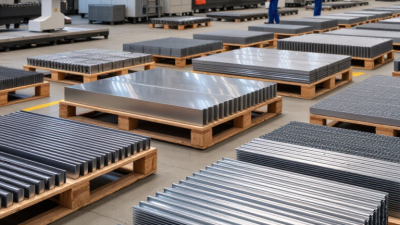
For global buyers, steel grating remains the practical baseline. China produced about 1.005 billion tonnes of crude steel in 2024, according to the World Steel Association. This scale supports broad plate thickness, bearing-bar, and panel-size choices. Hot-dip galvanizing usually improves outdoor durability, but damaged cut edges still need inspection. Steel suits loading bays, walkways, and industrial platforms where impact resistance matters most.
Stainless steel grating serves harsher environments. It resists moisture, cleaning chemicals, and many corrosive atmospheres better than carbon steel. The International Stainless Steel Forum reported global stainless-steel production of approximately 62.6 million tonnes in 2024. Grades such as 304 and 316 are common, yet neither is universally suitable. Chlorides, temperature, and weld quality must guide selection. Stainless steel costs more upfront. That difference can shrink when repainting and replacement are considered.
FRP grating offers a different engineering balance. Grand View Research identifies corrosion resistance and electrical insulation as major drivers of the FRP grating market. It is lightweight, nonconductive, and easier to carry across elevated platforms. However, buyers should verify resin type, UV resistance, fire performance, and load deflection. Some FRP panels feel less rigid under foot. That detail matters. I would request independent test reports, dimensional samples, and documented standards before placing a large China order. Cheap comparisons often ignore installation conditions, which is an expensive mistake.
What Are the Best China Grating Products for Global Buyers?
Quality starts with the specification, not the country of origin. For steel grating, buyers should confirm bar size, pitch, surface finish, welding method, and allowable load. A factory certificate alone is not enough. The ISO Survey 2022 recorded more than one million ISO 9001 certificates in China, but certification does not automatically prove product performance. Check the certificate scope, audit date, and manufacturing address. Ask for mill certificates and independent test records.
Safety requires measurable evidence. EN ISO 14122 covers permanent access systems, while OSHA 29 CFR 1910.22 requires walking-working surfaces to support their intended loads safely. Request load tables with span assumptions, not attractive catalog claims. Examine welded joints closely. Poor welds may appear as small dark gaps around cross bars. Anti-slip serrations should remain consistent across panels, including corners and cut sections. Hot-dip galvanizing should be verified by coating-thickness tests, especially near welds. The American Galvanizers Association notes that coating thickness strongly affects service life, yet many purchase files omit this result.
International buyers should match drawings with EN, ASTM, or national project requirements. Tolerance checks matter. A panel can meet its weight target and still fail installation because dimensions drift. Factory inspections, batch sampling, and shipment photographs improve traceability. I have seen suppliers provide excellent samples but weaker production batches. That risk deserves a written inspection plan. Product selection is never only about price.
Evaluating Quality, Safety, and International Standards
Reference basis: EN 10025-2 structural steel grades, ASTM A36 and ASTM A572 Grade 50 steel specifications, and commonly published minimum properties for 6061-T6 aluminum. Values are shown in MPa.
What Are the Best China Grating Products for Global Buyers?
Choosing the Right Chinese Grating Supplier for Global Projects
Choosing a Chinese grating supplier requires more than comparing unit prices. World Steel Association data reports that China produced about 1.005 billion tonnes of crude steel in 2024. This capacity supports broad product selection, including welded steel grating, press-locked grating, stair treads, and galvanized panels. Capacity is not quality, however. A supplier should match bar size, span, load rating, surface treatment, and installation conditions to your project drawings.
Ask for practical evidence. Request material certificates, dimensional inspection records, welding procedures, and load tables. For galvanized grating, confirm compliance with ISO 1461 or the specified ASTM requirement. Samples should show consistent bearing bars, clean welds, and even zinc coverage. Small defects matter. A twisted panel can delay installation.
Use independent inspection when the project is critical. The International Trade Centre and other trade-data sources show China remains a major global manufacturing hub, but supplier performance still varies. That point is easy to overlook. Check factory capacity, export experience, packaging methods, and replacement procedures before signing. UNCTAD reports that over 80% of world merchandise trade by volume moves by sea, so moisture-resistant packing and accurate shipping documents deserve attention. I would also test one shipment before approving repeated orders. A lower quotation can hide thinner bars, weaker welds, or unclear tolerances. Supplier selection is partly technical judgment, and partly disciplined doubt.
| Product Type | Typical Material | Common Surface / Finish | Typical Bearing-Bar Range | Common Mesh Options | Main Advantages | Suitable Global Applications | Key Buying Checks |
|---|---|---|---|---|---|---|---|
| Hot-Dip Galvanized Steel Bar Grating | Carbon steel, commonly low-carbon structural steel | Hot-dip zinc coating after fabrication | 25–100 mm depth; 3–8 mm thickness | Bearing-bar spacing commonly 30, 40 or 60 mm; cross-bar spacing commonly 50, ಲ್ಲ 100 mm | High load capacity, economical, widely available and suitable for outdoor service | Walkways, platforms, stairs, drainage covers, industrial plants and infrastructure projects | Steel grade, design load, deflection limit, zinc coating standard, weld quality and drainage requirements |
| Plain or Painted Carbon-Steel Grating | Carbon steel | Mill finish, epoxy coating or industrial paint | 25–100 mm depth; 3–8 mm thickness | Commonly 30–60 mm bearing-bar spacing with 50–100 mm cross-bar spacing | Lower initial cost and easy fabrication for controlled indoor environments | Indoor platforms, machinery areas, temporary structures and protected service corridors | Corrosion category, coating thickness, surface preparation, maintenance plan and indoor humidity exposure |
| Stainless-Steel Grating | AISI 304/304L or 316/316L stainless steel | Mill finish, pickled and passivated, or electropolished | 20–75 mm depth; approximately 3–6 mm thickness | Commonly 20, 30 or 40 mm bearing-bar spacing | Strong corrosion resistance, hygienic surface and long service life | Food processing, pharmaceutical facilities, water treatment, coastal sites and chemical areas | 304 versus 316/316L selection, chloride exposure, weld passivation, surface finish and chemical compatibility |
| Aluminum Grating | 6061-T6 or comparable structural aluminum alloy | Mill finish, anodized or powder coated | 25–75 mm depth; approximately 3–6 mm thickness | Commonly 25–40 mm bearing-bar spacing | Low weight, good atmospheric corrosion resistance and easier handling | Marine accessways, rooftop equipment areas, transport facilities and lightweight platforms | Allowable load, galvanic corrosion at steel connections, alloy temper, slip resistance and thermal movement |
| Molded FRP Grating | Fiberglass-reinforced polymer with resin matrix | Molded open mesh with grit or concave anti-slip surface | 25–50 mm panel depth is common | Approximately 19, 25, 30 or 38 mm square mesh options | Non-conductive, corrosion resistant, lightweight and suitable for chemically aggressive areas | Chemical plants, wastewater facilities, electrical areas, offshore accessways and humid environments | Resin type, UV resistance, fire performance, load-span tables, electrical requirements and slip rating |
| Press-Locked Steel Grating | Carbon steel, stainless steel or aluminum | Galvanized, painted, mill finish or anodized depending on base metal | 20–75 mm depth; approximately 3–6 mm thickness | Square or rectangular mesh, commonly 20–40 mm spacing | Clean appearance, close mesh options and useful for architectural or pedestrian areas | Architectural floors, ventilation screens, pedestrian walkways and decorative platforms | Joint tightness, panel squareness, pedestrian opening limits, edge finishing and corrosion protection |
| Safety or Serrated Grating | Carbon steel, stainless steel or aluminum | Serrated bearing bars with galvanized, painted or bare finish | 25–100 mm depth; approximately 3–8 mm thickness | Usually based on standard bar-grating mesh, with serrated top surfaces | Improved slip resistance in wet, oily or icy conditions | Industrial stairs, ramps, drainage zones, loading areas and outdoor maintenance platforms | Slip-resistance requirement, drainage direction, sharp-edge control, load rating and local safety regulations |
What Are the Best China Grating Products for Global Buyers?
For global buyers, China grating prices depend on material, load rating, and production volume. A low quote may exclude edge bars, surface treatment, packing, or inland delivery. Ask for a line-item quotation. Compare steel weight, bearing-bar size, cross-bar spacing, and finish. Hot-dip galvanized surfaces need coating thickness records, not vague claims. Request drawings, samples, mill certificates, and recent inspection photos. In my purchasing experience, small specification changes can alter container weight significantly.
Customization should start with a measured application, not a copied catalog image. Share platform dimensions, support spans, foot traffic, forklift loads, drainage needs, and fixing preferences. Confirm tolerances before cutting begins. A competent technical team should issue shop drawings for approval. It should also explain when standard dimensions cannot meet your safety margin. I once accepted a neat-looking sample that needed stronger support. Appearance was not enough. That mistake still influences my checks.
For shipping, confirm bundle dimensions, gross weight, container loading plans, and moisture protection. Salt air and trapped water can damage finishes before installation. Use export-grade packing and photograph sealed bundles. Import planning requires the correct HS classification, commercial invoice, packing list, bill of lading, origin details, and applicable conformity documents. Duties and inspection rules vary by destination. Confirm them with customs authorities or a licensed broker. Do not rely on a supplier’s guess. A pre-shipment inspection can verify dimensions, weld quality, markings, and quantities, although it adds cost and time. Build that cost into the landed price.