2026 Top Safety Light Barrier Sensor Applications and Innovations?
The advancements in Safety Light Barrier Sensors have transformed various industries. These sensors provide critical safety measures, ensuring protection in manufacturing and automation environments. In 2026, innovative applications are expected to redefine their utility.
Integrating Safety Light Barrier Sensors in robotics has shown promise. They help detect obstacles, preventing accidents and injuries. However, there are challenges. The adaptation of these sensors in complex environments may lead to false readings. This can cause unnecessary halts in operations.
Furthermore, the shift towards smart factories introduces new dynamics. Real-time data from Safety Light Barrier Sensors can improve workflow efficiency. Still, reliance on technology requires ongoing assessments. Companies must balance efficiency with safety. The discussion on the future of these sensors will explore both their benefits and limitations.
2026 Market Analysis of Safety Light Barrier Sensors in Industrial Applications
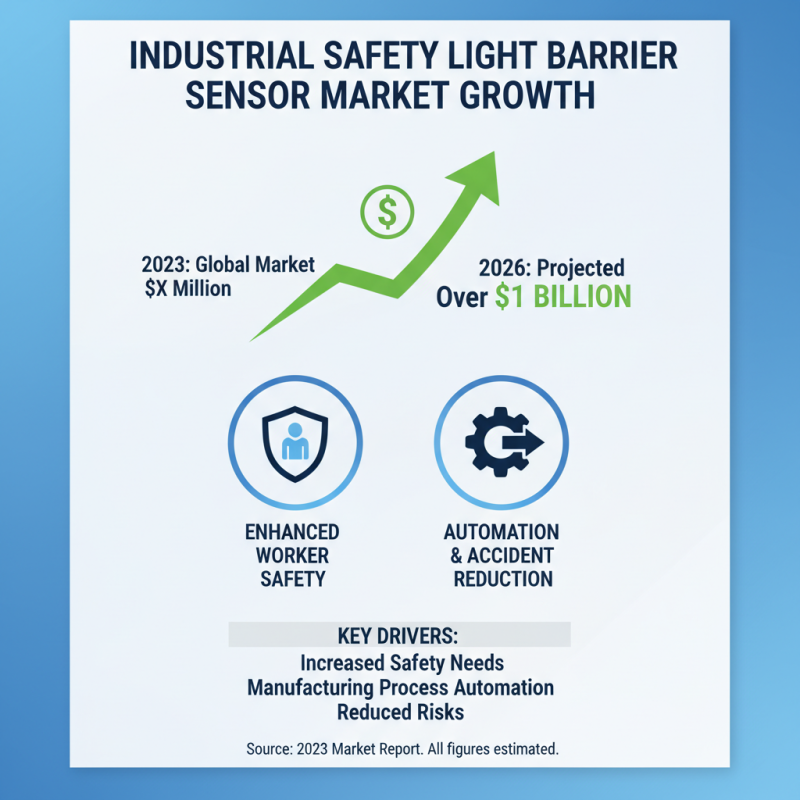
The market for safety light barrier sensors is growing rapidly in industrial settings. According to a 2023 market report, the global market size is projected to reach over $1 billion by 2026. This increase is driven by the rising need for safety and automation in manufacturing processes. Industries are increasingly adopting these sensors to enhance worker safety and reduce accident risks.
In 2026, sectors like automotive and food processing will dominate the usage of safety light barriers. The automotive sector alone accounted for approximately 35% of the total share in 2023. These sensors help in safeguarding workers from hazardous areas and stop machines when obstructed. Despite their effectiveness, some companies still underutilize these technologies. A survey indicated that 20% of manufacturers have not integrated safety barriers into their operations. This gap presents both a challenge and an opportunity for improvement.
Furthermore, innovation in sensor technology is notable. More advanced models now offer features such as integrated diagnostics and IoT connectivity. However, the adoption rate remains inconsistent across industries. Many facilities still rely on outdated systems that do not meet current safety standards. This reliance can lead to potential hazards and affect overall efficiency. A proactive approach is essential for improving workplace safety.
Key Innovations in Safety Light Barrier Technology for the Manufacturing Sector
Safety light barrier sensors have become increasingly important in the manufacturing sector. Their primary purpose is to protect workers and machinery from potential hazards. Recent innovations in this technology have enhanced their detection capabilities significantly. For instance, multi-beam configurations allow for greater coverage in various environments. These advancements help to ensure that even the smallest object can trigger a response.
Moreover, the integration of smart technology is a notable trend. Many sensors now feature connectivity options, enabling real-time monitoring. This allows for immediate feedback and faster response times in safety scenarios. However, this shift towards more intelligent systems can lead to complexities in implementation. Not all companies are equipped to handle these advancements, which may lead to confusion.
Another innovation includes the introduction of more robust materials. Sensors made with durable, weather-resistant materials perform better in harsh environments. However, the cost of these advanced options may not be justifiable for every business. Balancing safety upgrades with budget constraints is an ongoing challenge. It calls for careful analysis and thoughtful planning to ensure the details align with the actual needs.
Impact of Safety Light Barriers on Workplace Safety and Accident Reduction Rates
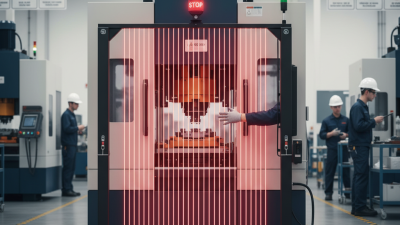
Safety light barriers are crucial in modern workplaces. They provide a protective measure to prevent accidents involving moving machinery. These sensors create an invisible safety zone. When this zone is breached, machinery automatically stops. This simple mechanism can significantly reduce workplace injuries.
Incorporating safety light barriers can also lead to greater productivity. By minimizing accidents, companies can maintain continuous workflows. However, not all installations are foolproof. Sometimes, human error in placement occurs. This may lead to false alarms or missed detections. Regular maintenance and training are essential. Without proper oversight, the effectiveness of these systems may decline.
The impact of safety light barriers on accident reduction is evident. Studies show a notable decrease in incidents where these barriers are installed. Yet, reliance solely on technology is risky. Employees must still be vigilant and well-trained. Safety culture should encompass both technology and human awareness for the best results.
2026 Safety Light Barrier Sensor Applications and Innovations
This chart illustrates the percentage impact of safety light barriers on workplace safety across various industries, highlighting their role in accident reduction rates. As shown, manufacturing and construction show significant reductions in accidents due to the implementation of safety light barriers.
Comparative Study of Active vs. Passive Safety Light Barrier Systems
In recent years, the debate between active and passive safety light barrier systems has gained traction. Active systems use emitters and receivers, continuously monitoring a specific area. Passive systems, on the other hand, rely on reflective surfaces to detect objects. According to a recent industry report by Research and Markets, the market for active safety light barriers is projected to grow at a compound annual growth rate (CAGR) of 7.5% through 2026.
The effectiveness of these systems varies significantly. Active barriers often provide faster response times. However, they can be prone to false alarms, especially in environments with high ambient light. Passive systems, while generally more stable, sometimes struggle in detecting movements quickly. This could lead to potential safety risks in high-speed environments. A study from the International Journal of Industrial Ergonomics indicated that nearly 25% of accidents occurred in areas protected by outdated passive systems.
Innovation continues in both sectors. Advances in sensor technology allow for enhanced detection capabilities, making systems more efficient. Yet, challenges remain. For instance, integrating these systems into existing workflows can be complex. Organizations must also consider maintenance costs. As companies push for more automated solutions, the need for reliable safety mechanisms intensifies. Balancing technological advancements with practical applications remains an ongoing challenge in safety light barriers.
2026 Top Safety Light Barrier Sensor Applications and Innovations - Comparative Study of Active vs. Passive Safety Light Barrier Systems
| Application |
Active Safety Light Barrier |
Passive Safety Light Barrier |
Key Innovations |
| Industrial Automation |
High sensitivity to small objects; adjustable range |
Simple installation; cost-effective |
Integration with IoT; self-diagnostics |
| Robotics |
Real-time object detection; dynamic range adjustment |
Reliable blocking performance; durable construction |
Machine learning algorithms; edge computing |
| Construction Sites |
Smart safety warnings; environmental adaptability |
Low power consumption; robust against harsh conditions |
Wireless connectivity; data analytics |
| Automotive Safety |
Advanced collision detection; integrated braking systems |
Cost-effective retrofitting; high reliability |
Vehicle-to-everything (V2X) communication; adaptive response systems |
| Packaging Industry |
Precision alignment; adjustable sensitivity |
Cost-effective for bulk operations; easy to maintain |
Smart packaging solutions; remote monitoring |