2026 Best Photoelectric Light Curtain Innovations for Buyers?
In the evolving landscape of industrial safety, the significance of the Photoelectric Light Curtain cannot be overstated. These devices have become essential in safeguarding personnel and machinery in various sectors. According to a recent market analysis, the global demand for light curtain systems is expected to grow by 15% annually through 2026. This growth reflects an increasing awareness of workplace safety and automation needs.
As technology advances, the innovations surrounding Photoelectric Light Curtains are expanding. Features like advanced sensing capabilities and wireless connectivity are becoming common. A study by Safety Tech Insights indicates that installations of upgraded light curtain systems reduce accidents by up to 30%. However, buyers often face challenges in navigating the vast array of options. Understanding which innovations provide the best value and safety features is crucial.
While many suppliers promise increased protection, not all deliver proven results. Buyers need to critically assess product specifications and compatibility with their specific environments. The importance of selecting the right Photoelectric Light Curtain is not just about compliance; it genuinely impacts operational efficiency and worker safety. As we explore the innovative offerings available in 2026, keeping a discerning eye on the latest technologies and their benefits is key.
Overview of Photoelectric Light Curtain Technology in 2026
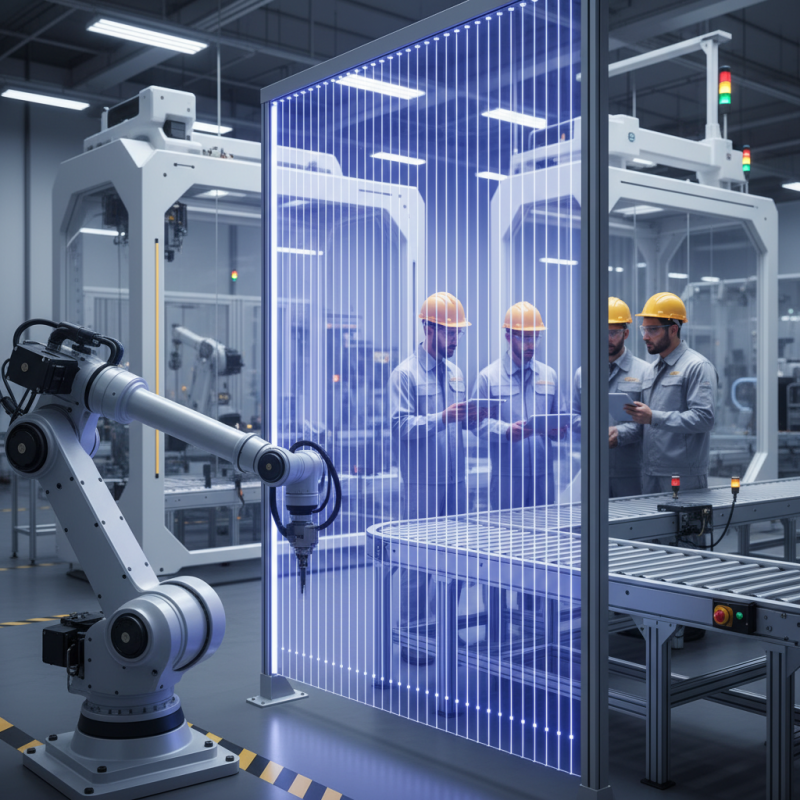
In 2026, photoelectric light curtain technology has made significant strides in safety and efficiency. These devices utilize infrared beams to create safety zones, effectively detecting objects and ensuring secure operations. They are widely used in manufacturing, robotics, and safety automation. With advancements, these light curtains now offer better sensitivity and faster response times, which are crucial in high-speed environments.
Notably, the designs have evolved to become more compact and user-friendly. New materials enhance durability while reducing weight. Companies are exploring various configurations to suit different applications. However, with these advancements come challenges. Users often face complex installation procedures. Misalignment and environmental factors can hinder performance, requiring skilled personnel for adjustments.
Moreover, some innovations push the limits of current technology. Integrating artificial intelligence into light curtains promises smarter detection. Yet, these integrations can lead to unintended consequences. There’s a risk of over-reliance on automated systems, which could create vulnerabilities. As technology progresses, it’s essential to remain vigilant and prioritize safety protocols.
Key Innovations in Photoelectric Light Curtain Design
Innovations in photoelectric light curtain design have made significant strides recently. Advanced sensing technologies enhance accuracy and detection speed. These systems now feature improved algorithms that reduce false alarms. The integration of AI helps in predictive maintenance. Users benefit from knowing when to conduct checks.
Tips for Buyers: Look for models with self-diagnostic features. This can save time and costs. Consider units with adjustable sensitivity settings. They adapt better to different environments and tasks.
Material advancements also play a key role in durability. New coatings resist wear and environmental factors. This means longer service life with less maintenance. However, some innovations may come with complexities. Buyers should ensure they understand the technology fully before making a decision.
2026 Best Photoelectric Light Curtain Innovations
This chart illustrates the key innovations in photoelectric light curtain design for 2026, highlighting important features such as safety, cost efficiency, installation ease, durability, and detection range with their respective scores.
Safety Features Enhancements in Modern Light Curtains
The evolution of photoelectric light curtains is profoundly shaped by safety features. Modern innovations focus on enhancing these protective elements. Increased accuracy in detecting objects helps reduce accidents in industrial settings. Companies now prioritize responsive technology that signals operators in real time.
New models incorporate advanced algorithms for better object recognition. This shift aims to minimize false alarms while maintaining a high level of vigilance. Enhanced visibility through integrated LED indicators guides operators effectively. Such features support a safer work environment, yet they can still struggle in harsh conditions.
While technology advances, challenges remain. Not every model adapts well to varying light sources. Users must evaluate the surrounding environment when choosing new equipment. It's crucial to balance cutting-edge features with proven reliability. Continuous testing and feedback from professionals drive these improvements, highlighting the importance of practical experience in achieving safety standards.
Applications of Photoelectric Light Curtains in Various Industries
Photoelectric light curtains have become integral in various industries. They are essential tools for safety and automation. These curtains detect objects and people, providing effective protection in manufacturing environments. In automotive factories, for instance, they prevent accidents during heavy machinery operations. Workers can move safely without the fear of machinery starting unexpectedly.
In the food processing sector, photoelectric light curtains play a vital role. They help ensure product safety by creating invisible barriers. These barriers detect barriers and help maintain sanitary conditions. However, reliance on technology can lead to overconfidence. Regular maintenance and calibration are crucial to avoid malfunctions that could result in production downtime.
The logistics industry also benefits from these innovations. Photoelectric light curtains aid in the automation of conveyor systems. They enhance efficiency while minimizing the risk of collisions. Yet, sometimes, operators may overlook regular training for staff. This can lead to improper use or misunderstanding of the equipment. Balancing technology and human oversight is critical for achieving optimal safety and efficiency.
2026 Best Photoelectric Light Curtain Innovations for Buyers
| Industry |
Application |
Key Features |
Safety Standards |
Estimated Market Price ($) |
| Manufacturing |
Machine Protection |
High-resolution detection, Fast response time |
ISO 13849, EN 61496 |
250-500 |
| Logistics |
Conveyor Safety |
Long range detection, Adjustable sensitivity |
ANSI B11.19, IEC 62061 |
300-600 |
| Automotive |
Robotic Arm Guarding |
Compact design, Real-time monitoring |
ISO 10218, IEC 61508 |
400-800 |
| Food & Beverage |
Production Line Safety |
Hygienic design, Easy cleaning |
FDA, HACCP |
350-700 |
| Construction |
Site Safety |
Durable materials, Weather-resistant |
OSHA, ANSI |
500-900 |
Selecting the Right Photoelectric Light Curtain for Different Needs
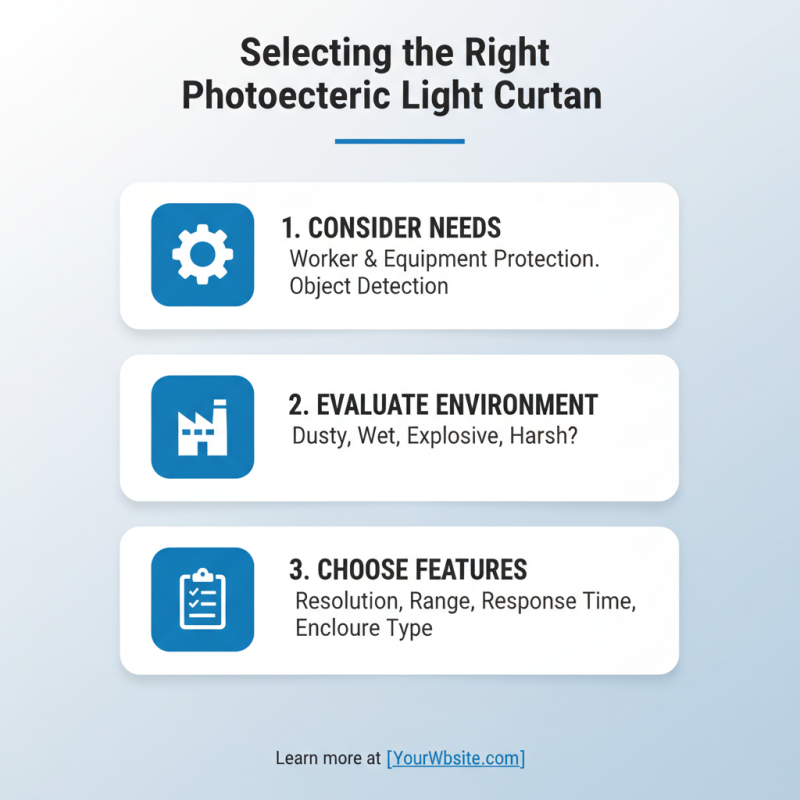
When selecting a photoelectric light curtain, consider your specific needs. These devices protect workers and equipment by detecting objects in their path. The type of environment will influence which features are essential.
For industrial settings, durability is key. Opt for models that resist dust and moisture. In contrast, for quieter, more sensitive environments, consider curtains with precise detection. They help reduce false alarms and improve safety.
**Tips:** Understand the installation space before purchasing. Measure the area to ensure proper fit. Additionally, evaluate the range of detection—shorter ranges may suffice for small equipment but longer ranges are necessary for large machinery.
Reflecting on user experiences can be beneficial. Sometimes, a light curtain may not cover all angles effectively. It's essential to assess real-world conditions to ensure optimal placement. This prevents accidents and enhances overall workplace safety.